


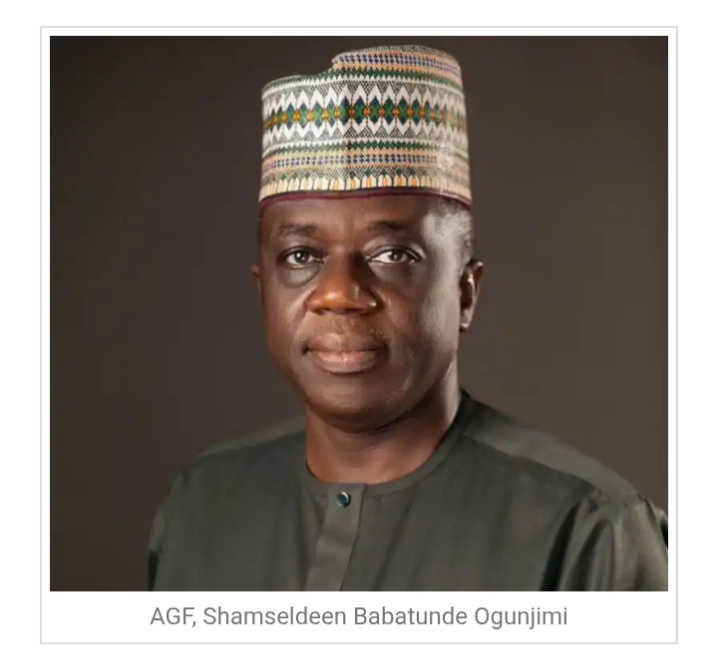
AGF, Shamseldeen Babatunde Ogunjimi
The Office of the Accountant-General of the Federation (OAGF) has introduced a series of major financial management reforms aimed at strengthening transparency, accountability, and efficiency in the execution of World Bank–funded projects across Nigeria.
In a statement issued by Bawa Mokwa, Director of Press, OAGF, the Accountant-General of the Federation, Dr. Shamseldeen Babatunde Ogunjimi, announced the measures on Tuesday during a financial management workshop for Accountant-General staff, Heads of Project Financial Management Units (PFMUs), and coordinators of World Bank–supported programmes at the Treasury House in Garki, Abuja.
According to Dr. Ogunjimi, the workshop was convened to deepen discussions on improving transparency and accountability in donor-funded project management — values he described as “the foundation upon which we build trust, ensure effective use of resources, and achieve our development objectives.”
Dr. Ogunjimi revealed that a new Financial Management Manual (FMM) has been developed by the OAGF to guide the execution of financial transactions across all World Bank–funded projects. He urged project coordinators, project accountants, and PFMU heads to adopt the manual fully to reduce infractions, improve performance, and maintain Nigeria’s favorable rating with the World Bank.
The Accountant-General also announced the rollout of the World Bank’s Funds Chains system — a blockchain-based platform designed to significantly enhance transparency and efficiency in the management of development funds. The system is being launched initially across six projects.
To reduce disruptions in project execution, the OAGF and World Bank have agreed that financial management staff should not be removed within six months of a project’s closure.
Dr. Ogunjimi explained that this measure aims to prevent lapsed loans and undocumented advances.
He added that new project officers will now be required to work alongside outgoing officers for at least three months to ensure continuity and avoid project shutdowns.
Highlighting ongoing efforts to address issues affecting project ratings, Dr. Ogunjimi reported significant progress in reducing lapsed loans and undocumented advances. Through recent collaboration with the World Bank, outstanding lapsed loans have dropped from $18 million to $7 million, representing a 61% reduction, while undocumented advances have decreased by 15%.
Projects will continue to receive formal notifications on outstanding financial obligations, he said, urging all project coordinators and PFMUs to prioritize timely documentation, refunds of lapsed loans, and adherence to World Bank agreements.
Dr. Ogunjimi emphasized the importance of partnership, accountability, and capacity building in delivering results aligned with the Federal Government’s Renewed Hope Agenda under President Bola Ahmed Tinubu.
Earlier, World Bank Country Director Mr. Mathew A. Verghis, represented by FM Coordinator Mr. Akram Elshirbegy, commended the Accountant-General’s leadership and the strides made by the OAGF.
He reiterated the World Bank’s commitment to continued collaboration to ensure the sustainability of development projects in Nigeria.