


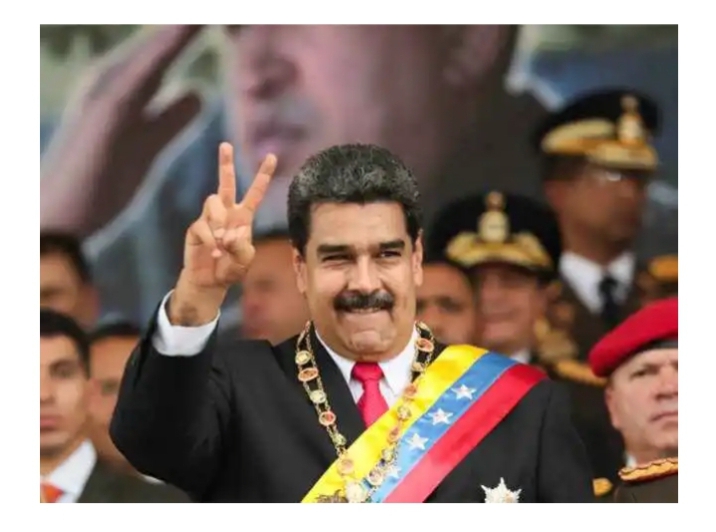
The UN Security Council remained sharply divided on Monday during an emergency session over the U.S. capture of Venezuela’s President, Nicolás Maduro, in a weekend military operation.
The emergency meeting followed Washington’s removal of Maduro from Caracas, an action that has unsettled governments across Latin America and drawn global diplomatic concern.
Several delegations questioned the legality of the operation, while others defended it as a response to alleged criminal conduct by Venezuela’s leadership.
The Security Council, charged with maintaining international peace and security, is empowered to authorise sanctions, peacekeeping missions and military action.
It comprises 15 members, including five permanent members with veto powers: China, France, Russia, the United Kingdom and the United States.
The remaining 10 members are elected for two-year terms and do not possess veto authority.
Speaking at the session, the United Kingdom said “Maduro’s claim to power was fraudulent”.
UK Ambassador, James Kariuki, said Maduro’s governance produced severe poverty, violent repression and collapsed public services.
He said these failures triggered a regional displacement crisis, placing pressure on neighbouring countries.
Kariuki said Britain sought “a safe and peaceful transition to a legitimate Government reflecting the will of the Venezuelan people”.
He reaffirmed the UK’s commitment to international law and the UN Charter.
“These foundations are essential for maintaining global peace, security and the rule of law,” he said.
The United States rejected claims of aggression, insisting “there is no war against Venezuela or its people”.
U.S. Ambassador, Michael Waltz, said Washington conducted “a surgical law enforcement operation” to apprehend two indicted fugitives.
He named “narco-terrorist Nicolás Maduro and Celia Flores” as targets of the operation.
Waltz likened the action to the 1989 arrest of former Panamanian leader Manuel Noriega.
He described Maduro as a fugitive leading a “vicious foreign terrorist organisation”.
The U.S. envoy alleged links between Maduro’s network and international drug trafficking operations.
He cited claims of extrajudicial killings, torture and arbitrary detentions under Maduro’s rule.
Waltz said more than eight million Venezuelans have fled the country, creating one of the world’s largest displacement crises.
China strongly condemned the U.S. action, calling it “unilateral, illegal and bullying”.
China’s representative said Beijing was “deeply shocked by” Washington’s conduct in Venezuela.
He accused the United States of trampling on Venezuela’s sovereignty and placing force above diplomacy.
The Chinese envoy warned the action posed a grave threat to peace in Latin America and beyond.
He urged Washington to heed the “overwhelming voice” of the international community and return to dialogue.
Russia echoed China’s concerns, saying U.S. actions were fuelling “neocolonialism”.
Russia’s UN Ambassador, Vassily Nebenzia, described the operation as armed aggression violating international law.
He called for the immediate release of the “legitimately elected President” and his spouse.
Nebenzia urged Council members to reject double standards and resist fear of the “American global gendarme”.
He warned the United States sought control over Venezuela’s natural resources.
According to him, such actions risk generating renewed “imperialism and neocolonialism”.
Latvia, a non-permanent member, said Maduro’s regime repeatedly violated the UN Charter.