


For the first time since the collapse of negotiations in mid-2025, senior U.S. and Iranian officials are preparing to meet face to face.
On Friday, February 6, 2026, Istanbul will host what may be the most consequential diplomatic summit of the decade: a direct, high-level U.S.–Iran negotiation, backed by a regional support cast from Turkey, Qatar, Oman, Egypt, Saudi Arabia, the UAE, and Pakistan. It’s billed as a last-ditch attempt to avoid another war—and possibly resurrect a new nuclear framework.
But before Iran ever steps into the room, the table is already set—and the knives are out.
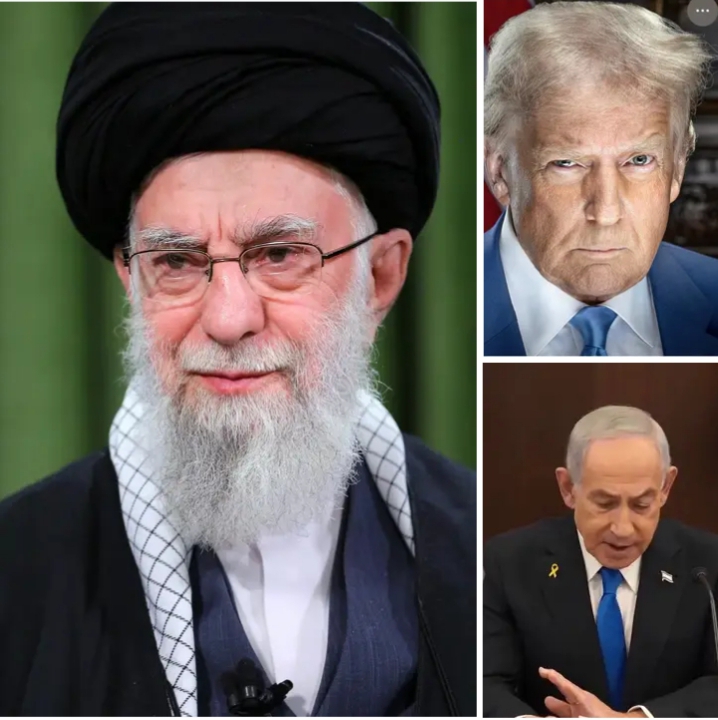
Just days before the summit, U.S. Special Envoy Steve Witkoff arrived in Jerusalem for consultations with Israeli Prime Minister Benjamin Netanyahu. According to The Times of Israel and Channel 12, Israel is pushing Witkoff to carry forward three non-negotiable demands in any U.S. understanding with Iran:
1. No nuclear program
2. No ballistic missile program
3. No support for armed groups that threaten Israel
These “Three No’s” are more than policy suggestions—they’re a red line drawn with national survival in mind. In the meeting, Mossad chief David Barnea and IDF Chief of Staff Lt. Gen. Eyal Zamir are expected to join, emphasizing that Israel views this round of diplomacy as a critical moment of leverage—possibly the last before military confrontation becomes unavoidable.
Channel 12 further reports that Israeli intelligence believes a carefully calibrated strike campaign could bring down the Iranian regime—a position being quietly relayed to Washington to harden its negotiating stance ahead of Istanbul.
But from Tehran’s perspective, the “Three No’s” are a nonstarter—particularly the second.
Why Iran Won’t Give Up Its Missiles
Iran’s ballistic missile arsenal is not just an offensive tool—it’s a strategic equalizer. Lacking air superiority, advanced bombers, or global strike capabilities, Iran’s missile force is the only reliable means of deterrence against a potential Israeli or American attack.
It’s also the only viable way to retaliate if hit.
Strip away the missile program, and Iran becomes militarily mute in any conflict. That’s not just a loss of firepower—it’s a death sentence in regional geopolitics.
So while Iran has signaled openness to nuclear transparency and enrichment caps, it has explicitly rejected any discussion about its missile capability. President Pezeshkian’s foreign minister, Abbas Araghchi, is attending the talks under orders to seek “fair and equitable negotiations”—which, in Tehran’s calculus, means no bargaining over missile deterrence and no surrender of regional influence.
And that’s where the agenda collapses.
The U.S. wants a “comprehensive package”—a deal that curbs not just nuclear activity, but also Iran’s ballistic arsenal and support for proxies like Hezbollah and the Houthis. Iran insists the talks are about nuclear policy, not its entire strategic doctrine. If that gap doesn’t close fast, the summit is already a failure in motion.
The Escalation Map Remains Red
Israel isn’t sitting still.
• Hezbollah remains armed and alert along Israel’s northern border.
• Houthi drones continue to test Israeli defenses from the south.
• Iranian Revolutionary Guard activity in Syria shows no signs of retreat.
Add to that a U.S. aircraft carrier strike group now parked off Iran’s coast, and the message is clear: diplomacy is happening under the shadow of force.
No party is entering the talks with trust:
• The U.S. wants de-escalation, but carries a military threat in its back pocket.
• Iran wants sanctions relief, but refuses to negotiate from weakness.
• Israel wants assurance—but sees only risk, and is already shaping the post-summit battlefield.
The real question isn’t whether the Istanbul summit will happen.
It’s whether anyone in the room actually believes it will work.
Because in this region, the quiet between negotiations and missiles is often just reload time.