


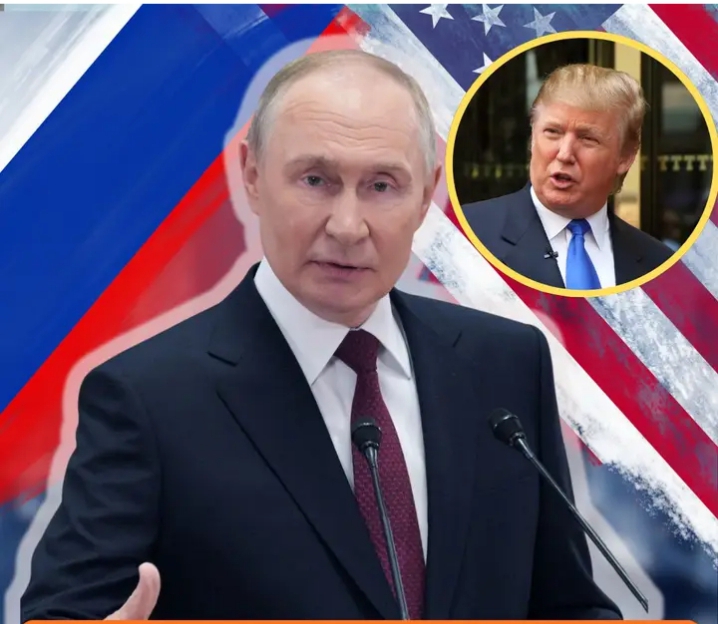
Russian President Vladimir Putin has delivered one of his most aggressive ideological attacks on Western leadership to date, declaring that what he called the West’s era of dominance — a “vampire’s ball” — is nearing its end.
Speaking with unusually vivid language, Putin accused Western political and economic elites of parasitic behavior, claiming they have grown accustomed to “stuffing their bellies with human flesh and their pockets with money.”
The speech marks a clear escalation in Moscow’s messaging and is being interpreted as more than rhetorical theater.
Russian officials and state media are framing the remarks as a moral and civilizational critique, portraying the West as extractive, exploitative, and detached from the consequences of its policies on the rest of the world.
The language reflects a broader effort by the Kremlin to position Russia as a challenger to what it sees as a decaying Western-led order.
Putin’s comments come amid a series of recent confrontations. Moscow has accused the United States of using cryptocurrency markets to manipulate global finance and weaken rival economies, and has also pointed to alleged intelligence breaches involving Middle Eastern partners.
Together, these claims are being used to reinforce the narrative that Western power is exercised not through transparency, but through covert economic, financial, and intelligence pressure.
The timing is notable. As global tensions rise across Ukraine, the Middle East, the Arctic, and international financial systems, Moscow appears to be sharpening its ideological framing of the conflict — no longer just as a geopolitical rivalry, but as a struggle over values, sovereignty, and who sets the rules of the global system.
Western governments have largely dismissed Putin’s language as inflammatory propaganda.
However, analysts note that the tone reflects a hardened posture in Moscow, one that signals diminishing interest in compromise and a growing emphasis on rallying domestic and non-Western audiences against U.S. and European influence.
Whether viewed as hyperbole or strategic messaging, the speech underscores a widening fracture between Russia and the West — one increasingly defined not just by policy disputes, but by openly hostile worldviews. As diplomatic channels strain and mutual accusations intensify, the rhetoric itself is becoming a signal of how far relations have deteriorated.
– Source: Russian state media (Rossiya Segodnya), March 13, 2024.