


By Olufemi Adegbulugbe
What is now unfolding before the Federal High Court in Abuja is no longer speculation or partisan storytelling. It is sworn testimony, backed by bank records, tracing how local government funds in Kogi State were allegedly funnelled through private accounts, broken into structured deposits to evade reporting limits, and converted into cash.
At the centre of this financial architecture is a ₦2.1 billion loan disbursed on December 14, 2021, by Access Bank to Keyless Nature Limited, a private company with no constitutional role in local government finance.
That date matters. It marked exactly one year after the inauguration of elected Local Government Chairmen in Kogi State.
A Loan That Raises More Questions Than Answers
Keyless Nature Limited is not a government agency. It has no statutory authority to receive or manage LGA funds. Yet, within days of receiving the ₦2.1 billion loan, ₦1.259 billion was withdrawn in cash, with no evidence of projects, procurement, or capital deployment.
In standard banking practice, immediate large cash withdrawals following a loan disbursement trigger serious anti money laundering concerns. They demand explanation, escalation, and reporting. None of that appears to have stopped the flow.
The 21 LGAs as a Repayment Engine
Kogi State has 21 Local Government Areas. Court evidence shows that shortly after the loan was disbursed, inflows from multiple LGAs began appearing in the company’s accounts.
The deposits were deliberately kept below ₦10 million, a clear attempt to avoid mandatory Currency Transaction Reports to the Nigerian Financial Intelligence Unit.
The maths is straightforward.
₦2.1 billion divided across 21 LGAs comes to roughly ₦100 million per LGA, excluding interest and charges.
This was not normal repayment activity.
It was public funds collectively servicing a private corporate loan, without legislative approval or public disclosure.
The Conveyor Belt Pattern
The movement of funds followed a predictable cycle.
LGAs received statutory allocations.
Funds were transferred into private company accounts.
Entries were labelled as loan repayments.
Immediate outflows followed, either through inter bank transfers or large cash withdrawals.
Once labelled as loan repayment, public money acquired a false legitimacy. This was laundering by accounting description.
Following the Cash and the Power Chain
Court exhibits involving Hayzma Business Enterprise show ₦813.7 million inflows from LGAs in August 2020 alone, with ₦546.6 million withdrawn in cash within just 12 days.
Those withdrawals were executed by Siyaka Yakubu Adabenege.
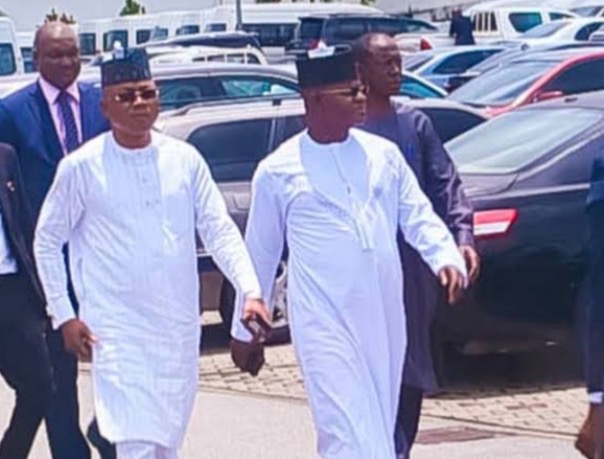
At the time, Adabenege was Personal Assistant to Usman Ahmed Ododo, then Auditor General for Local Governments in Kogi State. That office is constitutionally responsible for auditing LGA finances.
Ododo later became Governor, succeeding Yahaya Bello. This continuity is not incidental. It establishes access, proximity, and control over the local government financial system.
Cash at this scale does not build roads, light communities, or improve healthcare. If even a fraction of the nearly ₦800 million withdrawn from LGA linked inflows had been deployed for rural electrification, large parts of Kogi East would not still be in darkness.
Why the Payments Refused to Stop
Perhaps the most telling detail is that these so called repayments continued for nearly 26 months, even after the tenure of the elected LG Chairmen expired. They only stopped about a month after December 14, 2023.
This places the mass reappointment of former LG Chairmen as Special Advisers in a new light. It looks less like governance and more like silence management.
The Bank’s Role Cannot Be Ignored
Banks are not passive pipes. They are regulated gatekeepers.
This scheme required senior level loan approvals, tolerance of structured deposits, repeated overlooking of anti money laundering red flags, and facilitation of extraordinary cash withdrawals.
Corporate innocence does not survive these facts.
Why This Matters Now: Local Government Autonomy
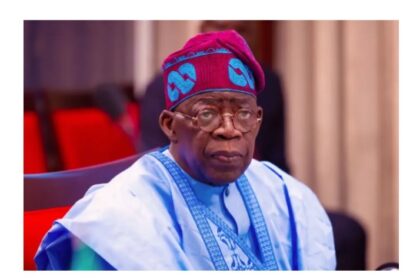
This case goes beyond one state or one trial. It reinforces why President Bola Ahmed Tinubu must fully implement the Supreme Court judgment on local government autonomy.
In December, during his meetings with governors, President Tinubu was unambiguous. He said he has both the yam and the knife, and that he would cut short governors’ interference in local government funds if they do not stop dipping their hands into council accounts.
The evidence now before the court shows exactly why that warning matters.
Local governments are the closest tier of government to the people. When their funds are siphoned, communities suffer first. Roads collapse. Clinics shut down. Rural electrification stalls. Poverty deepens.
This is one of the major structural problems in Nigeria today. A local government system that cannot function independently cannot deliver development.
Any government or political movement that genuinely commits to protecting local government funds and enforcing full autonomy will not only fix governance at the grassroots, it will significantly sway the electorate. Nigerians understand, perhaps more than ever, that development does not start from Abuja. It starts from their wards, their councils, and their communities.
A State Explained by Numbers
This case explains abandoned projects, stalled development, and why massive allocations never translated into visible progress.
The money did not vanish.
It was withdrawn.
Now that the trail is in open court, Nigeria must decide whether this is just another headline, or the moment accountability finally follows the money.