


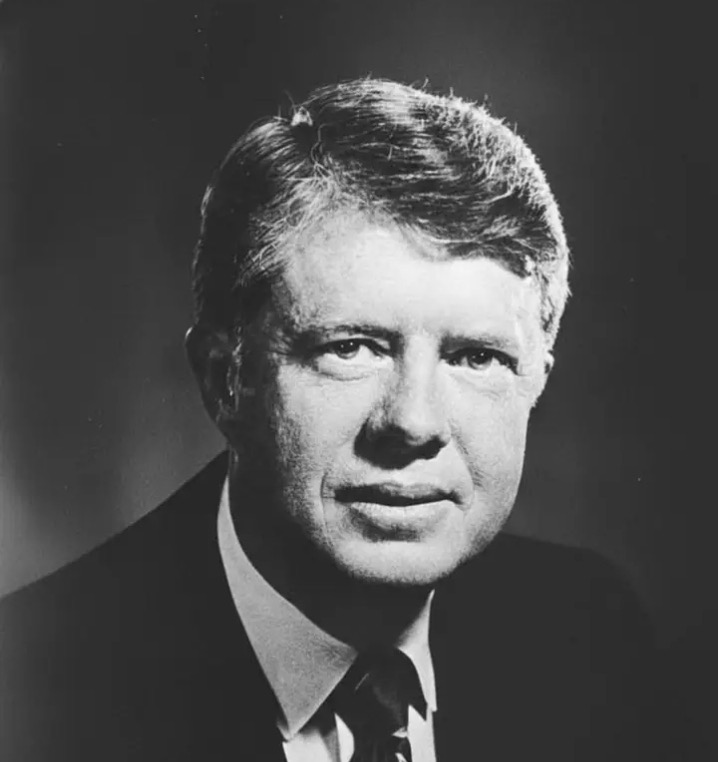
They mocked him for being too kind. Then he stopped a 30-year war that no one else could end. Jimmy Carter never looked like what America thought a president should be.
He carried his own luggage. He wore cardigan sweaters in the Oval Office and asked Americans to turn down their thermostats. He taught Sunday school. He spoke in soft Georgia drawl about love and sacrifice when political consultants said voters wanted strength and dominance.
Washington called him weak. Political opponents called him naive. Comedians turned his decency into late-night punchlines.
But in September 1978, that quiet man accomplished something that had eluded every leader before him.
He ended a war that had consumed two nations for three decades.
Egypt and Israel had fought four brutal wars since 1948. Thousands had died.
Generations grew up knowing only enemies across the border. Every peace attempt had shattered against walls of history, trauma, and pride. The conflict seemed permanent, woven into the identity of the region itself.
Jimmy Carter believed otherwise.
By 1978, his presidency was struggling. Inflation squeezed American families. Gas lines stretched around blocks. His approval numbers had collapsed. Political advisers begged him not to risk his remaining credibility on an impossible peace negotiation.
Carter did it anyway.
He invited Egyptian President Anwar Sadat and Israeli Prime Minister Menachem Begin to Camp David, the secluded presidential retreat in the Maryland mountains. No media circus. No public grandstanding. Just thirteen days locked away from the world with one mission.
He told them: we stay until we find peace, or until we have truly exhausted every possibility.
The talks nearly died within hours.
Sadat and Begin carried decades of pain. Begin had survived the Holocaust, losing most of his family. He believed Israel could never afford to show weakness again. Sadat had led Egypt through wars that cost thousands of Egyptian lives. He believed his people deserved an end to endless bloodshed.
They refused to sit together. They shouted through intermediaries. They walked out of meetings. The gaps seemed unbridgeable.
Carter’s own team urged him to end the summit quietly and minimize the damage. If it collapsed publicly, it would haunt his reelection campaign.
Carter refused to quit.
Each night, he walked alone through the wooded paths around Camp David. He prayed. He wrote notes by hand. He stopped thinking like a politician trying to win and started thinking like a human being trying to heal.
On the eleventh day, Begin announced he was leaving.
The negotiations were over.
Carter went to Begin’s cabin with a simple request. Would Begin sign photographs for Carter’s grandchildren? Just some pictures with their names.
As Begin carefully wrote each child’s name, Carter spoke quietly. About legacy. About what outlasts political power. About the stories we leave for those who come after us.
He did not threaten. He did not bargain. He asked one question, gently:
What will you tell your grandchildren about this moment?
Begin stayed.
Two days later, on September 17, 1978, Anwar Sadat and Menachem Begin signed the Camp David Accords. The Sinai Peninsula was returned to Egypt. Diplomatic relations were established between former enemies. A framework for peace replaced decades of war.
The border violence that had claimed hundreds of lives stopped.
Sadat and Begin received the Nobel Peace Prize that year.
Carter did not.
Within months, his presidency unraveled. The Iran hostage crisis consumed his final year in office. Fifty-two Americans were held captive for 444 days. Carter refused to sacrifice their lives for political theater or military spectacle. The restraint that history would later honor, voters punished in real time.
In November 1980, he lost the presidency in a landslide. The hostages were released minutes after Ronald Reagan was sworn in.
The narrative seemed complete. Jimmy Carter, the failed president.
But Carter was never finished.
He returned to Plains, Georgia. To the same modest house he had lived in before the White House. To teaching Sunday school at Maranatha Baptist Church. To asking himself what responsibility meant when cameras were gone and power was stripped away.
His answer was not retirement. It was work.
He picked up a hammer and joined Habitat for Humanity. Not for photo opportunities. Not symbolically. He spent decades building houses with his own hands, sweating in the sun, climbing ladders well into his eighties and nineties, working alongside volunteers who could barely believe a former president was framing walls beside them.
He founded the Carter Center, dedicating himself to eradicating diseases the world had forgotten, monitoring elections in fragile democracies, mediating conflicts no one else would touch.
He lived simply. He wrote books. He showed up.
In 2002, twenty-two years after voters rejected him, the Nobel Committee finally recognized what history had revealed. Jimmy Carter received the Nobel Peace Prize for decades of tireless humanitarian work.
In August 2015, doctors told him melanoma had spread to his brain and liver. He stood before cameras, calm and smiling, and said he was at ease with whatever came. No self-pity. No drama. Just grace.
The cancer went into remission. Carter went back to work.
On December 29, 2024, James Earl Carter Jr. died at home in Plains, Georgia. He was one hundred years old.
By then, the verdict of history had overturned the verdict of elections.
The Camp David Accords still held.
Forty-six years of peace between Egypt and Israel. Entire generations alive because one man refused to accept that failure was inevitable.
Carter never governed through fear. He never mistook cruelty for strength. He believed leadership meant appealing to the best in people, even when that choice cost him power.
He once asked two bitter enemies to think about what they would tell their grandchildren.
That question saved thousands of lives.
The man they called too weak for the presidency left behind something far rarer than political dominance. He left a blueprint for leadership rooted in moral courage, relentless service, and stubborn faith in human goodness.
He did not always win.
But he changed the world.
And he proved that kindness, practiced without spectacle or surrender, can outlast every headline and rewrite every hasty judgment written in the heat of the moment.