


In 2001, a new doctrine entered global politics under the label “the war on terror”. Standing before the American public, George W. Bush declared: “Either you are with us, or you are with the terrorists.”
This binary framing redrew the global order. For the first time, states were forced into a rigid alignment: support the campaign or risk being classified as adversaries. Diplomatic missions carried warnings and threats across capitals. In Pakistan’s case, then-president Pervez Musharraf later revealed that his country was told to cooperate or face being “bombed back to the Stone Age”.
From Compliance to Exploitation
Under this pressure, states joined the campaign out of fear or leveraged it to eliminate domestic opponents under the cover of a ready-made accusation. Yet, by 2026, a central question remains: what did this global campaign actually produce?
To answer that, the timeline must be traced further back.
Structural Roots: Repression Before the Doctrine
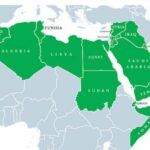
Since the 1950s, large parts of the Arab world had already been shaped by exclusionary governance. Military-led regimes dominated political life, suppressing dissent and criminalising opposition. Citizens were left with a binary choice: silence or imprisonment.
This environment did not produce stable societies. Instead, it entrenched authoritarianism and distorted social values. Intellectuals and scholars were often labelled as threats, while public life elevated figures lacking substance or credibility. Cultural output reflected this imbalance, with serious intellectual work emerging from prison cells, while public discourse deteriorated in quality.
The mechanisms used to consolidate power domestically later evolved into tools that justified external intervention. What began as internal repression became a gateway for foreign actors to intervene, occupy territories, and reshape entire states under the justification of combating terrorism.
“Terrorism” as a Strategic Umbrella
Over time, the term “terrorism” expanded into a broad, undefined label. It became a strategic umbrella used to legitimise military campaigns and political agendas.
Under this banner:
– The United States conducted military operations in Yemen and deployed white phosphorus in Fallujah, Iraq.
– Bashar al-Assad justified chemical attacks against civilians in Syria as part of counter-terror operations.
– Russia reduced Chechen cities to rubble under the justification of combating extremism.
Across these cases, the pattern is consistent. Destruction, displacement, and mass casualties were reframed under a single justification: counter-terrorism.
This aligns with the concept of “creative chaos”, a term associated with Condoleezza Rice, reflecting a strategic vision where instability itself becomes a tool for reshaping regions.
A War Without Clear Foundations
The trajectory of these conflicts can be compared to a military exercise recounted by participants: a full football match played without a ball, yet with referees, penalties, and strict enforcement.
Players ran, passed, argued, and competed as if the game were real, despite the absence of its core element. The fear of punishment ensured full compliance with an illogical framework.
This analogy captures the nature of many wars in the region. All structures of conflict are present, yet the foundational logic is absent. Meanwhile, outcomes are claimed by actors operating at a distance, shaping events without direct exposure to their consequences.
Political Will Versus Structural Suppression
A defining moment illustrating this contradiction occurred during Algeria’s first fair elections, where Islamic movements secured approximately 80 percent of the vote. Despite this mandate, the military intervened, halted the process, and pushed the country into years of instability.
The episode raised a fundamental question: who truly holds public legitimacy?
This question continues to confront governments across the region. Should resources be directed towards development and institutional reform, or continue to be consumed by cycles of repression and conflict?
Media Framing and Narrative Control
Following the events of September 2001, media landscapes were saturated with clerics, analysts, and commentators warning against terrorism and framing it as a societal epidemic.
Islam, a religion rooted in peace and stability, was repeatedly placed in a defensive position, as if requiring constant justification. Over time, this narrative became institutionalised, shaping both domestic and international perceptions.
Outcomes After Two Decades
By 2026, the outcomes of the “war on terror” are measurable:
– Cities occupied or destroyed
– Strategic corridors brought under external control
– Economic resources drained
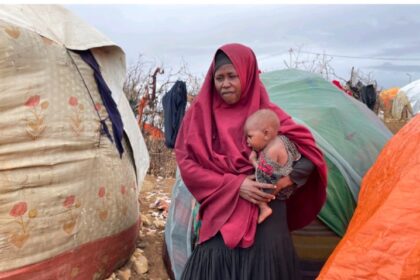
– Societies fragmented
All under a broad and flexible label that justified sustained intervention.
The result closely mirrors the earlier analogy: a prolonged conflict played without a clear foundation, yet with very real consequences.
Strategic Lessons and the Path Forward
The long-term implications highlight a critical principle: prevention outweighs reaction. For Arab states, the strategic choice is increasingly clear:
– Invest internally in development, stability, and open political engagement
– Or continue reliance on authoritarian mechanisms that may later justify external intervention
The trajectory demonstrates that the “war on terror” often begins with internal policies and ends with external interference, accompanied by significant losses in both resources and human lives.
Final Assessment
The recurring pattern is consistent. The primary beneficiaries of these conflicts are rarely those who fight them directly. Instead, gains are concentrated among those who initiate, manage, and observe these conflicts from a distance.
The cycle continues, shaped by narratives, power structures, and strategic interests that extend far beyond the battlefield.
– Sunna Files