




By Prof. Johnson Afolabi
As the 2027 general elections approach, with several contenders already expressing interest in the Kogi West Senatorial seat, it is important to recognize that legislative representation is ultimately shaped by capacity, competence, and the level of acceptance a candidate enjoys among the people.
Electoral cycles are not only about rotation of office but about sustaining effective representation that can translate into measurable gains for the district at the national level. In this regard, experience remains a central factor in determining who is best positioned to advance the interests of Kogi West.
Kogi State must present its best to the National Assembly to have vocal voices that represent the entire state. This is not merely a call for participation in the electoral process, but a reminder that the strength of representation defines the reach of every Senatorial district and its contribution to the state as a whole. The National Assembly is a place where influence is built through experience, sound judgment, and the ability to engage national issues with clarity and purpose. When Kogi State puts forward its most capable representative, it not only secures stronger advocacy for its own interests but also reinforces its role as a steady and credible voice for the interest of its people in national affairs.
Senator Smart Adeyemi stands within this context as a figure with extensive legislative exposure and tested competence, having served three terms in the National Assembly with unmatched records of legislative achievements. His years in the Senate have provided him with institutional experience that is difficult to replicate within a short period. That depth of service has also positioned him to understand the inner workings of lawmaking, committee engagement, and national negotiations that shape development outcomes for his constituency.
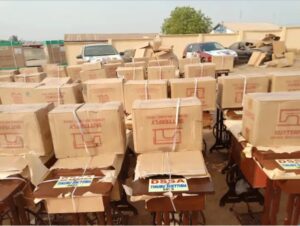
Beyond legislative experience, he is widely regarded as a representative with strong connection to his constituents and a consistent focus on their welfare. Over the years, he has maintained a presence that reflects accessibility and responsiveness to local concerns. His public service record includes numerous constituency projects across different communities in Kogi West, reflecting efforts aimed at addressing infrastructure, education, and community development needs.
He also carries a notable record of legislative activity, including sponsorship and support of several bills that cut across key sectors such as education, health, governance, and economic regulation. This combination of constituency interventions and national legislative engagement places him among lawmakers whose contributions extend beyond symbolism into practical representation. For many in Kogi West, his profile reflects continuity, familiarity, and a sustained commitment to public service within the district.
Senator Smart Adeyemi of Kogi West Senatorial District has remained one of the most experienced and visible voices in Nigeria’s upper legislative chamber. His years in the National Assembly have placed him in a position where his contributions are measured not only by presence but by the depth of engagement in national debates and policy formulation. Over time, he has come to represent continuity in legislative service for Kogi West, a factor that continues to shape discussions around representation in the district.
A senator embodies the character and aspirations of his senatorial district, while also carrying the wider voice of the entire state. His intellect, clarity of thought, and manner of engaging national issues reflect not only personal ability but the collective interest and dignity of the people he represents. When he speaks on matters of policy and national direction, he does so as a trusted custodian of public trust, shaping perceptions and advancing solutions that mirror the values, concerns, and hopes of his state.
Representative democracy gains strength when elected officials are allowed sufficient time to understand institutional processes and convert that understanding into measurable outcomes. Frequent changes in representation often disrupt legislative momentum and weaken the ability of a district to secure long term influence within parliamentary structures. Stability in representation allows for deeper participation in committee systems and policy negotiations that shape national direction.
Legislative effectiveness is rarely immediate. It develops through familiarity with parliamentary procedures, committee assignments, and sustained engagement with policy actors. Lawmakers who remain longer in office tend to acquire stronger institutional memory, which improves their capacity to sponsor, defend, and refine bills that reflect constituency interests. In this context, continuity becomes a practical instrument of governance rather than a political sentiment.
Kogi State and Kogi West in particular have over the years participated actively in Nigeria’s democratic space through its representation in the National Assembly. The district has produced senators and federal lawmakers who have contributed to national discourse. Among them, Senator Smart Adeyemi has maintained a prominent legislative presence, marked by experience, exposure, and consistent participation in lawmaking activities that touch on both national and constituency development.
Senator Smart Adeyemi, a distinguished legislator and holder of national honour recognition, has built a profile defined by legislative engagement and public service experience. His background in journalism and public communication further strengthens his ability to articulate issues within and outside the chamber. These qualities have contributed to his standing as one of the more visible senators from Kogi West in recent years.
His legislative work reflects a broad interest in institutional development and sectoral reform. Over successive terms, he has participated in debates and contributed to bills that address education, health care, infrastructure, governance reform, and economic regulation. His sponsorship record places him among lawmakers with sustained interest in shaping legal frameworks that affect both federal and subnational governance.
A significant part of his legislative focus has been on education and human capital development. His sponsorship of the Federal University of Agriculture Kabba seeks to expand access to specialized agricultural training and research in Kogi West. In the same direction, the establishment of the School of Mines and Geological Studies in Kabba reflects a policy interest in leveraging natural resource potentials and building technical capacity within the region.

Health sector interventions also feature prominently in his legislative agenda. The proposed Federal Medical Centre Kabba and the Federal University of Medicine and Medical Sciences Egbe aim to improve access to quality healthcare services and medical education in Kogi West. These initiatives, if fully realized, would reduce pressure on existing health institutions while expanding training opportunities for medical professionals in the region.
His legislative interests extend to infrastructure, housing regulation, and public administration. The Advanced Rent Regulation Bill addresses concerns around housing affordability and tenant protection in urban areas. The National Building Code Bill contributes to improved standards in construction and safety regulation. These efforts reflect an understanding of the structural challenges facing urban development in Nigeria.
Legal and electoral reforms also appear within his sponsorship portfolio. The Electoral Act Amendment Bill and the Constitution Alteration Bill indicate participation in ongoing national conversations about democratic consolidation and governance improvement. These legislative efforts aim at strengthening institutional credibility and improving electoral processes across the federation.
Economic and administrative reforms form another dimension of his legislative work. The Federal Capital Territory Inland Revenue Service Bill seeks to improve revenue administration efficiency, while amendments related to university teaching hospitals governance aim to enhance institutional accountability and performance in public health administration. These initiatives demonstrate engagement with systemic governance issues.
Across his legislative career, Senator Smart Adeyemi has also been associated with active participation in debates and committee work. His exposure within the National Assembly has allowed him to build relationships across political blocs and policy groups. Such networks are often critical in advancing bills from introduction to committee consideration and eventual passage.
From a comparative standpoint, legislative continuity offers Kogi West a strategic advantage in national representation. Lawmakers with extended tenure tend to occupy stronger positions within committee structures, where budgetary decisions and policy reviews are often shaped. This positioning can translate into greater visibility and influence for the constituency at the federal level.
The consideration of a fourth term for Senator Smart Adeyemi therefore raises broader questions about institutional memory, policy continuity, and regional advantage. His established networks within the legislature, combined with years of experience, place him in a position where continued service could potentially strengthen Kogi West’s influence in national decision making processes.
Political leadership within the All Progressives Congress in Kogi State is faced with decisions that carry long term implications for representation and governance outcomes. Retaining experienced legislators is often linked with improved access to federal opportunities, stronger advocacy for constituency projects, and more effective navigation of legislative procedures that determine resource allocation.
The presence of seasoned lawmakers in the Senate also contributes to internal party stability and institutional balance. Experience within legislative chambers allows representatives to serve as stabilizing figures in policy negotiations and party coordination. In Kogi West, such continuity could translate into more consistent advocacy for development priorities and federal engagement.

In considering the trajectory of Kogi West, it becomes necessary to evaluate representation not only in terms of rotation but also in terms of effectiveness and accumulated institutional capacity. Senator Smart Adeyemi’s legislative history presents a case for sustained experience as a tool for enhancing regional influence and policy outcomes at the national level.
Nigeria’s legislative history provides clear examples of how continuity in office can translate into influence and policy impact. In the National Assembly, lawmakers such as Nicholas Mutu, who has served continuously since 1999 in the House of Representatives, demonstrate how sustained presence strengthens institutional knowledge and legislative authority. Senator Ahmad Ibrahim Lawan also reflects this trajectory, having moved from the House of Representatives into the Senate and maintained uninterrupted service since 1999. Within the Senate, Senator David Mark’s long tenure of about two decades stands as a reference point for how extended service can consolidate leadership roles, deepen committee influence, and shape national direction. These examples show that legislative power is not built quickly but developed through time, consistency, and accumulated responsibility.
Comparable patterns exist beyond Nigeria and further reinforce the value of continuity in representative institutions. In the United States Congress, senior lawmakers such as Chuck Grassley, serving since 1981, and Ed Markey, serving since 1977, have built significant influence through long years of service.
Members of the House of Representatives, including Hal Rogers and Chris Smith, both in office since 1981, illustrate how experience translates into leadership positions within committees and policy negotiation structures. In the United Kingdom, Edward Leigh, in service since 1983, and Barry Sheerman, since 1979, reflect a parliamentary culture where long service is associated with policy expertise and institutional stability. In Germany’s Bundestag, figures such as Gregor Gysi have also demonstrated how sustained parliamentary participation builds authority and policy impact over time. Across these systems, experience remains a core currency of influence.
The importance of experience is most visible in the committee system, where much of legislative work is shaped before it reaches plenary sessions. Bills are refined, negotiations are conducted, and policy details are settled within these structures.
Lawmakers with longer service tend to occupy stronger positions within these committees, giving them greater capacity to influence outcomes that affect their constituencies. Senior legislators also tend to develop stronger access to leadership networks within the National Assembly and across government institutions. This access often translates into improved advocacy capacity for constituency interests, including project allocation and policy attention.
In Kogi West, these lessons are particularly relevant when evaluating representation and legislative effectiveness. The district stands to benefit from continuity in legislative service, where accumulated experience can be translated into stronger national influence and sustained advocacy.
Senator Smart Adeyemi’s years in the National Assembly place him within this category of experienced legislators whose exposure and institutional knowledge can strengthen the voice of Kogi West. Retaining such experience is not simply a political preference but a strategic consideration for ensuring that the district maintains relevance within national legislative processes and continues to secure meaningful developmental outcomes through effective representation.
Kogi State and also Kogi West in particular should not become a place where legislative neophytes and inexperienced representatives are produced at every election cycle. If the district is to grow and remain competitive among other progressive regions, it must give greater weight to competence rather than convenience and consistently present its most capable voices to secure long term development and stronger national representation.