


By Abdulkarim Abdulmalik
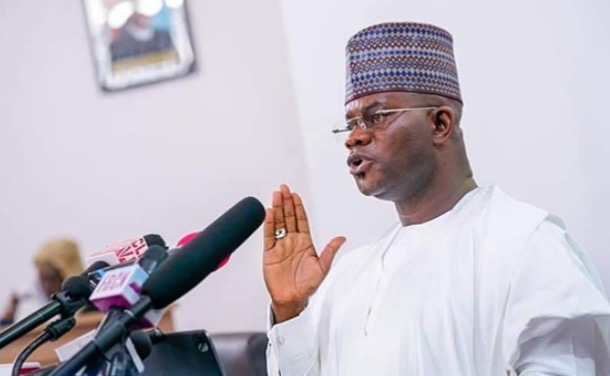
Former Governor Yahaya Bello recently called on Nigerians, especially young political leaders and public office holders, to embrace unity, patience, and service to humanity as the foundation for national development and lasting leadership.
Bello, who governed Kogi State from 2016 to 2024, made the appeal while reflecting on the challenges facing Nigeria’s democracy and the growing impatience among many young people seeking quick political success and instant wealth.
According to the former governor, the future of Nigeria would not be secured by noise, bitterness, or division, but by leaders who are willing to sacrifice personal ambition for the collective good of the people.
He stressed that leadership is not about occupying public office alone, but about leaving behind institutions, opportunities, and values that will continue to benefit society long after one leaves power.
“Unite, be patient, serve the people, and focus on building something that will outlive you,” Bello was quoted as saying during an interaction with political associates and youth groups in Kogi State.
The former governor noted that Nigeria’s greatest challenge is not the absence of talented individuals, but the growing culture of political hostility, ethnic suspicion, and short-term thinking that often destroys meaningful progress before it matures.
He advised young politicians against allowing desperation for power to push them into unnecessary conflicts, hate campaigns, and unhealthy rivalries.
In his words, political ambition without patience and discipline could easily destroy both the individual and the society they aspire to lead.
Observers say Bello’s message comes at a time when political tensions are gradually rising ahead of future electoral contests across the country.
Across social media and public spaces, political conversations have increasingly become aggressive, divisive, and driven by personal attacks rather than ideas and policies.
For many Nigerians, especially the youth, frustration over unemployment, economic hardship, insecurity, and rising cost of living has created an atmosphere of anger and impatience. Analysts believe this frustration sometimes translates into extreme political behavior and intolerance.
Bello, however, urged young Nigerians not to lose hope in the country or in the democratic process.
He emphasized that meaningful change requires consistency, long-term planning, and the willingness to work with others despite differences in tribe, religion, or political affiliation.
The former governor also encouraged leaders at all levels to prioritize people-centered governance instead of political propaganda.
According to him, the true measure of leadership is the impact felt by ordinary citizens in their daily lives — whether through access to education, healthcare, jobs, infrastructure, or security.
During his tenure in Kogi State, Bello often projected himself as a youth-focused leader, appointing several young people and women into government positions.
Supporters argue that his administration opened political space for younger generations in a system traditionally dominated by older political figures.
Critics, however, have at different times questioned aspects of his administration, especially concerning governance priorities and political controversies. Yet even among critics, there is acknowledgment that his emergence as governor at a relatively young age changed conversations around youth participation in Nigerian politics.
Political observers believe his recent remarks may resonate with many young Nigerians who are searching for direction in a country battling deep economic and social challenges.
Across Nigeria today, there is a growing debate about the kind of leadership the country truly needs. While some citizens demand radical and immediate transformation, others argue that nation-building is a gradual process that requires patience, institution-building, and collective sacrifice.
Bello’s statement appears to align with the latter view — that sustainable development cannot be achieved through anger alone, but through strategic cooperation and long-term thinking.
He further advised public officials to avoid the temptation of using power for personal gain or political revenge.
“Power is temporary,” he reportedly told his audience, adding that “what remains after power is how you treated people and what you built for society.”
That message may sound simple, but in Nigeria’s often turbulent political environment, it carries weight.
In recent years, public trust in political leadership has weakened significantly due to corruption scandals, unfulfilled promises, and widening economic hardship. Many citizens now judge leaders less by speeches and more by visible impact.
For this reason, Bello’s emphasis on service and legacy reflects a broader national conversation about accountability and responsible governance.
Religious and community leaders have also repeatedly called for greater unity and tolerance across Nigeria’s ethnic and political divides. With rising insecurity and social tension in several parts of the country, appeals for national cohesion have become increasingly urgent.
Bello’s call for unity therefore touches on an issue that extends beyond politics. In a deeply diverse nation like Nigeria, many believe progress can only happen when citizens learn to cooperate despite their differences.
As the country continues to navigate economic reforms, political transitions, and social pressures, voices calling for patience, unity, and people-oriented leadership are likely to remain part of the national discourse.
Whether Nigerians agree or disagree with Yahaya Bello’s political legacy, his message highlights a truth many citizens already understand: nations are not built overnight, and leadership is ultimately remembered not for slogans, but for lasting impact on human lives.