


By Abdulkarim Abdulmalik
As the Iran-Israel confrontation reshapes Middle Eastern politics, Gulf states are increasingly discovering that geography matters more than ideology. The UAE’s reported outreach to Tehran may signal not weakness, but the emergence of a new regional order in which national survival, economic stability and strategic autonomy take precedence over traditional alliances.
In international politics, survival often triumphs over ideology. Nations may speak the language of alliances, solidarity, and strategic partnerships, but when security, economic stability, and national interests are at stake, they frequently choose pragmatism over sentiment. Recent developments in the Gulf region appear to illustrate this reality in dramatic fashion.
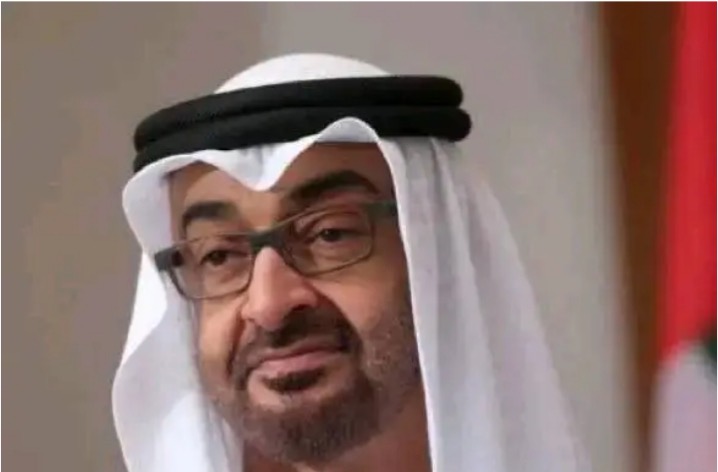
As tensions between Iran, Israel, and the United States continue to reshape the Middle East, reports have emerged suggesting that the United Arab Emirates is pursuing renewed economic and diplomatic engagement with Tehran. Whether viewed as a strategic recalibration or a reluctant concession, the move has sparked intense debate about the future of Gulf security and the changing balance of power in the region.
For years, the UAE successfully projected an image of exceptional stability. Glittering skyscrapers, world-class infrastructure, thriving financial markets, and ambitious development projects transformed the federation into one of the most attractive destinations for global investment. Dubai became synonymous with opportunity, while Abu Dhabi established itself as a major player in international finance and diplomacy.
Yet beneath this image of confidence lies a geopolitical reality that no Gulf state can escape: geography.
Iran is not a distant power. It sits directly across the Gulf, possessing significant military capabilities, strategic depth, and considerable influence throughout the Middle East. While international discussions often focus on the role of Washington, London, or Brussels, Gulf leaders understand that their most immediate security challenges originate much closer to home.
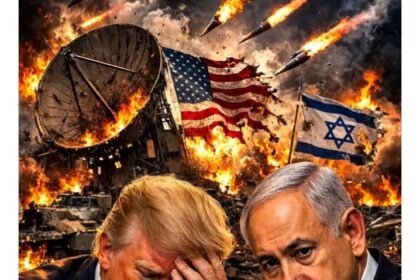
The recent conflict involving Iran, Israel, and the United States has exposed difficult questions about regional security arrangements. For decades, Gulf states relied heavily on American military protection. The United States positioned itself as the guarantor of stability, maintaining military bases, naval fleets, and extensive security partnerships throughout the region.
This arrangement provided reassurance to many governments. It also reinforced an international order in which Washington remained the dominant external power in Middle Eastern affairs.
However, every conflict tests assumptions.
The latest crisis appears to have encouraged regional actors to reassess old calculations. Reports suggesting that UAE officials are exploring significant economic cooperation with Iran reflect a broader trend that has been unfolding for several years. Across the Gulf, governments are increasingly diversifying their diplomatic options and reducing exclusive dependence on any single global power.
This shift should not be interpreted as an abandonment of traditional alliances. Rather, it reflects a growing recognition that regional problems often require regional solutions.
If reports of a proposed $20 billion economic package and expanded cooperation between the UAE and Iran prove accurate, the implications would be substantial. Such a move would signal that economic engagement and conflict management are being prioritised over confrontation and isolation.
Supporters of this approach argue that dialogue is not weakness but wisdom. They contend that countries sharing the same neighbourhood cannot afford permanent hostility. The economic costs of instability are simply too high.
The UAE’s prosperity depends heavily on investor confidence. Global corporations establish headquarters in Dubai and Abu Dhabi because they perceive the country as a safe and predictable environment. Any prolonged military confrontation in the Gulf threatens this perception and carries significant economic consequences.
From this perspective, pursuing accommodation with Iran may be less about surrender and more about safeguarding national interests.
Critics, however, see the situation differently.
They argue that recent developments expose vulnerabilities in Gulf security architecture and reveal the limitations of external guarantees. According to this view, regional governments have been forced to acknowledge uncomfortable realities about their strategic position.
Some analysts contend that the conflict demonstrated that even powerful allies may not always be able—or willing—to provide absolute protection during moments of crisis. This perception has fuelled arguments that Gulf states must become more self-reliant and pursue diplomatic arrangements capable of reducing tensions with neighbouring powers.
Whether one agrees with this interpretation or not, it highlights an undeniable fact: the Middle East is changing.
The era in which regional governments automatically aligned themselves with a single geopolitical bloc appears to be fading. Increasingly, countries are pursuing what might be called “multi-directional diplomacy”—maintaining relationships with competing powers simultaneously.
The UAE exemplifies this trend. It has cultivated strong ties with Western nations while also expanding relations with Asian powers, including China and India. It has engaged in regional normalization efforts while pursuing ambitious economic partnerships across multiple continents.
This flexible approach reflects a broader transformation occurring throughout the Global South.
Indeed, perhaps the most important lesson from this moment lies not in the Gulf but in Africa.
For decades, African nations have often been encouraged—or pressured—to align their foreign policies with the preferences of major external powers. Independent diplomatic initiatives have sometimes attracted criticism, sanctions, or political pressure.
Yet countries around the world increasingly appear willing to chart their own courses.
The debate surrounding UAE-Iran engagement illustrates a larger principle: nations ultimately act according to their perceived interests. They negotiate with whom they must, trade with whom they choose, and pursue policies they believe will enhance their security and prosperity.
African leaders may find valuable lessons in this reality.
The continent faces its own complex security challenges, economic pressures, and geopolitical rivalries. As global power becomes more dispersed, opportunities are emerging for African countries to exercise greater strategic autonomy and diversify international partnerships.
This does not mean rejecting existing alliances. Rather, it means recognizing that national interests should remain the primary guide for foreign policy decisions.
The world is entering an era characterized by shifting alliances, evolving power centres, and growing regional assertiveness. The assumptions that shaped international relations for much of the post-Cold War period are being questioned.
In the Gulf, this transformation is unfolding in real time.
Whether the reported UAE-Iran rapprochement ultimately succeeds remains uncertain. Diplomatic initiatives can falter, political calculations can change, and regional tensions can re-emerge unexpectedly.
What is certain, however, is that governments across the Middle East are reassessing old strategies and exploring new pathways toward stability.
For the UAE, this may represent a pragmatic effort to secure its future in an increasingly unpredictable region. For Iran, it may provide an opportunity to reduce isolation and expand economic engagement. For the United States, it may serve as a reminder that even close allies possess independent interests and priorities.
And for Africa, it offers a powerful case study in the importance of strategic autonomy.
The story unfolding in the Gulf is not merely about Iran, the UAE, or the United States. It is about a changing international order in which nations are becoming less willing to subordinate their interests to distant geopolitical agendas.
The world is reorganising itself before our eyes. The question for governments everywhere is whether they will adapt to these changes—or be left behind by them.
– Abdulkarim Abdulmalik is an Abuja-based Journalist. Email: nowmalik@gmail.com