



By Abdullah Zubair Dantane
There are moments in the life of a nation when politics must give way to the more urgent question of human survival.
The controversial naira redesign policy of the closing months of the Muhammadu Buhari administration was one such moment.
For weeks, Nigerians watched a crisis unfold in markets, banking halls, villages and cities. People spent long hours in queues, not necessarily to withdraw large sums of money, but simply to access enough cash to buy food, pay transport fares or keep small businesses alive. Automated Teller Machines became centres of anxiety. Banks were crowded with angry customers. Traders lost customers because buyers had neither cash nor reliable electronic alternatives. In several places, frustration spilled into protests and violence.
It was against this backdrop that then Kogi State Governor, Yahaya Bello, joined other governors in taking the Federal Government to the Supreme Court.
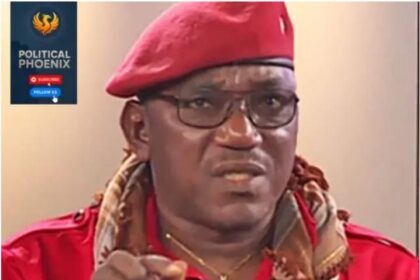
In a revealing interview on Channels Television on the wake of that national crisis that predicted the 2023 General Elections in Nigeria, Bello offered his own explanation of why the governors went to court, why they resisted the implementation of the policy and why he believes former President Muhammadu Buhari was badly advised.
For Bello, the matter was never simply about politics or elections. It was about the ordinary Nigerian caught in the web of a policy that, however well-intentioned it might have been, produced consequences that many citizens could neither understand nor survive.
“Leave the election out of it,” Bello said during the interview. “You see so many property being burnt. You walk through the streets and see people queuing, sleeping at ATMs and in banks. You see small businesses crumbling.”
That, perhaps, was the human face of the crisis.
When a Policy Meets the People
Every government has the right to introduce policies. Indeed, governments are elected partly because they are expected to make difficult decisions. But the ultimate test of any public policy is not merely the elegance of its design on paper. It is what happens when that policy impact positively in the lives of the citizens.
Can the market woman sell her goods?
Can the farmer buy what he needs?
Can the taxi driver buy fuel?
Can the patient get treatment?
Can the small trader survive another day?
These were the questions Bello appeared to be raising when he defended the governors’ decision to challenge the Federal Government.
He argued that the implementation of the naira redesign policy created an economic emergency that went far beyond partisan politics.
At one point in the interview, he described the policy as being “more or less like a policy of funds confiscation,” arguing that although it may have been presented attractively, its implementation produced devastating consequences.
Bello’s argument was that the then President, Buhari of blessed memory may have had good intentions but did not receive the right advice from those responsible for implementing the policy.
“Mr. President was deceived in the implementation,” he said.
It was a serious allegation, particularly coming from a prominent member of the then ruling All Progressives Congress, APC.
But Bello was unapologetic.
Loyalty Is Not Silence
One of the most striking aspects of the interview was Bello’s attempt to redefine political loyalty.
In Nigerian politics, criticism from within a ruling party is often interpreted as rebellion. Party members are frequently expected to defend every government action, whether privately convinced or not.
Bello disagreed with that culture.
“In APC, we disagree to agree,” he said.
The phrase captured his broader argument: that supporting a President does not mean supporting every policy or every adviser around the President.
According to him, genuine loyalty sometimes requires the courage to say, “This is not working.”
Bello insisted that there were people around Buhari whose advice, in his view, damaged the administration and exposed Nigerians to unnecessary hardship.
“Mr. President had the best of intentions and good policies for this country,” he said. “But there are those saboteurs, those that Mr. President had invested confidence and trust in, and they betrayed him.”
The former governor suggested that these individuals had interests different from those of the Nigerian people. Some, he claimed, were driven by personal or political calculations.
His remarks echoed a recurring problem in governance: the distance that can develop between a leader and the reality experienced by citizens.
A President may receive reports. Advisers may present data. Officials may give assurances. Yet, outside the corridors of power, the story may be entirely different.
The people standing in queues understand the policy differently.
The trader whose business has stopped understands it differently.
The elderly person who could not navigate digital banking understands it differently.
The lesson is simple: government must never become too insulated from the people it governs.
The Road to the Supreme Court
Bello said going to court was not the first option.
According to him, governors and other concerned leaders engaged those responsible for the policy and invited them to explain what they intended to do.
But Bello said their concerns were dismissed.
“We challenged them,” he recalled, suggesting that those behind the policy had already made up their minds.
That was when, according to him, frustration turned into legal action.
The Supreme Court became the arena where the disagreement between the Federal Government and the States would eventually be tested.
Bello rejected the suggestion that only a handful of politicians were responsible for the court action.
“It was not just the decision of the three of us,” he said. “All the APC Governors and at least three PDP Governors unanimously took this particular action.”
This is significant because it suggests that the opposition to the implementation of the policy cut across party lines.
When politicians from rival parties find themselves on the same side of an issue, it is often a sign that the matter has moved beyond conventional political rivalry.
For Bello, the case was about protecting citizens from the consequences of what he believed was a poorly implemented policy.
The Judgment and the Lesson
The Supreme Court’s eventual decision became a major turning point in the controversy.
During the Channels Television interview, Bello acknowledged the weight of the court’s observations concerning the implementation of the policy and the role of the President.
“We were before the apex court in the land, and after the Supreme Court, it is God Almighty,” he said.
It was a remarkable statement from a politician defending a legal challenge against a government led by the President of his own party.
Bello said he was personally disturbed that Buhari had been placed in a position where the Supreme Court would eventually find fault with aspects of the government’s action.
He maintained that efforts had been made to raise concerns before the crisis reached the courts.
But, according to him, powerful interests sometimes make it difficult for alternative voices to reach the highest levels of government.
“Sometimes, when those who have certain pecuniary interests are at work, you can be shielded away,” Bello said.
Whether one agrees with all of Bello’s allegations or not, his account raises an important question about leadership: how does a President know when he is receiving honest advice?
It is one of the oldest challenges of power.
Leaders are surrounded by people. But being surrounded by people is not the same as being surrounded by truth.
Some advisers tell leaders what they want to hear. Others tell them what they need to hear.
The difference could determine the fate of millions.
The Ordinary Nigerian at the Centre
Perhaps the strongest part of Bello’s defence was his repeated return to the suffering of ordinary Nigerians.
He spoke about people sleeping at banks and ATMs. He spoke about businesses collapsing. He spoke about visiting hospitals and seeing people in desperate conditions.
“These are people that you came to serve,” he said.
That sentence should remain at the centre of every debate about public policy.
Government exists to serve people.
Economic policies should strengthen livelihoods, not make survival more difficult.
Reforms may sometimes be painful. But pain without adequate preparation, communication and protection for vulnerable citizens can quickly become a crisis.
The naira redesign episode demonstrated the importance of planning for the human consequences of economic decisions.
It is not enough to announce a policy. Government must also ensure that the infrastructure required to support that policy is available.
If citizens are expected to depend more heavily on electronic transactions, those systems must work.
If old currency notes are to be withdrawn, sufficient new notes must be available.
If deadlines are imposed, they must reflect the realities of a country as large, diverse and economically complex as Nigeria.
These are lessons that go beyond one administration and one policy.
Beyond Yahaya Bello’s Defence
Yahaya Bello’s interview was, in many respects, a defence of his own role in one of the most controversial economic crises of the Buhari era.
But it was also something more.
It was a reminder that political leadership should not mean blind obedience.
There is a difference between loyalty and silence.
There is a difference between defending a government and refusing to see the suffering of the people.
Bello insists that his opposition to the policy was motivated by concern for Nigerians and, paradoxically, by loyalty to the then President, Buhari himself.
In his view, allowing a bad policy to proceed unchecked would have been a greater betrayal than resisting it.
That is the political argument he has placed before Nigerians.
History will continue to debate the motives, the politics and the personalities behind the naira redesign crisis. There will be disagreement about who knew what, who advised whom and whether political considerations played a role.
But there is one aspect of the episode that remains difficult to dispute: ordinary Nigerians bore the heaviest burden.
They were the ones in the queues.
They were the ones whose businesses suffered.
They were the ones who discovered that a policy designed in offices could suddenly determine whether they could buy food, pay transport fares or access their own money.
That, perhaps, is the enduring lesson from Yahaya Bello’s account: the true measure of government policy is not how beautifully it is explained in a conference room, but how mercifully and effectively it works in the lives of the people.
When the people are suffering, those in power must listen.
And when advisers get it wrong, leaders must have the courage to change course before a policy meant to solve a problem becomes a bigger problem itself.
– Abdullah Zubair Dantane is a public affairs analyst based in Kaduna