


American foreign policy needs a fundamental rethink
By Abdullah Zubair
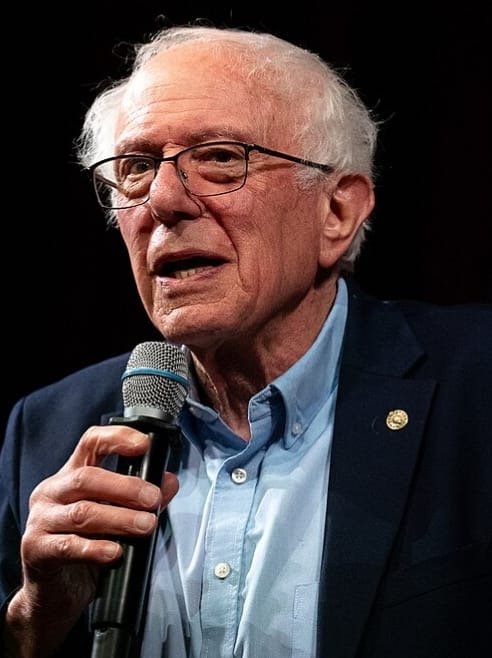
There is a particular kind of political statement that refuses to disappear after the headlines have moved on. Senator Bernie Sanders’ latest warning about America’s wars belongs to that category.
“The war in Vietnam was based on a lie. The war in Iraq was based on a lie. The war in Iran is based on a lie, in my view,” Sanders said recently while arguing that American foreign policy needs a fundamental rethink.
The words are blunt. They are also deliberately provocative. But behind them lies a question much bigger than Sanders himself: How much truth should citizens be given before their governments send them to war?
That question matters not only in Washington. It matters everywhere, including countries such as Nigeria, where citizens have watched foreign interventions reshape the Middle East, Africa and the global economy.
Sanders draws a line connecting three different conflicts separated by decades. Vietnam was a Cold War confrontation. Iraq was invaded in 2003 after the George W. Bush administration argued that Saddam Hussein possessed weapons of mass destruction. Iran represents the latest and most dangerous chapter in the continuing struggle over American and Israeli policy toward Tehran.
Although the circumstances are different with their different historical contexts, Sanders believes that the political mechanism is familiar: present a compelling threat, convince the public that military action is necessary, and only later confront the consequences.
Vietnam: The Warning from History
The Vietnam War remains one of America’s most painful historical experiences.
The United States became increasingly involved in Vietnam during the Cold War, with successive administrations portraying the conflict as part of a global struggle against communism. The Gulf of Tonkin incidents of 1964 became a crucial justification for expanding American military involvement.
But subsequent investigations and historical evidence seriously challenged the official account of the second reported Gulf of Tonkin attack. Sanders has long argued that the American public was misled about the circumstances that helped produce the escalation.
The human cost was enormous. More than 58,000 Americans died, while millions of people across Vietnam and neighbouring countries were killed or affected by the wider conflict. Sanders has repeatedly described Vietnam as a catastrophe that devastated an entire generation.
The lesson is crystal clear: when governments exaggerate or distort threats, ordinary people ultimately pay the bill.
Iraq: The Weapons that were Never Gound
Nearly four decades later came Iraq. The argument for invading Iraq in 2003 rested heavily on claims that Saddam Hussein possessed weapons of mass destruction and represented an imminent danger.
Those weapons were never found.
The failure was not merely an intelligence mistake. The case for war had been presented to the American public with extraordinary certainty. President George W. Bush had warned of the danger of Saddam Hussein acquiring a nuclear weapon, while supporters of the invasion argued that waiting for absolute proof could be disastrous.
Sanders, who opposed the invasion, has repeatedly pointed to Iraq as a defining example of how intelligence, political assumptions and fear could combine to produce disastrous policy. He says the war cost thousands of American lives, hundreds of thousands of Iraqi lives and trillions of dollars.
The tragedy was compounded by what followed: sectarian violence, displacement, institutional collapse and the destabilisation of an already fragile region.
Iraq therefore remains a cautionary tale about the difference between winning a war and building a peaceful future after the war.
Iran: The Question Sanders wants Americans to Ask
Now Sanders is asking whether history is repeating itself with Iran. In his latest remarks, he was pressed to explain what he meant by saying the Iran war was “based on a lie.”
His answer was specific: he challenged the claim that the Iranian government was prepared to attack the United States. He also offered his personal assessment that Israeli Prime Minister Benjamin Netanyahu had spent decades attempting to persuade Washington to confront Iran. However, Sanders acknowledged that his interpretation was his own view and might not be completely correct. And that qualification matters.
Saying that a war is “based on a lie” is an enormous claim. It should not be treated as an established fact merely because a prominent senator says it. The motives, intelligence assessments and military calculations surrounding the Iran conflict deserve independent and unbiased examination.
Nevertheless, Sanders’ larger argument deserves serious attention. His concern is that Americans may once again be asked to accept extraordinary military action without receiving sufficient evidence about the necessity, legality and likely consequences.
The Real Casualty may be Trust
Perhaps the most important word in Sanders’ argument is not “war.” It is trust.
Democracies depend upon citizens believing that their leaders are telling them the truth, particularly when the stakes involve human lives. Once governments lose that trust, every subsequent national-security claim becomes harder to believe.
That is why Vietnam still matters. That is why Iraq still matters. And that is why Iran matters.
The question should not be whether Sanders is right about every aspect of the Iran conflict. Further question is whether governments have learned enough from previous wars to provide citizens with transparent evidence before military decisions become irreversible.
For Nigerians, this lesson is especially relevant. Nigeria has experienced the consequences of insecurity, terrorism, disinformation and military intervention. In such an environment, information is not a luxury. It is part of security itself.
A population misled by propaganda can make decisions based on fear. A population denied credible information becomes vulnerable to rumours. And a society divided by competing narratives becomes easier to destabilise.
War Deserves More than Slogans
There is also a danger in the opposite direction. Criticising government claims does not mean automatically accepting every alternative narrative. Governments could mislead, but politicians, activists, influencers and media organisations could also simplify complicated conflicts for political purposes.
The informed citizen therefore has to ask uncomfortable questions on all sides.
What evidence exists?
What is disputed?
Who benefits?
What are the alternatives to military action?
What happens the morning after the bombing stops?
And perhaps most importantly: Who pays the human price?
Sanders’ warning ultimately goes beyond Vietnam, Iraq or Iran. It is a warning about the seduction of war itself.
Wars are often presented as necessary, urgent and unavoidable. Their human consequences, however, are rarely visible when the first arguments are made.
Young soldiers leave home. Families wait. Civilians flee. Economies collapse. Hatred deepens. And decades later, historians are left trying to reconstruct how a country arrived at a decision that seemed, at the time, inevitable.
That is why Sanders’ three-war comparison deserves debate and reflection; certainly not dismissal.
History cannot prevent another war. But history can provide a question powerful enough to slow leaders down:
Before you ask people to fight and die, are you absolutely certain that the story you are telling them is true?