


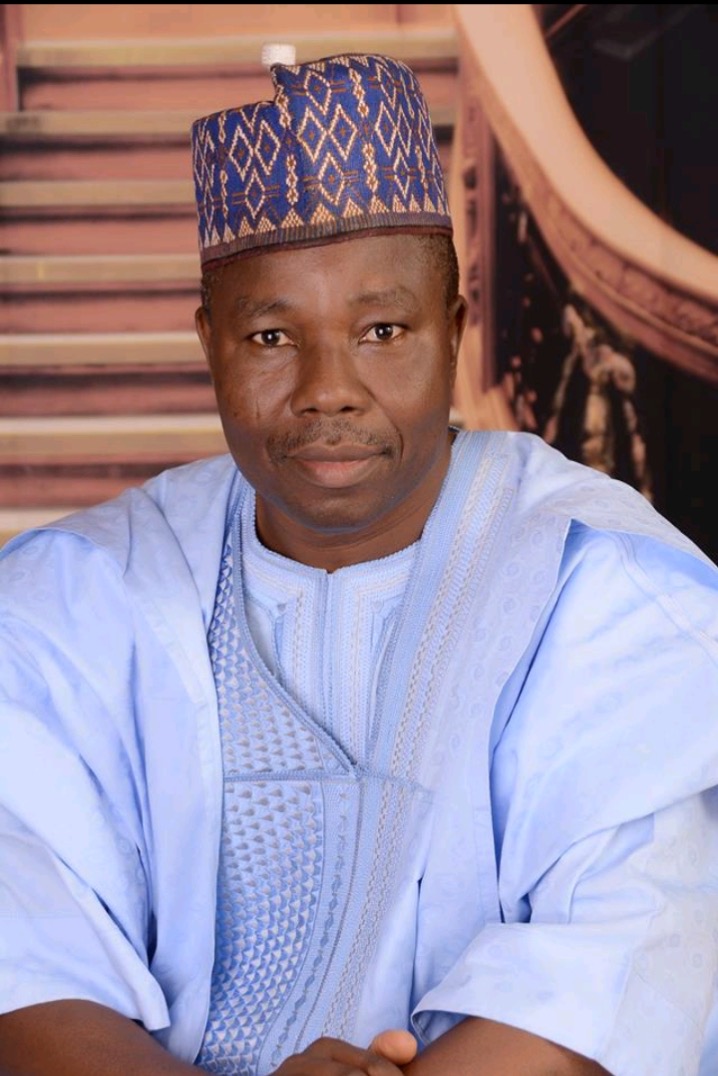
By Yusuf Abubakar Onumoh
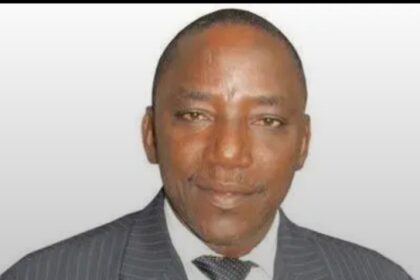
There are men who merely pass through time, and there are those whose minds carve deep inscriptions upon the conscience of their age. Onukaba Adinoyi-Ojo belonged unmistakably to the latter order. Poet, dramatist, journalist, polemicist, and restless intellectual, he lived with the fierce urgency of a man who believed that words were not ornaments of speech but instruments of truth.
Born on 9 March 1960 in Ihima, in the hills of Okehi—then in old Kwara State and now within the cultural heartbeat of Kogi—his life was shaped early by the fertile soil of Ebira heritage and the discipline of learning. At the revered Lennon Memorial College in Ageva, Okene, the young Onukaba first displayed the restless brilliance that would later define him. From there he journeyed to the nation’s premier citadel of learning, the University of Ibadan, where he immersed himself in Theatre and Performing Arts and began sharpening the blade that would become his most formidable weapon—his pen.
In those formative years, destiny arranged encounters that would widen his horizon. During his service year as a reporter covering the aviation beat for The Guardian, he met Olusegun Obasanjo, a meeting that would later grow into a relationship of intellectual engagement and respect. But even as the corridors of power brushed past him, Onukaba never surrendered the independence of his mind. His loyalty was always first to truth.
He later proceeded to New York City in search of deeper intellectual pastures, carrying with him the intellectual fire he had kindled in Ibadan. Across continents and platforms, he remained a writer of rare conviction. As Contributing Editor-at-Large of Ovation International Magazine—alongside his friend and contemporary Dele Momodu—he continued to illuminate public discourse with insight, wit, and fearless commentary.
His literary and journalistic legacy bore the mark of courage. In collaboration with Dele Olojede, he co-authored Dele Giwa: Born to Run, a gripping chronicle of the turbulent circumstances surrounding the tragic death of investigative journalist Dele Giwa during the Dele Giwa parcel bomb assassination of October 19, 1986. In that work, as in many others, Onukaba demonstrated that journalism, when wedded to courage, becomes an instrument of national memory.
Yet, beyond the books and essays stood a man defined by intellectual integrity. He possessed what might be called a Spartan temperament—severe with himself, uncompromising with falsehood, and unsparing in the pursuit of clarity. When the process that led to the ascension of Ado Ibrahim as the Ohinoyi of Ebiraland stirred controversy, Onukaba did not cloak his convictions in diplomatic silence. He spoke openly, wrote fiercely, and argued publicly, not out of malice but out of fidelity to principle.
Such was the temperament of a freethinker who believed that society progresses not by silence but by the friction of honest disagreement.
The theatre of his intellect was not limited to literature or journalism. In 2016, driven by the belief that ideas must sometimes step out of books and into the arena of governance, he ventured into active politics, seeking to become governor of Kogi State.
For him, political participation was not ambition but responsibility—the natural extension of a life spent interrogating power.
But fate, that unpredictable dramatist whose script no mortal edits, brought his earthly narrative to a tragic close. On 5 March 2017, along the Ita-Ikpele highway in Ondo State, the life of this luminous mind ended in a ghastly road mishap as he attempted to evade armed robbers while returning from Otta, where he had gone to felicitate Olusegun Obasanjo on his birthday. It was a cruel paradox: a man who had survived the storms of ideas was claimed by the hazards of a nation still wrestling with the promise of its own destiny.
Yet death, though inevitable, does not erase the architecture of a noble life. The works of Onukaba—among them the memorable Masked Masquerade—continue to breathe with intellectual vitality. His essays carried the clarity of reason, the rhythm of poetry, and the sharpness of moral inquiry. In the literary world he was a beacon of scholarly rigor; in Ebiraland he was a voice of fearless identity; and in Nigeria he was one of those rare citizens who believed that truth must not bow before convenience.
William Shakespeare once wrote, “The evil that men do lives after them; the good is oft interred with their bones.” Yet in the case of Onukaba Adinoyi-Ojo, the reverse seems truer: the good he did through his pen refuses burial. His ideas still walk among us.
And as Aristotle reminds us, “The aim of the wise is not to secure pleasure, but to avoid pain.” Onukaba understood this wisdom in civic terms: he believed that a society guided by justice and equality spares its people the pain of oppression and mediocrity.
Today, the silence he left behind echoes loudly across the intellectual landscape. The literary community mourns the loss of a scholar whose pen cut through fog like morning light. Ebiraland remembers a son who spoke truth even when truth was inconvenient. Nigeria remembers a citizen who insisted that governance must serve the governed.
He was not merely a writer; he was an argument for courage.
He was not merely an intellectual; he was an institution of conscience.
And though he departed before the fullness of his time, the memory of Onukaba Adinoyi-Ojo endures—like a well-written line of poetry that refuses to fade, like a stage performance whose final curtain never truly falls.
For men of such stature do not vanish; they become reference points in the moral geography of their nation.
May his pen rest, though its ink shall never dry.
– Yusuf Abubakar Onumoh, PhD, is a Policy and Development Practitioner, Diplomacy Researcher and Public Affairs Enthusiast.