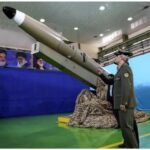



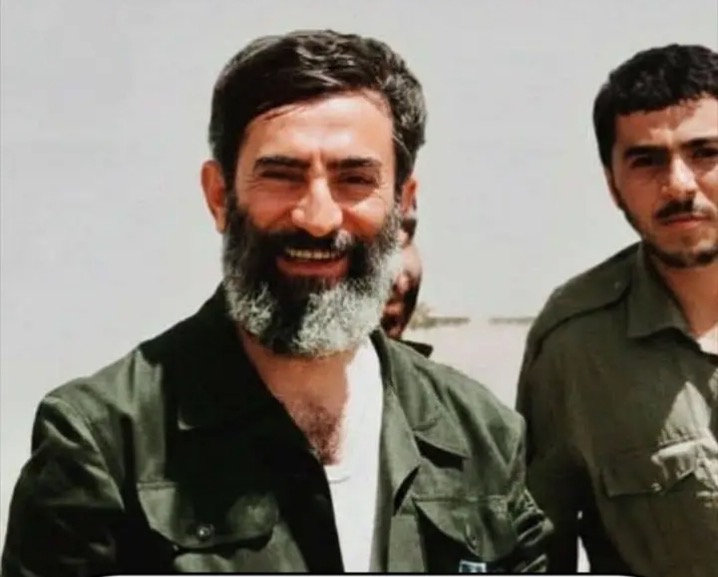
In October 1981, Ali Khamenei demonstrated his direct involvement on the front lines by wearing military uniform while accompanying Iranian troops during Iraq’s invasion. The man who would later succeed Ayatollah Khomeini as Supreme Leader was already exercising national leadership amid the intense turmoil of war.
Serving as Iran’s third president from 1981 to 1989, Khamenei became a central figure in shaping the country’s defense strategy. By 1982, his role grew increasingly critical as Iran’s military began to shift the direction of the conflict. Although initially cautious, alongside several civilian elites, he ultimately supported Khomeini’s vision to continue military operations, even after Iraqi forces had been pushed back from Iranian territory that year.
These are several key points highlighting Ali Khamenei’s role throughout 1982 :
Leadership in Crisis
Elected president in 1981 following the assassination of Mohammad Ali Rajai, Khamenei carried out his duties while still suffering from the effects of a June 1981 assassination attempt, which left his right arm permanently paralyzed.
The Khorramshahr Victory
The year 1982 marked a strategic turning point when Iranian forces, led primarily by the Islamic Revolutionary Guard Corps (IRGC), successfully recaptured the vital port city of Khorramshahr in May. This victory dramatically shifted the balance of power on the battlefield.
Shift in War Strategy
Initially, Khamenei and Prime Minister Mir-Hossein Mousavi were reportedly hesitant about launching a counter-invasion into Iraqi territory. However, out of loyalty to Ayatollah Khomeini’s mandate, Khamenei eventually approved military expansion beyond Iran’s borders.
Transnational Islamic Vision
In 1982, Khamenei reinforced the ambition of “Exporting the Revolution,” stating that the struggle against Iraq aimed to establish an Islamic government under Khomeini’s leadership. He popularized the principle that “Islam recognizes no territorial boundaries.”
Synergy with the IRGC
During this period, Khamenei’s relationship with the IRGC grew stronger. As president, he was involved not only in bureaucracy but also in military budgeting and administrative operations, positioning himself at the core of Iran’s wartime command structure.