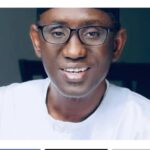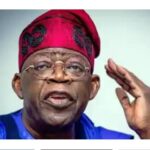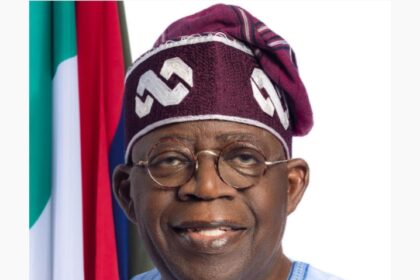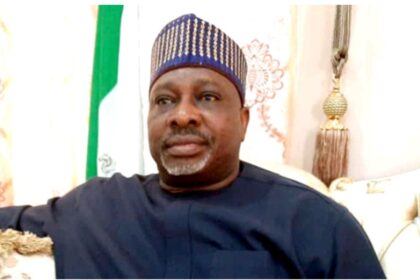



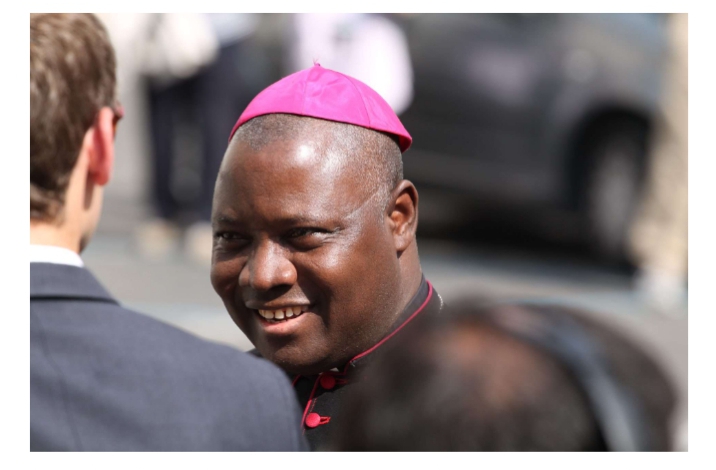
The Archbishop of Abuja Ignatius Kaigama met Nigeria’s President Bola Tinubu after US President Donald Trump threatened military intervention against Islamist militants in the country.
Tinubu received the archbishop at the presidential residence on 4 November, days after Trump announced on social media that the US would re-designate Nigeria as a “Country of Particular Concern” (CPC) under religious freedom legislation “and may very well go in to that disgraced country” to strike jihadist groups responsible for the mass killing of Christians.
Neither Tinubu nor Kaigama reported the purpose of their meeting, but speaking to the German aid organisation Missio Aachen two days later the archbishop warned that “if bombs fall, the collateral damage is incalculable”.
“The US should choose effective diplomatic means instead of military intervention to expand and reform [Nigeria’s] security infrastructure,” he said. “We need to assess why our security have made no progress in fighting this multi-faceted violence for 15 years.”
He said that “corruption is the main reason for the rampant poverty that drives young people into the arms of criminals and terrorists”.
“We must identify those who are appropriating Nigeria’s wealth and transferring it abroad. The US government must ensure that these funds, which belong to the people of Nigeria, are returned. That would help us more than any large-scale military strike.”
However, preaching in Abuja the following Sunday he called on the Nigerian authorities to “ensure that the freedom of religion we profess will not only be a thing of the books, merely written in the constitution, but to take practical steps to enforce it, instead of keeping quiet and watching some fundamentalist groups of people systematically and intentionally and violently try to subjugate or eliminate others, all in the name of God”.
“We should expend our energy not fighting for God, or fighting for territorial expansion of religious influence, but to concentrate on the fight against economic, political, ethnic malaise, immoral activities, and selfish interests,” he said.
“Nigerian leaders have been too complacent, insensitive, and perhaps too afraid to call a spade a spade, which explains the lingering evil of bloodshed and violation of rights. We need leaders who confront, tackle, and challenge evil and injustice, no matter whose ox is gored.”
The advocacy group Muslim Rights Concern accused the Christian Association of Nigeria (CAN) of betraying Tinubu by endorsing the claims of Christian genocide which prompted the US to restore the CPC designation. It said that 62 per cent of federal appointments had gone to Christians under Tinubu.
“CAN’s action is a stab in the back, considering President Tinubu’s preferential treatment of Christians in appointments and other privileges, even above his Muslim compatriots,” said the group’s founder Ishaq Akintola.
“Despite the Nigerian government’s repeated denials of Christian genocide, the US administration has redesignated Nigeria as a country of particular concern. This decision is misplaced, distorted, and misrepresents the situation on the ground,” Akintola said, citing the attacks suffered by Muslims as well as Christians.
There were continued reports of violence across the country, including an attack in which gunmen killed 10 people and set fire to a Catholic church in Benue State last week.
“They killed two farmers who were working on their farms and six others yesterday and another two today,” a resident said on 4 November. The attack on Anwule village, in Oglewu District of Ohimini Local Government Area (LGA), was reportedly a reprisal for the killing of a Fulani herder by the locals in August.
“As we speak, some persons are missing. Today, at about 5 p.m., the attackers also came into the village, but I’m yet to hear of any casualties,” a resident told The Tablet.
The chairman of Ohimini LGA Adole Gabriel confirmed the killings and said the state government deployed security personnel to the area after he reported the attack.
Elsewhere in Benue State, the traditional ruler of the Yelwata community welcomed US plans to act against Christian persecution in Nigeria.
Kumaga Jor, whose domain includes the village where suspected Fulani militants killed at least 200 people in June this year, told reporters in Makurdi that “US military action on the terrorists” was an appropriate response to the violence.
“The situation remains dire as killings go on almost daily with many villages sacked and occupied by the terrorists,” he said.
The Islamic State West Africa Province responded to Trump’s statement on its social media channels, calling him a “reckless American tyrant” and welcoming US military entanglements across Africa in its role as the “global defender of Christians”.
It said such rhetoric would draw the US into conflicts in the Democratic Republic of Congo and Mozambique, and called on Muslims in West Africa to “unite” against the US and its “crimes against African Muslims”.
ISWAP also issued a directive to its fighters to avoid large gatherings, limit their movement and reduce the use of smartphones, in response to intensified US surveillance and drone activity.