Tuesday, 3 Mar 2026
Exclusive insights, data, and analysis for financial market experts.
Explore Now
Home
World
Business
Finance
Politics
Pages
Contact US
Search Page
404 Page
Blog
My News
Opinion
Education
Featured
Global Affairs
Climate Change
Renewable Energy
Politics
Research
Hot
Health
Read History
Environment
Business
Politics
Finance
Technology
Search
Pages
Home
Blog Index
Contact Us
Search Page
404 Page
Personalized
Read History
Categories
Business
Politics
Technology
Environment
Finance
Have an existing account?
Sign In
Follow US
Savannah News Hub
Follow:
513
Articles
News
Alleged ₦80.2bn Kogi Fraud: How ₦3.1bn Kogi LGs Funds Were Lodged into E-traders Account in Eight Months — Witness
January 30, 2026
World
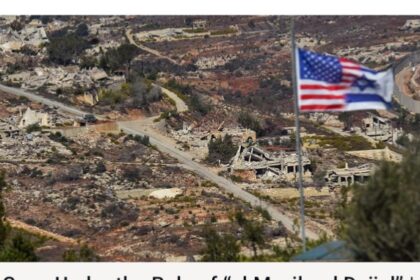
Gaza Under the Rule of “al Masih ad Dajjal”
January 30, 2026
Opinion
*THE SERMON TODAY* Sha’ban 11, 1447 (January 30, 2026) Assalaamun Alaykum Warahmatullah Taallah Wabarakatuhu (Part I) *When Muslims Forgot the Qur’an, They Lost the World* The Qur’an is never just a book to recite. It is a manual for building civilisation, hearts, and history. But somewhere along the path, we began to honour its ink while forgetting its instructions. We beautified its pages while neglecting its rulings. We hung it on walls — but failed to hang its teachings in our lives. And when the Ummah turned the Qur’an into a symbol, instead of a system, it lost not only guidance — it lost the world. *I. The Qur’an Built Civilisations* The early Muslims were few in number. Poor. Persecuted. Yet they recited Qur’an — and lived Qur’an. It raised orphans into leaders. It turned oppressed slaves into generals. It transformed scattered tribes into a global Ummah. The Qur’an built Andalusia, where Muslims, Jews, and Christians studied under its light. It inspired scholars like Al-Ghazali, Ibn Sina, and Ibn Khaldun to advance knowledge in ways the world still benefits from. “And thus We have made you a balanced nation, that you may be witnesses over mankind.” (Qur’an 2:143) *II. When the Qur’an Became a Ritual, Not a Revival* As centuries passed, the relationship changed: Recitation without reflection. Memorisation without transformation. Decoration without devotion. We began to read the Qur’an for blessings — but not for blueprint. We celebrated its Hafiz competitions — but neglected its governance. And so Allah’s Word remained protected — but its people lost their power. “And the Messenger will say, ‘O my Lord, indeed my people have abandoned this Qur’an.’” (Qur’an 25:30) *III. Signs That We Forgot* Today, we see the signs everywhere: Justice is demanded from secular courts, not Islamic ones. Solutions are sought from ideologies, not the Book. Pride is found in flags and races, not in being “servants of the Most Merciful.” Knowledge is celebrated, but wisdom is scarce. We are a people drowning in access to the Qur’an — but starving for its application. *IV. Reclaiming the Qur’an Before It’s Too Late* The Qur’an is not waiting to be changed. It is waiting to be obeyed. If we want honour, it will not come from wealth, armies, or political deals. It will come from this: “Indeed, this Qur’an guides to that which is most just and upright.” (Qur’an 17:9) Revival begins when: We measure success by Qur’anic standards, not worldly trends. We raise children not just to read Qur’an — but to embody it. We demand from ourselves first what we demand from others. The world will not respect us until we respect our own Book again. *Conclusion* When we abandoned the Qur’an, we abandoned the rope that connected us to dignity, justice, and leadership. But Allah’s promise still stands: “And hold firmly to the rope of Allah all together and do not become divided.” (Qur’an 3:103) The Qur’an never failed us. We failed it. It’s time to return. Not just with tongues. But with lives. ______________ (Part II) *Through Their Own Scriptures: How Jewish Texts View Muslims and the World* We are often told that dialogue, tolerance, and interfaith harmony must be built without looking into each other’s scriptures. But what happens when the very books held sacred by a people reveal dangerous ideas about others — especially Muslims? This is not about spreading hatred. It is about uncovering hidden truths from Jewish sacred texts themselves, truths rarely mentioned in polite conversation but crucial for every Muslim to understand. With the rise of Zionism and the brutal oppression of Palestinians, ignoring the ideological foundations behind it would be a disservice to justice and awareness. This is a journey into the Talmud, the Mishnah, and rabbinical commentaries — citing them directly — to understand how deep these attitudes go, and why Muslims must approach political realities with open eyes and firm hearts. *The “Goyim” in the Talmud: A Dehumanised Other* In Jewish texts, the term “Goyim” refers to non-Jews. Muslims, Christians, and all others fall under this category. The Talmud, one of Judaism’s most revered legal and theological texts, contains numerous passages that degrade the Goyim: Sanhedrin 57a: “If a gentile strikes a Jew, he must be killed.” Baba Kamma 113a: “It is permitted to deceive a gentile.” Yebamoth 98a: “All gentile children are animals.” Abodah Zarah 26b: “Gentile girls are in a state of niddah (impurity) from birth.” In these rulings, non-Jews are often portrayed as spiritually inferior, morally suspect, and legally disposable. This is not a fringe view. These are foundational legal opinions within traditional Rabbinic Judaism. Islam, in contrast, elevated non-Muslims under the protection of the Islamic state (Ahl al-Dhimmah) and forbade injustice even against enemies: “And do not let the hatred of a people prevent you from being just. Be just; that is nearer to righteousness.” (Qur’an 5:8) *Islam and Muslims in Rabbinic Thought* Islamic scholars historically noted that some Jewish rabbis saw Islam differently from Christianity, viewing it as less idolatrous. However, this “better” view was limited and strategic. Maimonides (Rambam), one of Judaism’s greatest medieval authorities, wrote in his Mishneh Torah: While Islam is not considered idolatry, Muslims are still viewed as “erring in belief,” and Islamic monotheism is described as deficient because it denies Jewish claims of divine favoritism. In his Letter to Yemen (Iggeret Teman), Maimonides described Islam as a religion destined to be ultimately superseded by Judaism at the arrival of the Messiah. Thus, even in the most “respectful” Jewish readings, Islam is portrayed as a lesser, temporary, and misguided faith. *Religious Roots of Modern Zionism* Zionism is often painted purely as a secular nationalist movement. Yet its deepest ideological roots are nourished by religious superiority and exclusivism. Many Zionist settlers, particularly the religious nationalist movement (Gush Emunim), justify land theft and ethnic cleansing through Talmudic and Torah-based arguments. Examples include: The interpretation of Genesis 15:18 that “God gave the land to the descendants of Abraham” — selectively applied only to Jews. Sotah 35b: Gentile property is “like ownerless desert land” — an idea invoked to justify seizure of Palestinian homes and farms. Berakhot 58a: “The best of the gentiles — kill him” — cited by extremist elements to rationalise violence against Palestinians. The racism is not modern; it is scriptural. The apartheid walls of Gaza and the checkpoints of the West Bank are the physical manifestation of ancient ideological walls drawn centuries ago. *Islam: A Contrast in Divine Mercy* Islam did not call for domination based on ethnicity or bloodline. It called for submission to the Creator and justice to creation. The Prophet Muhammad صلى الله عليه وسلم, in his final sermon, declared: “No Arab has superiority over a non-Arab, and no non-Arab has superiority over an Arab; a white has no superiority over a black, nor a black over a white — except by piety and good action.” (Musnad Ahmad) In the Qur’an: “Indeed, We have honored the children of Adam…” (Qur’an 17:70) There is no “chosen race” in Islam. There is only chosen righteousness. *Conclusion: Eyes Open, Hearts Upright* Knowing these teachings is not about hatred. It is about understanding the ideological roots of political and religious movements that impact Muslims globally. Allah warns us: “You will surely find the most intense of the people in animosity toward the believers [to be] the Jews and those who associate others with Allah.” (Qur’an 5:82) Yet Islam commands us: “And do not let the hatred of a people prevent you from being just.” (Qur’an 5:8) We are not commanded to hate. We are commanded to be aware, strong, and just. To know what is written. To know what is hidden. And to stand, unshaken, upon the truth. Sunna Files _____________ Let’s pray: O Allah, I ask You for the best of begging, the best of du’a, the best of success, the best of knowledge, the best of work, the best of reward, the best of life, and the best of choices. And make me firm, make my scales heavy, fulfill my faith, raise my rank, accept my prayers, forgive my sins, and ask You for the heights above heaven. Ameen!!! _____________ Endeavour to read Surah Al-Kahf (Chapter 18: Verses 1-110). Juma’ah Mabrouq
January 30, 2026
World
The US–Iran War: Why It Keeps Approaching but Never Breaks Out
January 30, 2026
News
The Rule of Law, the Judge, in Sane Clime
January 30, 2026
Opinion
Yakubu Mohammed: He Was the Best of New Nigerian’s “Young Turks”
January 29, 2026
Opinion
The Tinubu Machine
January 29, 2026
News
Prohibition of Sachet Alcoholic Drinks: A Welcome Step Toward National Security and Social Stability
January 26, 2026
Opinion
No Permanent Champions, Only Current Champions
January 24, 2026
News
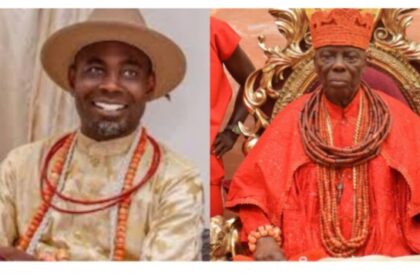
Uduaghan Cautions Orodje Against Actions That Could Spark Communal Crisis in Sapele
January 24, 2026
Opinion
When Power Panics: Landmines, Fear, and the Slow Unravelling of Political Confidence
January 24, 2026
World
Saudi Arabia Exposes the UAE, “They Betrayed God and the Ummah and Supported the Barbaric War on Gaza”
January 24, 2026
1
2
…
9
10
11
12
13
…
42
43
Welcome to Foxiz
Username or Email Address
Password
Remember me
Lost your password?