


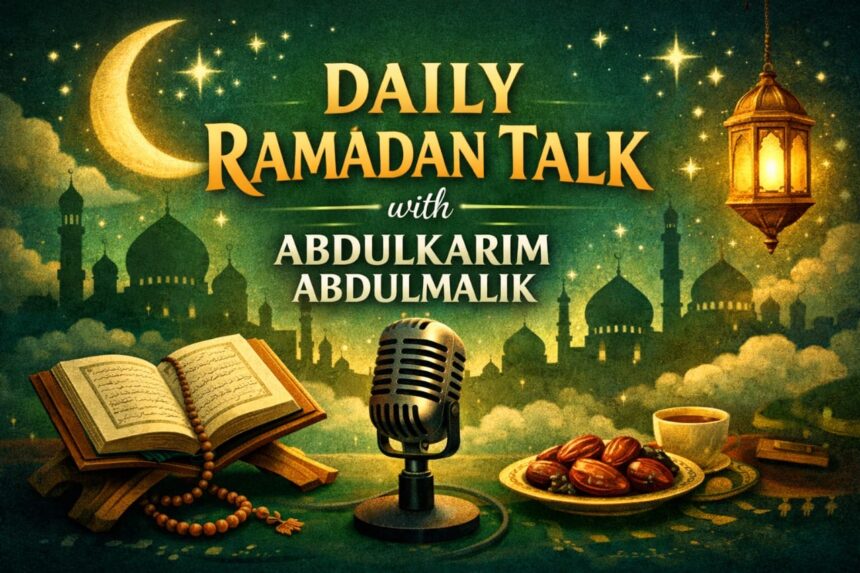
Ramadan 7, 1447 (February 24, 2026)
Assalaamun Alaykum Warahmatullah Taallah Wabarakatuhu
Zakat – The Pillar of Purification and Social Justice
All praise is due to Allah, the Most Generous, the Provider of all sustenance. We thank Him for the blessings He has bestowed upon us, both seen and unseen. We bear witness that there is no deity worthy of worship except Allah alone, and we bear witness that Muhammad (peace be upon him) is His servant and Messenger.
Dear brothers and sisters,
Among the five pillars of Islam is Zakat — the obligatory charity that purifies wealth and uplifts society. After the testimony of faith and the establishment of prayer, Allah commands the giving of Zakat. It is not optional generosity; it is a divine obligation upon those whom Allah has blessed with sufficient wealth.
Allah says in Surah At-Tawbah: “Take from their wealth a charity by which you purify them and cause them increase.” Notice that Allah describes Zakat as purification. It purifies our wealth from greed and selfishness, and it purifies our hearts from attachment to material possessions.
Dear believers,
Everything we own ultimately belongs to Allah. We are only trustees of what He has placed in our hands. When we give Zakat, we are not doing a favor to the poor; we are fulfilling a right that Allah has placed upon our wealth. The poor have a rightful share in what we possess.
Zakat teaches gratitude. When we give from our earnings, we acknowledge that Allah is the true Provider. It reminds us that our success is not solely due to our intelligence or effort, but by His mercy and decree.
It also builds a just society. Poverty, hunger, and hardship can weaken communities and create resentment.
Zakat redistributes wealth in a dignified and structured manner. It strengthens bonds between the rich and the poor. It replaces envy with compassion and selfishness with solidarity.
In Surah Al-Baqarah, Allah repeatedly links prayer with Zakat. This connection teaches us that worship is not only spiritual but social. A believer who prays but neglects the suffering of others has not understood the full message of Islam.
Dear brothers and sisters,
Zakat is typically a small portion — two and a half percent (2.5%) of qualifying savings — yet its impact is enormous. What seems small to us may be life-changing for someone in need. A widow may feed her children. A student may continue his education. A struggling family may regain dignity.
Moreover, giving Zakat does not decrease wealth. The Prophet (peace be upon him) taught that charity does not reduce one’s provision. Rather, Allah replaces it with greater blessings — sometimes in ways we do not immediately see.
Let us also remember that beyond the obligatory Zakat, voluntary charity (Sadaqah) which is discussed next in this article, carries immense reward. Ramadan especially is a season of generosity, but giving should continue throughout the year.
My dear brothers and sisters,
Calculate your Zakat carefully. Give it sincerely. Deliver it to those who are truly eligible. Do not delay it once it becomes due. Let your giving be quiet and humble, seeking only the pleasure of Allah.
___________
Sadaqah – A Sign of True Faith
Dear brothers and sisters,
Sadaqah — voluntary charity — is a beautiful expression of faith. The word itself comes from sidq, meaning truthfulness. When we give charity sincerely for the sake of Allah, it proves the truth of our belief.
Allah says in Surah Al-Baqarah: “Those who spend their wealth in the way of Allah are like a seed that grows seven ears; in every ear is a hundred grains.” This means one act of charity can multiply into seven hundred rewards — and Allah increases for whom He wills.
Sadaqah is not limited to money. A smile, a kind word, helping someone carry a burden, teaching beneficial knowledge — all are forms of charity.
Even removing harm from the road is Sadaqah.
Dear believers,
Sadaqah softens the heart, removes sins, and protects from calamities. It strengthens love within the community and brings comfort to those in hardship. When we give, we do not lose; we gain blessings, mercy, and closeness to Allah.
Give regularly, even if little. Give secretly, seeking only Allah’s pleasure. Let your generosity reflect gratitude for what Allah has given you.
_____________
Zakat and Sadaqah Distinguished
Zakat and Sadaqah are both forms of charity in Islam, but they differ in obligation, structure, and scope. Zakat is a compulsory pillar of Islam, required from eligible Muslims whose wealth reaches a minimum threshold (nisab). It is usually calculated at 2.5% of qualifying savings and must be distributed to specific categories of beneficiaries mentioned in Surah At-Tawbah (9:60), such as the poor and the needy. It is given annually and is considered a right of the less privileged over the wealth of the rich.
Sadaqah, on the other hand, is voluntary charity. It can be given at any time, in any amount, and to a wider range of recipients. It is not limited to money; acts of kindness, good words, assistance, and even a smile are forms of Sadaqah. While Zakat purifies wealth as an obligation, Sadaqah reflects extra generosity and strengthens compassion and social bonds within the community.
________________
Major Types of Zakat and Sadaqah in Islam
Types of Zakat
1) Zakat al-Mal (Zakat on Wealth): The annual obligatory charity on qualifying wealth such as cash, gold, silver, business assets, and certain investments. It is usually calculated at 2.5% of savings that reach the nisab and are held for one lunar year.
2) Zakat al-Fitr (Sadaqat al-Fitr): A mandatory charity given at the end of Ramadan before the Eid prayer. It is paid on behalf of every member of a household to purify the fast and support the poor before Eid celebrations.
3) Zakat on Agricultural Produce: Paid on crops and farm produce when they reach a minimum threshold. The rate differs depending on irrigation method.
4) Zakat on Livestock: Obligatory on certain animals (e.g., camels, cattle, sheep) when they meet specific numbers and conditions.
Types of Sadaqah
1) Sadaqah (General Charity): Voluntary financial or material assistance given at any time.
2) Sadaqah Jariyah (Continuous Charity): Ongoing charity that continues to benefit people, such as building a well, mosque, school, or supporting education.
3) Sadaqah in Non-Monetary Forms: Smiling, kind speech, helping others, removing harm from the road — all are acts of charity.
4) Hidden (Secret) Sadaqah: Charity given privately for sincerity and greater spiritual reward.
5) Sadaqah in Times of Hardship: Giving during personal difficulty carries special reward.
In essence, both Zakat and Sadaqah purify the soul, strengthen society, and draw a believer closer to Allah.
_______________
May Allah purify our wealth, expand our provision, and make us among those who give generously for His sake. May He remove poverty and hardship from our communities and unite our hearts through compassion and justice. May He make us among the generous and accept our Ibadah.
Ameen!
Ramadan Mabrouq