


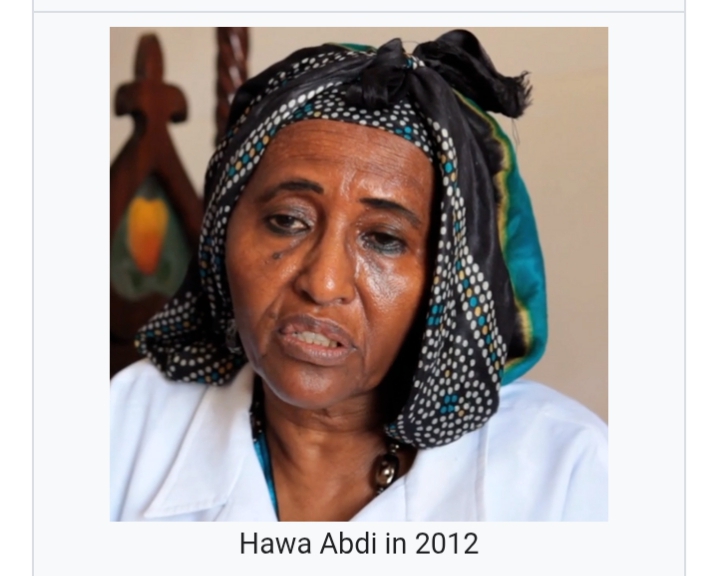
When armed militants demanded she surrender her hospital, she stood before them unarmed and said: “You’re young men—what have you done for your society?”_
In 1983, Dr. Hawa Abdi opened a one-room clinic on her family’s ancestral farmland outside Mogadishu, Somalia.
It wasn’t supposed to become a refuge camp. It was just meant to serve rural women who had no access to healthcare — women who couldn’t afford the journey to the capital, who had no money for doctors, who died in childbirth because there was simply nowhere to go.
Hawa charged only those who could pay. For everyone else, treatment was free.
She would wake before dawn to tend the farm, travel to Mogadishu where she worked as a full-time obstetrician and professor of medicine, then return home each evening to the long line of women waiting outside her clinic.
Slowly, carefully, she saved enough money to expand. One room became several. The clinic grew into a small hospital.
And then, in 1991, Somalia collapsed into civil war.
The government fell. Warlords carved up the country. Violence erupted everywhere. Families fled their homes with nothing but the clothes on their backs, searching desperately for somewhere—anywhere—safe.
Hawa’s grandmother told her to stay. Use your skills, she said. Help the vulnerable.
So Hawa stayed.
First, she housed her clinic employees on her land. Then, their families. Then their friends. Then strangers who had heard there was a doctor who would help anyone, who asked no questions about clan or politics or religion.
Mothers arrived carrying children with fevers. Old men who had walked for days collapsed at her gate. People with gunshot wounds, with broken bones, with stories of unimaginable violence whispered what had happened to them.
Hawa treated them all.
She worked day and night with the calm certainty of someone who believed every life mattered. She delivered babies in crowded rooms with limited supplies. She performed surgeries by candlelight when the generators failed. She kept careful notes on each patient so she wouldn’t lose track of anyone.
Her two daughters—Amina and Deqo, both doctors like their mother—helped organize the camp. They set up sanitation systems, coordinated food distribution, established schools.
What had started as a one-room clinic became a village of 90,000 people.
Hawa knew the camp made her a target. She prohibited residents from declaring any political affiliation, keeping the community neutral to protect everyone inside. She built primary schools and a high school. She started agricultural projects using simple technology so families could grow their own food instead of depending on aid that might never come.
She taught women to read. She banned practices that violated women’s rights—domestic violence, female genital mutilation, forced marriage. Inside her camp, on her land, different rules applied.
And she did all of this while war raged around her.
Then came May 5, 2010.
Hawa woke to the sound of gunfire. Looking out her window, she saw hundreds of armed fighters from Hizbul Islam, an Islamist militant group, surrounding her hospital.
They stormed through the gates. Bullets tore through the walls. Mothers ripped IV tubes from their babies and fled into the bush. One woman was seen crawling away mid-childbirth. Another burst her cesarean stitches running
The militants destroyed everything they could find. They shot the anesthesia machines. They smashed Somalia’s only glass incubators. They killed two of Hawa’s employees and took twenty security guards hostage.
Then they came for Hawa.
Their leader stood before her with a simple demand: surrender the hospital. A woman, he said, had no right to manage such a place. She must hand control to men.
Hawa looked at the armed fighters surrounding her home—500 men with guns, demanding she give up everything she had built over twenty-seven years.
She refused.
“You are young and you are a man,” she told them calmly. “But what have you done for your society?”
The militants were stunned. Women didn’t speak to them like this. Women didn’t refuse.
They placed her under house arrest, stationing armed guards outside her bedroom. They ransacked her home—destroyed her family photos, shredded her documents, smashed her daughters’ framed degrees. They shut down the hospital, leaving patients without care.
The camp fell into darkness and silence. Without Hawa’s daily order to start the generators, there was no electricity. No power for the water pumps. The militants taunted residents: “No Hawa, no water.”
But Hawa wouldn’t back down.
When a militant commander entered her room and told her she was “stubborn” and needed to “sit down,” she looked him in the eye.
“I do something for my people and my country,” she said. “You are young and active. What have you done for your people and your country?”
Her nurses stood frozen, terrified. But Hawa remained calm.
“If they shoot me,” she told the village elders, “at least I will die with dignity.”
For a week, the hospital stood paralyzed. Hawa refused to reopen it under militant control. She demanded they leave her land completely and apologize in writing for the damage they had caused.
Outside her camp, news of her captivity spread. Women inside the camp protested. The Somali diaspora around the world rallied. International pressure mounted. Local residents demanded her release.
The militants had underestimated one thing: Mama Hawa’s influence.
After a week of standoff, they backed down. They withdrew from the hospital. And they did something almost unprecedented—they submitted a written apology.
Hawa had won.
She immediately reopened the hospital and resumed treating patients. The generators hummed back to life. Water flowed again. Babies were born. Lives were saved.
The militants attacked again in February 2012, but again they were forced to retreat. Hawa would not be moved.
For nearly thirty years, through famine, drought, and constant violence, Dr. Hawa Abdi kept her hospital and camp running. She provided free healthcare, education, clean water, and shelter to an estimated two million people over the course of her lifetime.
She was nominated for the Nobel Peace Prize in 2012. Glamour magazine named her and her daughters “Women of the Year” in 2010, calling them the “Saints of Somalia.” Harvard gave her an honorary doctorate in 2017. Hillary Clinton called her “a perfect example of the kind of woman who inspires me.”
But Hawa didn’t do this work for recognition. She did it because people needed help, and she had the skills to help them.
On August 5, 2020, Dr. Hawa Abdi died at age seventy-three in Mogadishu. Her daughters continue running the Dr. Hawa Abdi Foundation, carrying forward their mother’s vision.
Somalia’s President said she had “a golden place in the history of our nation.” The Ministry of Women and Human Rights called her legacy one that “will live on through the lives she changed.”
But perhaps the truest measure of Hawa Abdi’s legacy is simpler: 90,000 people had a safe place to sleep because she refused to abandon them.
She proved that one woman armed with nothing but courage, compassion, and conviction can hold an entire community together when the world around it collapses.
They came with guns and demanded she surrender.
She stood before them unarmed and asked what they had done for their country.
And they left.
– Source: truthng.com