


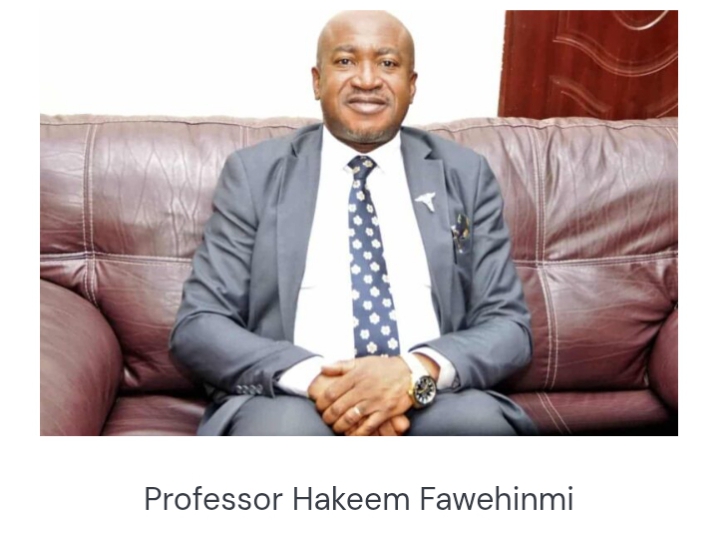
The University of Abuja entered a new phase of leadership on Thursday as Professor Hakeem Fawehinmi formally assumed duty as the institution’s eighth substantive Vice-Chancellor, stepping into the role with a pledge to deepen academic quality, innovation and stability.
Fawehinmi’s resumption follows his appointment by the 11th Governing Council during its 80th Extraordinary Meeting on November 7, 2025, which the Council described as the culmination of a transparent and competitive selection process. He takes over from Professor Mathew Adamu, who held the reins in an acting capacity.
The university’s acting Head of Information, Dr. Habib Yakoob, announced the new VC’s assumption of office in a statement, adding that early engagements with staff and students reflected widespread optimism about his leadership.
Upon taking office, Fawehinmi expressed gratitude to Council members, the Senate, management, staff, students and alumni for their confidence and warm reception.
“Under my leadership, the University will actively pursue new collaborations and funding opportunities to expand our programmes and widen access to quality education within the FCT and beyond,” he said, adding that “With the support of all stakeholders, we can actualise the vision of becoming a truly world-class institution.”
A distinguished scholar of clinical anatomy and biomedical anthropology, Fawehinmi brings more than 30 years of international and national academic experience to the office.
His qualifications include a BMedSc and MBBS from the University of Port Harcourt, an MSc in Medical Anthropology from the University of London, and a Doctor of Medicine (MD), the highest academic credential in the medical profession.
He is also a Fellow of several reputable bodies, including the Royal Anthropological Institute of Great Britain and Ireland (FRAI), the Anatomical Society of Nigeria (FASN), the Experimental and Clinical Anatomists of Nigeria (FECAN), and the Academy of Medicine Specialties of Nigeria (FAMedS).
Since assuming office, the new VC has begun extensive consultations with faculty leaders, unions, student representatives and administrative officers to ensure a smooth transition and align priorities for the university’s next growth phase.