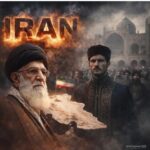



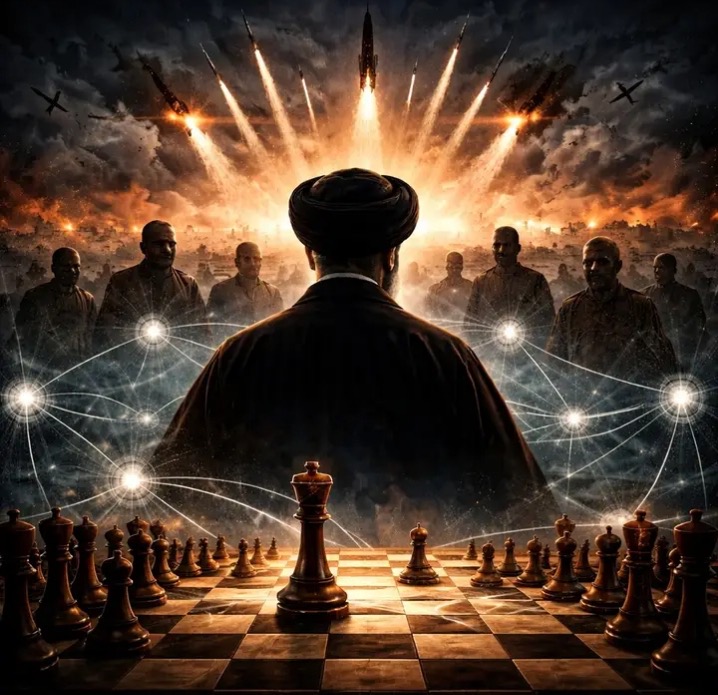
The old man had prepared for his own death with the cold patience of a chess grandmaster, not out of fatalism, but out of iron discipline. Ayatollah Ali Khamenei had known the trap was being set.
He knew it the way a general senses when the enemy is massing, because he had heard that particular drumbeat for forty-seven years. What no intelligence service in Langley, Tel Aviv, or the gilded corridors of Mar-a-Lago could have anticipated was what Khamenei had built, in deliberate silence, behind the public face of the Islamic Republic.
According to sources within Iran’s security structure, Khamenei issued a classified series of directives in the weeks preceding what he believed would be an imminent strike. These directives briefed senior leadership not just on how to absorb a decapitation strike, but how to retaliate instantly.
He was killed alongside senior figures including Ali Shamkhani and IRGC commander Mohammed Pakpour. The architects of the operation believed they had severed the head of the Iranian state.
They hadn’t.
Khamenei had already built a hydra system of command.
Every key military and government role had multiple layers of succession, ensuring that if the leadership was eliminated, the system itself would continue operating without pause.
When the strike came, the structure activated exactly as designed.
I · TEN HOURS THAT SHOOK THE REGION
While Washington was still confirming Khamenei’s death, Tehran had already moved into full retaliation mode.
Within the first ten hours:
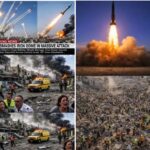
• 27 U.S. military bases across the region were struck in coordinated missile waves.
• The Persian Gulf was placed under effective military siege.
• All U.S. and Israeli assets across West Asia were declared legitimate targets.
• The Strait of Hormuz — through which nearly 20% of global oil flows — was temporarily blocked.
The expected collapse never happened.
Iran responded with speed, coordination, and scale.
II · THE MATHEMATICS OF MODERN WAR
Iran’s strategy relied on saturation.
Ballistic missiles forced American air defense systems to fire expensive interceptors early. Then waves of Shahed loitering drones followed through the gaps.
The numbers tell the story:
• 1,200+ missiles and drones launched in the first day
• Each THAAD interceptor costs roughly $15 million
• Iran’s arsenal is estimated in tens of thousands
In a prolonged conflict, the economics of defense begin to matter as much as the weapons themselves.
III · BLIND THE SENSORS
Iran’s first priority targets were not cities.
They were radar and early-warning systems.
Missiles struck sensor installations across the Gulf, including high-value radar infrastructure capable of tracking ballistic missiles thousands of kilometers away.
The strategy was simple:
Blind the sensors. Then overwhelm the defenses.
With radar coverage degraded, Iranian missiles began penetrating deeper into regional air defense networks.
IV · A MUCH BIGGER GAME
This confrontation is no longer just regional.
Reports suggest China monitored U.S. military movements and shared intelligence with Tehran, while Russia provided strategic coordination and support.
Iran also sits directly along the land corridors central to China’s Belt and Road Initiative.
If Iran collapses, those corridors collapse with it.
What is unfolding increasingly resembles the first real strategic clash of the emerging multipolar world.
V · ECONOMIC WARFARE
Iran’s targeting strategy also extends beyond military bases.
Cities like Dubai and Abu Dhabi represent the financial backbone of the Gulf — economies built on the perception of absolute stability.
If missiles can reach those skylines, that perception begins to fracture.
Capital, tourism, aviation, and investment depend on one thing above all:
Safety.
When that perception weakens, the economic consequences can ripple across the global system.
VI · WHAT THE STRIKE REVEALED
The most important moment of the conflict was not the assassination itself.
It was what happened immediately afterward.
Within minutes:
• Leadership succession mechanisms activated.
• Military command transferred.
• Retaliation authorized.
• Missile launches began.
From decapitation strike to coordinated retaliation in under an hour.
For decades, American military power rested not only on technology, but on an aura of invincibility.
That aura is now being tested.
And the entire world is watching.