


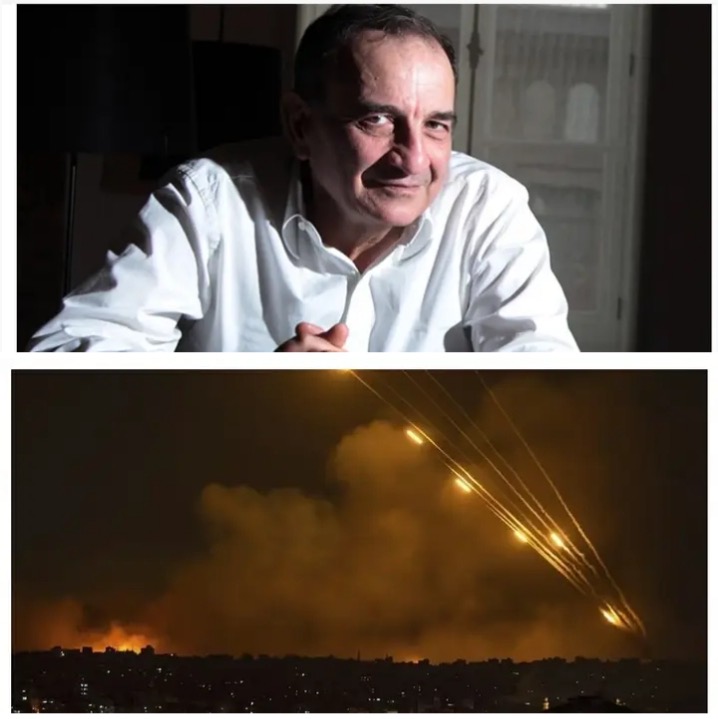
Ari Ben-Menashe—a former Israeli intelligence officer who has long lived in Montreal, Canada—is the primary source behind the narrative that Jeffrey Epstein operated as a Mossad asset. Ben-Menashe has gone on record claiming that both Epstein and Ghislaine Maxwell worked for Israeli intelligence, collecting kompromat—blackmail material—on powerful politicians to influence American policy.
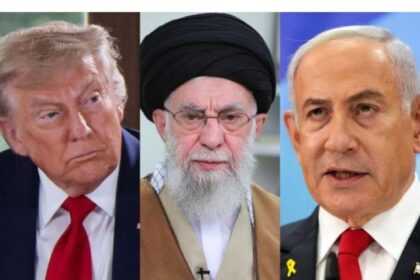
He further claims that Benjamin Netanyahu’s planned visit to Washington, D.C., is aimed at pressuring Donald Trump to reject any negotiation with Iran that does not include restrictions on ballistic missiles. According to Ben-Menashe, Mossad possesses additional compromising material on Trump related to the Epstein files, including allegations that Trump slept with underage girls. This should surprise no one. This is how Mossad operates. They did it to Bill Clinton, and now they intend to use these files against Trump—weaponizing disgrace to force compliance.
Trump is now trapped in a dilemma. He is not interested in a prolonged war. His preference is a quick, decisive conflict—in and out—similar to his posture toward Maduro in Venezuela. But the timing is disastrous. The U.S. midterm elections are approaching. If current conditions persist, Republicans risk losing the House to the Democrats. Should Democrats regain control, impeachment would be inevitable, making governance nearly impossible.
The economy is another pressure point. Trump wants to revive it. But a war with Iran—especially if Iran shuts down the Strait of Hormuz—would spike oil prices and cripple his economic agenda. Then there is his base: exhausted by endless wars and increasingly vocal about wanting Trump to focus on domestic issues rather than foreign entanglements.
This is the trap. Netanyahu’s pressure to force a war with Iran collides directly with Trump’s political survival. Iran has shown willingness to negotiate on nuclear weapons—but not on ballistic missiles, because surrendering missile capability would leave Iran defenseless.
At this point, Israeli leadership has shifted the goalposts. Nuclear weapons are no longer the central issue; ballistic missiles are. This shift confirms what many have been saying all along: Iran’s missile strikes on Israel were devastating.
Anyone claiming that Israel “absorbed” Iran’s missile attacks without serious damage is lying. Israel suffered immensely. Iranian missiles were devastating, but the media constructed a false narrative of resilience and control. The reality was buried.
____
Below are some of the military and strategic targets Iran struck—targets Israel actively concealed:
Military and Intelligence Targets
– Kirya Headquarters (Tel Aviv): A ballistic missile struck and damaged the vicinity of the IDF’s central headquarters.
– Camp Moshe Dayan (Tel Aviv): A warehouse at the Israeli Military Intelligence School was destroyed and set ablaze after a direct hit.
– Nevatim Airbase: Iranian missiles hit the base housing Israel’s F-35 fighter jets. Later reports confirmed at least four impacts, damaging a runway and two aircraft hangars.
– Strategic Command Centers: Guided missiles reportedly struck alternative command-and-control facilities and a biological research center during successive strike waves.
– Northern Radar Site: At least one ballistic missile was aimed at a radar installation in northern Israel.
___
Critical Infrastructure and Public Sites
– Haifa Bazan Oil Refinery: Pipelines and transmission lines sustained damage.
– Soroka Medical Center (Beersheba): A ballistic missile directly struck the hospital, forcing it to temporarily stop accepting new patients.
– Ben Gurion Airport: Iran claimed it targeted Israel’s main international airport with guided missiles during the June 2025 strikes.
– Weizmann Institute of Science (Rehovot): Several key laboratories were hit during the conflict.
____
Media Suppression and Damage Control
Israeli military censorship and public diplomacy masked the full extent of the destruction throughout the 12-day war. While the IDF insisted all bases remained functional, independent human-rights organizations and satellite imagery later documented at least 50 missile impacts inside Israel—many in densely populated areas such as Tel Aviv, Haifa, and Petah Tikva.
The truth wasn’t that Israel “withstood” the attack.
The truth is that the damage was real—and it was hidden.
The truth is, we still do not know the full extent of the damage. But Israeli leadership’s sudden fixation on Iran’s ballistic missiles tells its own story: ballistic capability now worries them more than Iran’s nuclear program ever did.
What happens next hinges on Netanyahu’s meeting with Trump. Either Trump rejects the push for war and opens the door to negotiation with Iran, or he caves to pressure and drags the United States toward another unnecessary conflict.