


By Muhammed Jamiu Adoke
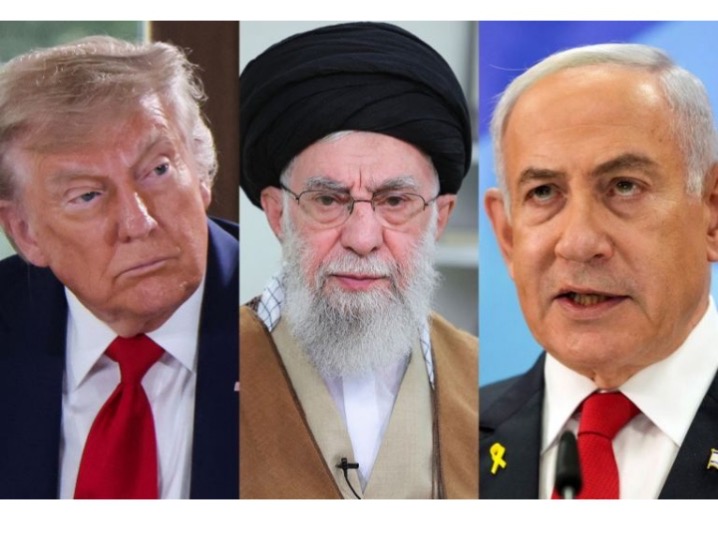
Today’s episode on this column is supposed to be a continuum of last week’s discuss, precipitating ‘the youth voices, national choices’ project. However, over the weekend, on Saturday February 28th, 2026, the United States of America and her siamese ally, Israel, assassinated Iranian Spiritual Leader and Head of State, Ayatollah Ali Khameni, thus, leading to an all out war of aggression.
As a keen observer of the endless threats, proxy-wars, and rhetorics between Iran and US-Israel for many years, I am compelled to air my opinion on the subject matter. To begin with, let me emphasize that this article is assertive and objective. I do not seek validation, neither do I have regrets for my actions. It is solely dedicated to the martyred Iranian Leader, Imam Ali Khameni.
Looking at global history over the past fifty-years, few figures embody the resillient spirit of resistance against imperial domination as profoundly as Ayatollah Ali Khameni. His assassination which has led to the escalating US-Israel war against Iran marks not merely the end of an era but a poignant testament to the enduring struggle for sovereignty in the face of hegemonic aggression.
Khameni’s legacy draws from the wellsprings of Islamic revolutionary thought, emphasizing justice, self-determination, and the defense of the oppressed. Ideologically rooted in anti-colonialism, his leadership inspired nations like Palestine, where the quest for liberation mirrors Iran’s defiance.
This exposition, while objective in its analysis of geopolitical realities, is driven by the philosophical imperative to honour those who stand against oppression, viewing Khamenei’s martyrdom as a catalyst for global introspection on power imbalances.
The root causes of this crisis trace back to decades of Western interventionism in the Middle East, where the US and Israel have pursued policies aimed at containing Iranian influence to secure strategic dominance. This stems from a Hobbesian worldview of perpetual conflict, where stronger states justify pre-emptive actions to maintain order, often at the expense of weaker nations’ autonomy. The tensions escalated from the 1979 Iranian Revolution, which rejected US-backed Shah monarchy in favour of a theocratic republic, clashing with Israel’s security concerns and America’s energy interests.
The war’s ignition, marked by targeted strikes and cyber operations, reflects unresolved grievances from the Iran-Iraq War, the nuclear deal’s collapse, and proxy conflicts in Syria and Yemen, all exacerbated by Iran’s support for groups like Hezbollah and Hamas, seen by Tehran as legitimate resistance but labelled terrorism by adversaries.
Central to this narrative is the portrayal of Iran’s actions as a defense of oppressed nations, with Palestine serving as the archetypal symbol of global injustice. Imam Khameni’s unwavering advocacy for Palestinian rights philosophically aligns with Kantian notions of universal moral duty, where solidarity with the subjugated transcends borders. Ideologically, Iran’s provision of aid and rhetoric against occupation positions it as a bulwark against what critics term Zionist expansionism, drawing parallels to historical anti-apartheid movements.
In this war, the assassination of Khameni underscores how such defenses invite retaliation, yet they highlight the ideological hypocrisy; while Israel defends its existence, Palestine’s right to self-defense is systematically denied, perpetuating a cycle of violence that Khameni’s Iran sought to disrupt through defiance.
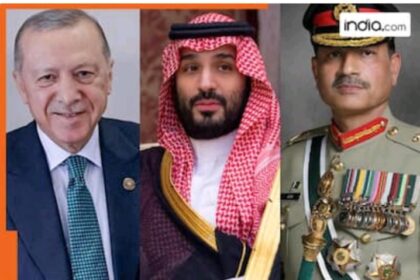
Further, a glaring indictment must be levelled at Saudi Arabia and the Gulf states such as the UAE, Bahrain, Jordan, and Qatar for their complicity in supporting US actions against Iran. Their alignment betrays Aristotelian ideals of virtue in statecraft, prioritizing material and economic alliances over ethical solidarity among Muslim nations. These monarchies, driven by Sunni-Shia divides and economic ties to the West, have normalized relations with Israel via the Abraham Accords, effectively undermining pan-Arab unity.
Their tacit endorsement of sanctions, airstrikes, and now the war, fuelled by fears of Iranian regional hegemony, reveals a shortsighted pragmatism that sacrifices long-term stability for short-term security, eroding the moral fabric of the Islamic world and enabling external powers to exploit internal rifts.
Emphatically, I am not an Islamic Scholar. And I do not seek to be. But, as a Muslim, I have a reasonable knowledge of the religion and its guiding principles. The complicity of most Arab Nations in the ongoing US-ISREAL aggression against IRAN is telling. For too long, I’ve been wondering how geopolitics and economic growth have overtaken tenets once preached by Islam and Christianity.
No doubt, I can firmly assert that the 21st century religion is based on the principles of advancement in technology and economic growth, rather than the ‘Faith’ once preached and practiced, simple!
The dangers this war poses to the world are manifold, extending far beyond the Middle East into existential threats that challenge humanity’s collective future. Aside from the already surging prices of global energy, it evokes Hegelian dialectics of thesis and antithesis, where unchecked militarism risks a synthesis of global catastrophe, potentially drawing in superpowers like Russia and China. Escalation could ignite a broader sectarian conflict, which, as at Tuesday, March 3rd, 2026, President Trump had already been quoted by several media outlets as considering arming local tribes and millitias in Iran so as to topple the government. Consequences of such acts would result in destabilizing energy markets and triggering refugee crises that strain international systems for a long time. Nuclear proliferation looms as a shadow, with Iran’s program defensive in Tehran’s view, potentially accellerating amid aggression, heightening the specter of mutually assured destruction and environmental devastation from fallout, all while diverting resources from global challenges like climate change.
Again, amid this perils, philosophical optimism rooted in Rawlsian justice offers pathways to peace, emphasizing fair co-operation among nations. Solutions begin with multilateral diplomacy, reviving frameworks like the JCPOA to address nuclear concerns objectively, free from unilateral dictates. Ideologically, fostering intra-regional dialogues such as Iran-Saudi reconciliation efforts could mitigate proxy wars, with the UN facilitating confidence-building measures. Empowering oppressed voices, like those in Palestine, through two-state solutions or international protections, would clearly honour Khameni’s legacy by prioritizing equity over dominance.
To this end, this war and Khameni’s assassination compell a re-evaluation of global hegemonies and ideologies, urging a shift from real politik to a philosophy of mutual respect. By addressing root imperialisms, condemning enablers like the Gulf states, and pursuing inclusive peace, the world can transform tragedy into triumph, ensuring that the defense of the oppressed endures as a beacon for future generations. Indeed, the end of every war signals the beginning of another! May the sun shine tomorrow…