


By Hassan Ahmad
An Open Reflection to the Presidency, the Cabinet, the Legislature, and the Opposition
Nigeria is not merely experiencing hardship; it is experiencing a test of judgment. This is not just another economic downturn or political transition—it is a defining moment that will determine whether the country evolves into a disciplined, institutional democracy or retreats further into personality-driven governance masked as reform.
On the day of inauguration, as the President stumbled just before the podium, many dismissed it as a harmless misstep. In another culture, perhaps it was. But in African cosmology, symbols matter. Such moments are read not as superstition, but as caution—an ancestral reminder to slow down, reflect, and govern with humility. When warnings are ignored, history tends to repeat itself with consequences.
The Choice Before the Presidency
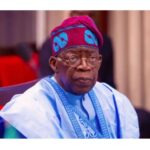
Mr. President, you embody two worlds: African heritage and Western institutional training. History will not judge your speeches; it will judge which of these worlds shaped your governance.
Will Nigeria be run by transparent systems, professional competence, and institutional restraint—or by opaque networks, personal loyalty, and recycled political familiarity?
No modern economy responds to rhetoric. Markets respond to design. Citizens respond to relief. Nations respond to competence. Governance by inner circle is not efficiency; it is fragility disguised as control.
Economic Shock Without Protection Is Not Reform
The sudden withdrawal of economic supports without adequate cushioning did not demonstrate boldness—it exposed a dangerous misunderstanding of reform sequencing. Reform without protection is not courage; it is negligence.
Yes, distortions needed correction. But when policy inflicts pain before preparation, the poor absorb the shock while elites explain it away. A market may “adjust,” but families break first. Transport fares rise immediately. Food prices spike overnight. Wages do not follow.
Political legitimacy is not sustained by macroeconomic applause from abroad. It is sustained in kitchens, buses, and marketplaces. Elections are won in households, not policy conferences.
Cronyism Is Not Capacity
Nigeria cannot be governed by a tight circle of familiar names, recycled faces, and one-city dominance. This country is too large, too diverse, and too complex for comfort-zone governance.
Loyalty without competence is not loyalty to the nation—it is sabotage by convenience. When appointments prioritize familiarity over merit, governance becomes blind to reality and allergic to dissent.
Nigeria does not need a Presidency of Personalities.
Nigeria needs a Presidency of Institutions.
Strong institutions outlive strong men. Weak institutions collapse under them.
Taxation Without Trust Is Punishment
Tax reform in an atmosphere of opacity is indistinguishable from punishment. Citizens cannot be asked to pay more while governance becomes less transparent.
When people do not know how funds are used, taxation feels like survival being penalized. Compliance collapses when trust disappears.
What must be done—immediately and publicly:
Adopt Open-Book Governance: a real-time, simplified digital dashboard showing loan acquisitions, procurement details, beneficiaries, costs, and timelines.
Tie taxes to visible outcomes: every tax bracket linked by law to specific infrastructure and social projects.
If people can see the bridge being built, they will not hide their tools.
Security and the Dangerous Optics of Outsourcing Sovereignty*l
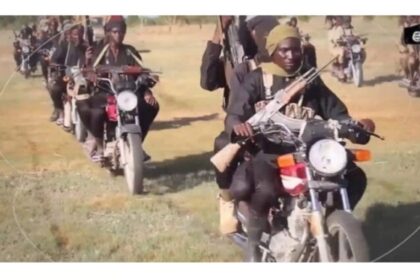
Nigeria once served as a stabilizing force across Africa. From Liberia to Sierra Leone, our soldiers paid the price of regional leadership. To now contemplate external management of internal security is not pragmatic—it is an admission of institutional decay.
Outsourcing security sends three dangerous signals:
That national military leadership has been undermined
That sovereignty is negotiable
That governance has surrendered to desperation
No serious nation subcontracts its internal legitimacy. Security reform must strengthen Nigerian institutions, not bypass them. Intelligence, accountability, welfare, and professionalism—not foreign dependency—are the foundations of national safety.
The Legislature and the Crisis of Moral Authority
Recent legislative actions, gazetted in ways that raise public concern, have deepened the perception that accountability is weakening rather than strengthening. The elevation of individuals facing widely reported corruption allegations into influential political roles—regardless of court outcomes—damages public confidence.
This is not a legal argument; it is a moral one.
When anti-corruption becomes selective, corruption becomes policy by omission. When consequences disappear, deterrence collapses. The law does not die loudly—it erodes quietly.
To the Opposition: Silence Is Complicity
Democracy does not survive on government failure alone. Opposition is not noise; it is responsibility. Silence in the face of excess is endorsement by default.
If you are not offering alternatives, you are irrelevant.
If you are not using the courts, the legislature, and public oversight, you are spectators.
Force transparency into existence.
Litigate abuse.
Document failures.
Offer a credible alternative vision.
Anything less is theatrics.
Warning Signs Nigeria Must Not Ignore
A nation should be alarmed when:
loyalty replaces competence
security is internationalized instead of institutionalized
corruption allegations are politically rewarded
reforms are announced without social buffers
suffering is explained instead of reduced
power is concentrated within a narrow circle
These are not opposition slogans. They are historical warning signs seen in states that later fractured under their own denial.
A Final Word
Mr. President, public anger is not hatred. Protest is not sabotage. Criticism is not treason. They are reminders—echoes of that missed call on inauguration day.
Nigeria does not need more strong men.
Nigeria needs strong systems.
Let experts lead.
Let institutions function.
Let loyalists serve, not rule.
And above all—
Let the people breathe.