


By Abdulkarim Abdulmalik
The politics of the Middle East has never lacked drama. Yet few developments in recent years have generated as much shock, confusion, and quiet anxiety across the Gulf region as reports surrounding a proposed $300 billion reconstruction fund for Iran.
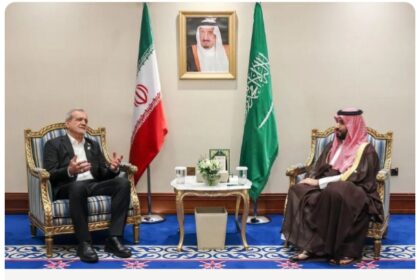
The controversy erupted after details emerged from a reported U.S.-Iran peace framework suggesting that Iran could gain access to a massive reconstruction and investment package worth as much as $300 billion if it complies with the terms of a broader agreement. What has made the issue even more controversial is that the United States appears unwilling to shoulder the financial burden itself. Instead, attention has shifted to the wealthy Arab states of the Gulf.
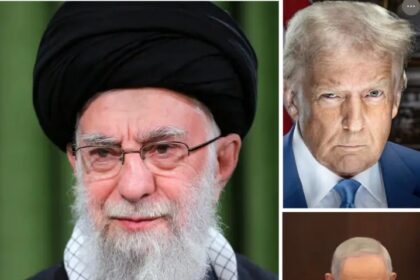
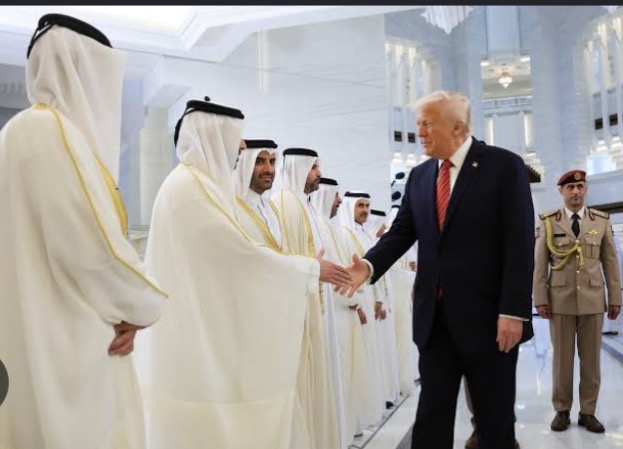
President Donald Trump has repeatedly denied that American taxpayers will finance Iran’s reconstruction. According to public statements attributed to both Trump and Vice President JD Vance, any future reconstruction capital would come from Gulf allies, international investors, and private-sector partnerships rather than from Washington.
This position has sparked an uncomfortable question throughout the region: Why should Gulf states pay to rebuild a country that many of them have viewed as a strategic rival for decades?
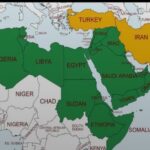
For countries such as Saudi Arabia, United Arab Emirates, Qatar, and Kuwait, the issue is not merely financial. It touches the very heart of regional security, power balances, and historical grievances.
For years, Gulf governments have accused Tehran of supporting proxy groups and expanding its influence across the Middle East. From Iraq and Syria to Lebanon and Yemen, Iran’s regional footprint has often been perceived by Gulf capitals as a direct challenge to their interests.
Now, many observers are asking whether Gulf nations are being asked to finance the economic recovery of a state they have spent years trying to contain.
Supporters of the proposal argue that the situation should be viewed through a different lens. They contend that rebuilding Iran is not an act of charity but an investment in regional stability. A devastated economy, they argue, creates fertile ground for political extremism, instability, and future conflict. A prosperous Iran integrated into global markets could potentially become less confrontational and more invested in maintaining peaceful relations with its neighbours.
This argument has historical precedent. Following major conflicts, reconstruction programs have often been used as instruments of peace-building. The logic is simple: nations with strong economic interests in stability are less likely to return to confrontation.
Yet critics remain deeply sceptical.
Many see the proposal as an indirect form of compensation disguised as diplomacy. If Iran receives hundreds of billions of dollars in investments, reconstruction projects, and sanctions relief after a period of confrontation with the United States and its allies, some Gulf policymakers fear it could create the impression that military pressure ultimately produces economic rewards.
Others question the practical details.
Where exactly would the $300 billion come from?
Would Gulf governments contribute directly from their sovereign wealth funds?
Would the money be private-sector investment?
Would international financial institutions be involved?
Would there be guarantees that the funds would be used strictly for reconstruction rather than strengthening Iran’s strategic capabilities?
So far, many of these questions remain unanswered. Even reports discussing the proposed fund acknowledge that the financing mechanisms remain unclear and subject to future negotiations. According to The Guardian, the proposed $300 billion reconstruction framework has been discussed, with multiple reports indicating that Gulf-backed investment or reconstruction funding—not direct U.S. taxpayer funding—has been part of negotiations, although the precise structure and commitments remain disputed.
The uncertainty has fuelled widespread speculation across financial markets and diplomatic circles.
Perhaps the most fascinating aspect of the debate is what it reveals about changing power dynamics in the Middle East.
In previous decades, Washington often played the role of financier, security guarantor, and diplomatic broker. Today, however, the United States increasingly expects regional partners to bear greater responsibility for both security and reconstruction.
This reflects a broader trend in American foreign policy. Successive administrations have sought ways to reduce direct financial commitments overseas while encouraging allies to assume a larger share of the burden.
From that perspective, asking wealthy Gulf states to help fund Iran’s reconstruction is consistent with a broader strategic shift.
But consistency does not necessarily make the proposal politically acceptable.
Public opinion within many Gulf countries remain hazy and could prove difficult to manage. Citizens may reasonably ask why vast sums should be directed toward Iran when domestic economic priorities, infrastructure needs, youth employment challenges, and diversification projects remain pressing concerns at home.
Moreover, Gulf leaders must carefully balance their desire for regional stability against concerns about empowering a long-standing competitor.
Ultimately, the debate surrounding Iran’s proposed $300 billion reconstruction fund is about much more than money.
It is about the future architecture of the Middle East.
Is the region entering an era where former adversaries are integrated through economics rather than divided by conflict?
Is this a pragmatic peace dividend that could transform regional relations?
Or is it a geopolitical bargain whose long-term consequences remain dangerously uncertain?
For now, Trump insists that America will not pay. The Gulf states, meanwhile, appear caught between strategic opportunity and political risk. Iran stands to benefit if the plan materializes. The rest of the region is still trying to determine whether the proposal represents diplomacy, compensation, or one of the most ambitious geopolitical deals of the modern Middle East.
One thing is certain: the discussion has already exposed the complex realities of a changing world where economic power, diplomacy, and regional security are becoming increasingly intertwined.
And in the Gulf, many are watching nervously.
– Abdulkarim Abdulmalik is an Abuja-based Journalist and can be reached on: nowmalik@gmail.com