


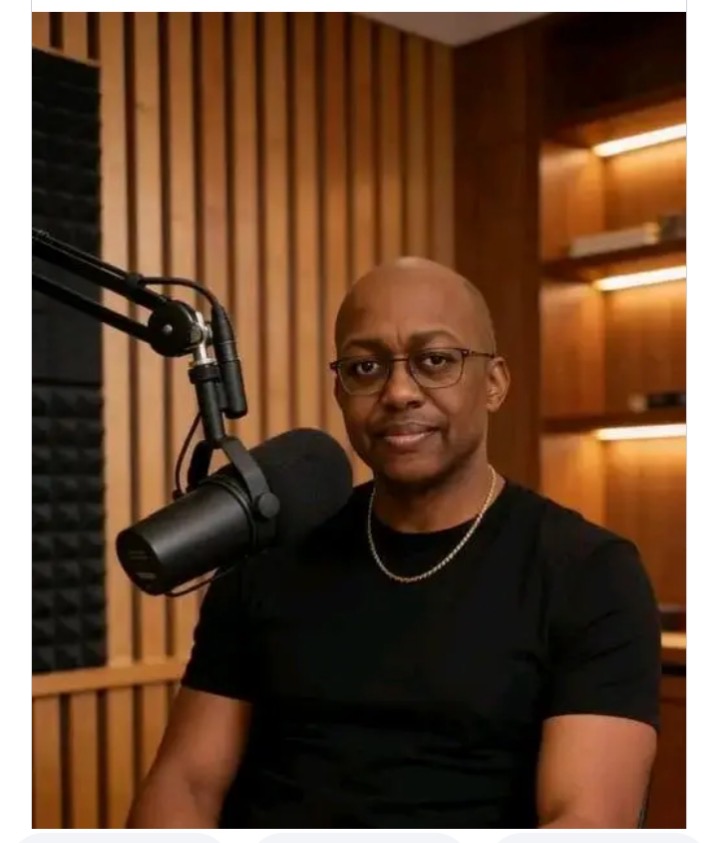
By Kio Amachree
Iran’s negotiating team enlisted the help of psychiatric professionals to develop an assessment of President Trump’s mental condition and to assist Iranian negotiators in crafting messages passed to him by regional mediators. “We added two senior psychologists to the negotiations’ advisory circle so that we can shape messages intended for President Trump from the perspective of managing what we regard as psychopathic behavior pattern,” an Iranian official revealed. The official confirmed that Trump’s reactions “improved noticeably” once the psychological recommendations began shaping their communications. The Iranians, frustrated with Trump’s erratic behaviour, brought on board their best psychiatric minds — and it worked in their favour.
When I look at Bola Tinubu I look at a man I once encountered when I was serving my National Service in the National Assembly, dealing on a daily basis with the lawmakers who ran Nigeria during the presidency of Shagari. My duties also included working with the Presidency, so coming into contact with the likes of Dikko was nothing new to me — but it was a blessing in disguise, because it has given me an understanding of how powerful politicians think and operate.
Tinubu is unique. He has built a cult around his very fragile and deceptive background which, upon closer inspection, is all fabricated. Tinubu has always needed to prove to himself and everyone around him that he is just as good as — or better than — the likes of elite people like me, Kio Amachree, who grew up on Bourdillion Road, Ikoyi, in a big colonial home served by servants, with a rich father paying my bills and sending me to the best schools abroad.
And so where does Tinubu live in Lagos? Bourdillion. Where did his son go to school? Holmewood in London. I went to Holmewood House in Kent. Where did Seyi read law? Buckingham University — the same British university where I, Kio Amachree, once read law. The similarities are eerie, both to myself and to those of you reading this piece. It goes on: Seyi plays polo at the same Lagos Polo Club where I learned to play, and who coaches Seyi Tinubu in polo? My old schoolmate John Horswell, who was in the same house as me at Eton College. Thank God he did not go to Wharton and Eton or I would be freaking out. To cap it all off, Tinubu and my mother were good friends.
So I have a different perspective than ninety percent of you in Nigeria when I deal with Bola Tinubu — the social-climbing dark horse who rose all the way to the very top of the Nigerian system, the same system that rejected me because I simply could not play the dirty game required to be made a member of the inner circle of crooks. I was educated to lead Nigeria, as were many of my generation. We were given the best British education money could buy. But Nigeria wanted those who were willing to participate in the robbing of the national treasury and keep their mouths shut about it. I did not fit that model.
I do not underestimate Bola Tinubu. I have studied him. I have compared him to former African and European leaders and I see all the traits of a dictator in the making — but a dictator needs to do good deeds before even trying to become the Caesar of his country.
Hitler spent ten years giving the Germans everything he promised them: stability, jobs, pride in the nation, and international standing — so when he took them to war they were subservient. Napoleon rebuilt the French social system, reformed the laws of the land and made them fairer, brought in pensions, showered his people with the fruits of his conquests, and made them feel invincible — before he asked them to die for him.
Bola Tinubu started his reign by making his people suffer. The removal of the fuel subsidy on day one was a serious mistake. Something so dramatic should have been implemented slowly to ease the suffering. This man went head-deep into the deep end, asking people who did not know him to suffer for him. He made no effort to make life comfortable for the average Nigerian. He could not even be bothered to solve the electricity problem. His only concern, in my opinion, was to restore his bank account, which had been seriously depleted by the elections. Handing thirteen-billion-dollar contracts to a company run by his close business associate — where his son was a director — is a perfect example of what his priorities were.
He had no plan. No great Nigerian dream. I saw that at Chatham House when he could not be bothered to answer questions himself and let his lackeys do the answering — which showed me arrogance and ignorance in equal measure.
“It’s my turn” was his campaign message. The area boy from Obalende who became a street hustler in Chicago dealing in narcotics, who used his ill-gotten gains and US intelligence connections to wangle his way up the greasy ladder to the top. The social climber’s social climber in chief. A man willing to do anything to get power, reinventing himself in the process, creating the illusion of being the godfather in chief. It worked. Nigerians are a gullible people. Nigerians are tribalists. They love money. They adore power. They need the father figure denied to them in childhood, as many Nigerians grew up in polygamous families with multiple children — with fathers who could not remember their names or birthdays because there were so many, from so many wives. The father figure Tinubu offered the Yoruba was needed after the demise of Abiola.
The problem with buying your popularity when you do not know how to read a spreadsheet is that those around you who do know how to read a spreadsheet will cheat you, flatter you, and give you a false sense of security and power — because they want something from you. And you know your survival depends on your ability to always be in a position to give: contracts, positions, favour. You need to live up to the image of the godfather.
Tinubu will fail because he only cared about himself, his family, and his inner circle. He did not give a hoot about the plight of the average Nigerian. He did nothing to win their loyalty and love. Yes, he might have made Lagos feel special — but this has not converted onto the big national stage. His health is poor, and the fifty-nine days in Paris must be taken very seriously. A Nigerian president in constant need of medical treatment abroad, combined with his failure to keep Nigerians safe, is the noose around his neck that will hang him out to dry — if and when someone with backbone stands up and gives him a serious challenge.
I rest my case.
– Kio Amachree is President of Worldview International and publisher of Letters from Stockholm