


Dr. Tom Ohikere
THE STORM WE HAVE LIVED IN FOR 3 YEARS
On May 29, 2023, six words changed the lives of 230 million Nigerians: “Subsidy is gone.”
Within 24 hours, the price of petrol went from ₦185 per litre to over ₦500 nationwide. By August 2023 it was ₦600. By August 2026, as I write this from Abuja, a litre sells between ₦1,200 and ₦1,300 in Jos, Kano, Lagos, Port Harcourt and the FCT.
That was not just a price adjustment. That was a shock to the entire economy.
Before May 2023, a commercial driver from Jos to Abuja charged ₦3,500. Today he charges ₦12,000 to ₦15,000. Intra-city buses that moved people for ₦100 now charge ₦500. A keke that was ₦50 per drop is now ₦200.
For millions of Nigerians, this meant one thing: you now spend half your salary just to get to work.
Consider the math of an average Nigerian worker:
– Minimum wage worker: ₦70,000 per month
– Transport to work: ₦1,500 daily x 26 days = ₦39,000 per month
– That is 55% of salary gone to transport alone, before food, rent, school fees and drugs.
A teacher earning ₦80,000 now spends ₦30,000 on transport. A student pays ₦500 daily. A civil servant in Lokoja who used to spend ₦8,000 monthly on fuel now spends ₦28,000.
The pain did not stop at the fuel station.
WHEN TRANSPORT GOES UP, EVERYTHING GOES UP
Over 70% of food in Nigeria moves by road. Tomatoes from Benue, onions from Sokoto, rice from Kebbi, yam from Benue, fish from Bayelsa. All of it comes on trailers that run on diesel.
In 2023, diesel was ₦700 per litre. Today it is ₦1,350 – ₦1,400 per litre.
The result: Food inflation. According to NBS, food inflation was 22.79% in May 2023. By July 2026 it crossed 40%. A bag of rice that was ₦30,000 in 2023 is ₦85,000 – ₦90,000 today. A crate of eggs moved from ₦2,500 to ₦6,500. A mother who budgeted ₦10,000 weekly for food now needs ₦18,000 – ₦20,000.
Small businesses are bleeding. Nigeria’s economy runs on SMEs. They employ over 80% of our workforce. The barber, the welder, the cold room operator, the POS agent, the provision store owner – all of them run generators.
When diesel was ₦700, they could stay open. At ₦1,400, they close by 6pm or transfer the cost to customers. That is why prices of everything – from haircut to grinding pepper – have doubled.
The government’s argument was simple: “We are removing subsidy to free money for schools, hospitals and roads.”
The numbers came. In the first half of 2023, states shared ₦3.3 trillion from FAAC. In the first half of 2024, it was ₦6.6 trillion. That is double in one year. The federal government also reported saving over ₦10 trillion in 2 years.
But 3 years later, ask the Nigerian on the street: “Where is the money?” New classrooms are few. New hospitals are few. The roads are still bad. What grew instead was hardship.
Political analysts have called it “savings without impact”. Money entered government accounts, but it did not enter Nigerian homes.
ENTER ATIKU ABUBAKAR: “RELIEF ON DAY 1”
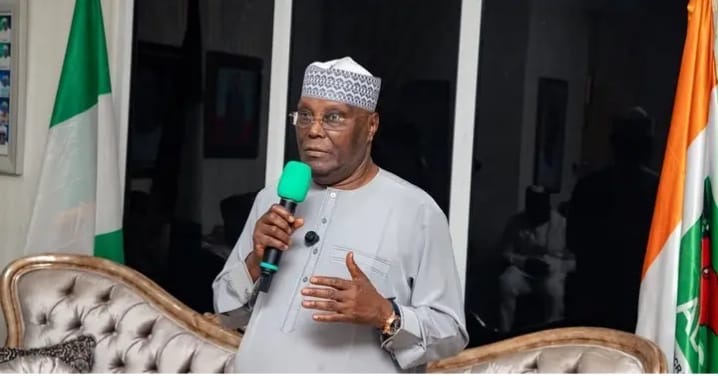
It is against this background that Alhaji Atiku Abubakar, the African Democratic Congress, ADC, Presidential Candidate for 2027, made a promise on Wednesday night during a live Hausa radio interview across Northern Nigeria.
His words were direct: “I will restore the fuel subsidy, if elected President of Nigeria.”
He did not stop there. He gave conditions. The subsidy will stay until three things are strong enough:
1. Local refining is working – Dangote Refinery, Port Harcourt, Warri and Kaduna refineries running at full capacity so we stop importing.
2. Mass transit is functional – CNG buses, rail, and waterways that reduce our dependence on petrol.
3. Social protection is real – Cash transfers, food support, and safety nets that actually reach the poorest Nigerians.
His target: Bring petrol back to the ₦300 – ₦400 per litre range.
WHY THIS PROMISE MATTERS: THE FACTS
Let’s look at what ₦300 – ₦400 petrol means for a Nigerian home.
1. Immediate Transport Relief
If petrol drops from ₦1,300 to ₦350, transport fares will drop by 50% – 60% within weeks. That Jos-Abuja trip of ₦15,000 will return to ₦6,000 – ₦7,000. City buses will return to ₦200.
For that teacher spending ₦30,000 on transport, that is ₦15,000 back in his pocket every month. That is money for school books, for drugs, for rent.
2. Food Prices Will Follow
A trailer bringing 600 bags of rice from Kebbi to Lagos spends over ₦1.2 million on diesel today. At ₦500 diesel, that cost drops to ₦400,000. That ₦800,000 saving will reflect on the price of rice in Mile 12 and in Jos Terminus.
When transport is cheaper, food is cheaper. Period.
3. SMEs Can Survive and Hire
Nigeria has over 40 million SMEs. They are the engine of jobs.
Today, a welder spends ₦15,000 daily on diesel to run his generator. At ₦500 per litre, he spends ₦5,000. That ₦10,000 daily saving means he can employ one more apprentice.
Multiply that by 40 million businesses. That is millions of jobs saved and created.
4. It Addresses the Original Sin of 2023
The biggest criticism of the 2023 removal is that it was done without a safety net. No working refineries. No mass transit. No cash transfers that reached people.
Atiku is saying: “Put the safety net first. Give people relief first. Then we reform.”
*BUT WHAT ABOUT THE LEAKAGES?” – THE ATIKU ANSWER
Critics will say: “Subsidy was a scam before. We can’t go back.”
Atiku agrees. The old subsidy regime was riddled with fraud: fake import claims, round-tripping, smuggling to Niger and Cameroon. NNPC lacked transparency.
The Atiku plan is different. It is a “Targeted, Audited, Time-Bound Subsidy”:
1. Targeted: Not a blank cheque. Focus on petrol and diesel for transport, agriculture and SMEs first.
2. Audited: Independent audit of NNPC and importers every quarter. Publish the figures. Nigerians must see where every naira goes.
3. Time-Bound: Clear exit date tied to milestones. Once Dangote hits 650,000 barrels per day. Once 10,000 CNG buses are on the road. Once the social register covers 20 million poor households. Then we phase out.
This is not 2015. This is 2027 with technology, with data, and with lessons learned.
THE MONEY QUESTION: HOW WILL WE PAY FOR IT?
Yes, subsidy costs money. At ₦1,300 per litre, the subsidy bill was estimated at ₦5.5 trillion – ₦6 trillion per year. At a target of ₦350, the bill drops to an estimated ₦2.5 trillion – ₦3 trillion per year.
Where will it come from?
1. Recovered leakages: The new NNPC under Atiku will be run like a business, not a political office. Stopping just 30% of current waste in government saves over ₦1 trillion.
2. Tax reforms: Widen the tax net. Only 10 million Nigerians pay personal income tax. Bring the informal sector in properly and we generate more without new taxes on the poor.
3. Cutting waste: Reduce the cost of governance. Fewer convoys. Smaller cabinet. Sell off non-performing government assets. The savings go to the people.
4. Increased oil production: Nigeria is still producing below 1.5mbpd due to theft. With better security, hitting 2.5mbpd adds billions to revenue.
The choice is simple: Do we spend ₦3 trillion to keep Nigerians alive and working, or do we “save” it while the economy collapses?
THE CONTRAST: ENDURANCE VS RELIEF
The current government is asking Nigerians to “endure” until 2028 when refineries and CNG buses will be ready. That is 5 years of pain.
Atiku is saying: “You should not endure poverty while we wait for policy to mature. Let’s manage the pain and grow at the same time.”
One approach says “structure first, people later”.
The other says “people first, structure alongside”.
For a mother who doesn’t know where the next meal will come from, the choice is clear.
ATIKU’S TRACK RECORD GIVES CREDENCE
This is not Atiku’s first time thinking about the economy. As Vice President from 1999 – 2007, he chaired the Economic Management Team that:
– Paid off $18 billion of Nigeria’s $36 billion debt.
– Grew GDP from 3% to over 7%.
– Created the telecoms revolution that gave us GSM.
– Privatized over 140 non-performing government companies and saved billions.
He understands how government and business work. He understands that policy without compassion is cruelty.
CONCLUSION: A VOTE FOR SURVIVAL
2027 will be decided by one question: “Who feels my pain?”
For the Nigerian filling his tank at ₦1,300 per litre,
For the mother buying half basket of tomatoes,
For the student trekking 5km to school,
For the businessman shutting down because of diesel,
Atiku’s promise is not just politics. It is a lifeline.
It says: “I see you. I hear you. And on Day 1, I will act.”
Restoring subsidy is not the final destination. It is the bridge. The bridge between the pain of today and the prosperity of tomorrow – a tomorrow where our refineries work, our buses run on CNG, and our social protection system actually protects.
Until that tomorrow comes, Nigerians deserve relief.
That is why #AtikuIsForThePeople.
That is why #TheAtikuMovement is the movement for now.
– Dr Tom Ohikere is
Public Affairs Analyst