


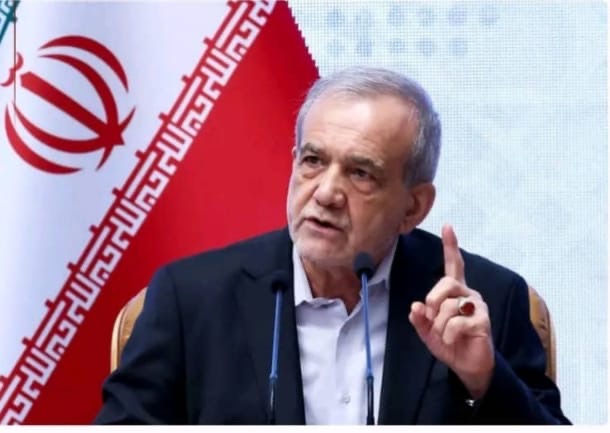
The President, at the 40th International Conference on Islamic Unity: The combined economy of the 57 member states of the Organization of Islamic Cooperation (OIC) in 2024 was approximately $9.2 trillion, but even with this size, it only accounts for 8.3% of the global economy.
The export trade between these countries was only 19% in the same year, and more than four-fifths of the exports from Islamic countries still go to countries outside this group.
We have over 2 billion Muslims, 57 countries, vast energy resources, vital trade routes, capital, markets, and a young population, but our collective influence in many major global decisions is not commensurate with this potential.
Why are our countries more connected to distant economies than to some of our Muslim neighbors? Why, whenever a crisis arises between two Muslim countries, is it often necessary for a power outside the Islamic world to mediate peace?
Most importantly, we must ask why Islamic lands continue to be major centers of war, occupation, displacement, and insecurity in the world; from Palestine and Gaza to Sudan, Lebanon, Yemen, and other places where Muslim people have been suffering the consequences of conflict, occupation, extremism, and power struggles for years.
While the path of dialogue between Iran and the United States was still open for resolving differences, extensive military attacks by the United States and Israel against Iran began.
Defending Iran does not mean being hostile to neighboring countries or Muslim nations. No Islamic land should become a platform for aggression against another Islamic country, and no Islamic country should seek its own security through the insecurity of its neighbors.