


Rabi al-Thanni 21, 1448 (October 2, 2026)
Assalaamun Alaykum Warahmatullah Taallah Wabarakatuhu
NIGERIA AT 66: TOLERANCE, UNITY AND THE ROAD TO NATIONAL RENEWAL
Dear brothers and sisters in Islam,
As Nigeria marks 66 years of independence, we should use this occasion to ask ourselves a simple but important question:
What kind of country are we helping to build?
Nigeria is richly blessed. Allah has given us fertile land, natural resources, intelligent young people, entrepreneurs, professionals, scholars and people of remarkable resilience. Yet we also face insecurity, poverty, unemployment, distrust, communal tensions and religious and ethnic suspicion.
So the question is not whether Nigeria has what it takes to prosper; it is whether we Nigerians can learn to trust, respect and cooperate with one another sufficiently to unlock what Allah SWT has already placed in our hands.
Allah Created Our Diversity
Allah says:
“O mankind! Indeed, We created you from a male and a female, and made you peoples and tribes that you may know one another.” (Qur’an 49:13)
Brothers and sisters, Allah did not say that nations and tribes were created so that we could hate one another. He said “that you may know one another.”
Nigeria’s ethnic diversity is therefore not a curse. Being Hausa, Yoruba, Igbo, Fulani, Kanuri, Igala, Ebira, Tiv, Ijaw, Nupe, Idoma, Gbagyi or belonging to any of our many communities is not itself a problem.
The problem begins when identity becomes a weapon:
When we begin to believe that our tribe is superior.
When we judge people before knowing them.
When we defend wrongdoing simply because the person involved belongs to our group.
Islam calls us back to justice when Allah says:
“Stand firmly for justice, as witnesses for Allah, even if it be against yourselves or your parents and relatives.” (Qur’an 4:135)
This is a strong message for Nigeria.
Justice must come before tribe.
Religious Difference Must Not Become Hatred
Allah also says:
“Allah does not forbid you from being kind and just to those who have not fought you because of religion…” (Qur’an 60:8)
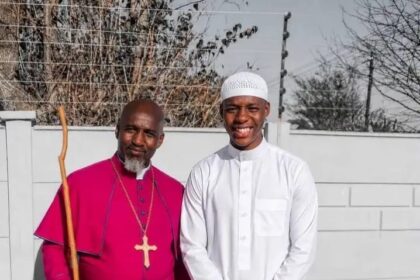
Therefore, being a committed Muslim does not require us to hate our Christian neighbours.
We can be firm in our faith and still be fair.
We can disagree religiously without becoming enemies.
We can defend our beliefs without insulting another person’s faith.
The Prophet Muhammad (peace and blessings be upon him) also taught Muslims to respect the rights of neighbours. Therefore, if our neighbour is in difficulty, our first question should not be:
“What religion does he practise?”
Our first question should be:
“How can I help?”
That is the Islam of mercy and responsibility.
Peace Is an Economic Asset
Brothers and sisters,
We must understand that peace is not only a religious virtue. It is also an economic asset.
When there is peace, farmers can farm.
When there is peace, traders can travel.
When there is peace, children can go to school.
When there is peace, businesses can invest.
When there is peace, communities can develop.
But when violence comes, everything suffers.
Markets close.
Farms are abandoned.
Businesses lose money.
Families are displaced.
Children leave school.
Young people lose opportunities.
So whenever we promote peace, we are not merely preaching religion. We are helping to build the Nigerian economy.
Young People shouldn’t Become Instruments of Hatred
Nigeria’s young people are one of our greatest assets.
But young people need opportunity.
They need education.
They need skills.
They need employment.
They need hope.
We must not allow anyone to recruit them into ethnic hatred, religious violence or criminality.
We should encourage our young people into:
Educational acquisition.
Entrepreneurship.
Agriculture.
Technology.
Science.
Creative industries.
Nation-building.
On the part of our youth, they should be asking:
“What can I build?”
Not:
“Whom can I fight?”
Watch What You Say, What You Forward
The Prophet (peace and blessings be upon him) taught us the importance of responsible speech.
Today, our phones have become extensions of our tongues. Any false message can reach thousands of Nigerians within minutes.
Allah says:
“If a sinful person brings you news, verify it…” (Qur’an 49:6)
This verse is important owing to the current age of the social media. So, before forwarding a message, ask:
Is it true?
Is it verified?
Can it cause harm?
Do not forward rumours about another ethnic group.
Do not spread unverified allegations against another religious community. Do not use social media to turn Nigerians against Nigerians. A Muslim should be a source of peace, not a source of panic.
*Government, Citizens and Religious Leaders*
Government has a responsibility to protect lives, uphold justice and create opportunities.
But the citizens also have responsibilities. We must obey lawful authority, report genuine threats through appropriate channels, protect public property and contribute to community development.
Religious leaders have major responsibilities:
Our mosques must become centres of moral renewal and peaceful citizenship.
Our sermons should discourage hatred.
Our religious teachings should strengthen compassion.
And our faith should be visible not only in how we worship Allah, but also in how we treat His creation.
From Tolerance to Cooperation
But tolerance alone is not enough. We must move from tolerating one another to working with one another in various ways.
Muslims and Christians can cooperate in education.
Communities can cooperate on security.
Young people from different backgrounds can establish businesses together.
Women can build networks for peace and enterprise.
Religious leaders can jointly discourage violence.
The media can promote truthful and responsible information dissemination.
Government can work with communities.
This is how trust grows.
This is how social cohesion becomes an economic resource.
A Message to Every Nigerian
As Nigeria turns 66, we should ask ourselves:
What will our children inherit?
Will they inherit our prejudices? Or will they inherit our possibilities?
Will they inherit suspicion? Or will they inherit cooperation?
Will they inherit a Nigeria divided by fear? Or a Nigeria strengthened by diversity?
Brothers and sisters, Nigeria does not need Nigerians who merely complain about the country. Nigeria needs Nigerians who will help repair it.
Every Muslim should become an ambassador of peace.
Every home should teach tolerance.
Every mosque should promote justice.
Every parent should teach children respect and moral.
Every citizen should reject ethnic superiority and religious hatred.
Every Nigerian should understand that our destinies are interconnected.
Conclusion
Allah says:
“And hold firmly to the rope of Allah all together and do not become divided.” (Qur’an 3:103)
This is the message on Nigeria’s 66th Independence Anniversary:
We should hold together.
We should reject hatred.
We should reject injustice.
We should reject ethnic superiority.
We should reject religious bigotry.
We should embrace justice.
We should embrace mercy.
We should embrace cooperation.
We should build a Nigeria where farmers can farm, traders can trade, children can learn, businesses can grow and communities can live in peace.
_______________
May Allah protect Nigeria.
May Allah protect our communities.
May Allah guide our leaders.
May Allah protect our young people from violence and destructive influences.
May Allah bring peace between Nigerians of every ethnicity and faith.
May Allah bless our land with security, prosperity and justice.
Rabbana ātinā fid-dunyā hasanatan wa fil-ākhirati hasanatan wa qinā ʿadhāban-nār.
Ameen.
Happy 66th Independence Anniversary, Nigeria.
________________
Endeavour to recite Surah Al-Kahf (Chapter 18: Verses 1-110).
Juma’ah Mabrouq