


By Abdulkarim Abdulmalik
Africa has lived with a striking economic contradiction for generations. The continent sits on enormous deposits of minerals that the modern world desperately needs, yet many of the communities where these resources are extracted remain among the poorest.
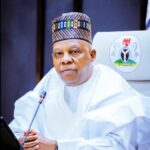
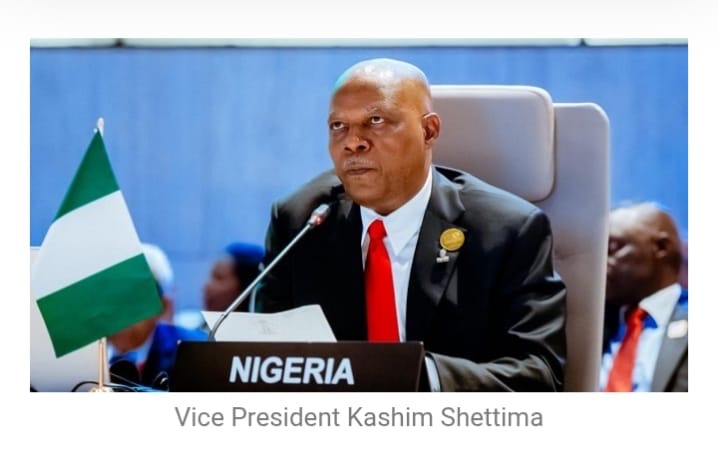
That contradiction lies at the heart of Vice President Kashim Shettima’s recent call for African countries to stop exporting minerals in their raw form and instead capture a much larger share of the value created from their natural resources.
Representing President Bola Tinubu at the Third Africa Minerals Strategy Group High-Level Roundtable in New York, Shettima challenged African leaders to rethink the continent’s traditional relationship with mineral wealth.
His central argument was straightforward: Africa cannot continue to dig up its wealth, ship it abroad and then import the finished products at several times the original value.
It is an argument that goes beyond mining policy. It touches the fundamental question of Africa’s place in the global economy.
From Digging to Processing
For decades, Africa’s mineral economy has largely followed a familiar pattern. Minerals are extracted from African soil, exported as concentrates or raw materials and processed elsewhere. The sophisticated stages of refining, manufacturing and technology development frequently take place outside the continent.
The consequence is that the greatest economic value is often captured after the mineral has left Africa.
Shettima’s intervention therefore represents an important shift in emphasis—from simply attracting mining investment to determining what kind of investment Africa actually needs.
Mining investment remains important. But the question should no longer be merely how much foreign capital enters Africa’s mining sector. African governments must increasingly ask how much processing capacity, technology, infrastructure, employment, knowledge and industrial capability that investment leaves behind.
A tonne of lithium, copper, cobalt or another critical mineral is valuable. But the industrial ecosystem built around refining, processing, battery production, component manufacturing and technological innovation can be considerably more valuable.
That is where Africa’s mineral strategy could become an industrial strategy.
Wealth Beneath the Soil, Poverty Above It
Perhaps the most powerful aspect of Shettima’s argument was his observation that Africa cannot convincingly describe itself as wealthy when communities living around mineral deposits remain poor.
This is a question that deserves serious attention.
If mining takes place in a community but local residents have inadequate roads, electricity, healthcare, schools, water and employment opportunities, the existence of valuable minerals beneath their land may mean little to them.
The challenge is therefore not simply to increase mineral production. It is to ensure that mineral wealth translates into human development.
This requires a different understanding of mining royalties and government revenues. The real measure of success should ultimately be visible in infrastructure, businesses, skilled employment and improved livelihoods.
In other words, the mine should not be the end of the economic story. It should be the beginning.
Africa Should not Compete Against Itself
Another important element of the Vice President’s argument is his warning against African countries competing for mining investments by offering progressively cheaper terms.
When countries compete by reducing royalties, weakening local-content obligations or granting excessive concessions, they may attract investment individually while weakening Africa’s collective bargaining position.
The global mineral market is increasingly strategic. Major economies are seeking reliable supplies of critical minerals for energy transition technologies, electronics, transportation, defence industries and advanced manufacturing.
This creates an opportunity for Africa—but only if African countries negotiate from a position of collective strength.
Regional processing hubs and cross-border mineral corridors could therefore become important instruments of African economic integration.
A mineral may be mined in one country, processed in another, transformed into components in a third and assembled into finished products elsewhere on the continent.
Such an arrangement would transform mineral resources from isolated national commodities into building blocks of a continental industrial economy.
Nigeria’s opportunity
For Nigeria, the discussion has particular relevance.
The country has historically depended heavily on crude oil exports, while other mineral resources have received comparatively less attention. The emerging focus on mining diversification therefore offers an opportunity to learn from the successes and failures of the oil economy.
Shettima pointed to ongoing mining reforms, including efforts to improve geological data, formalise artisanal mining, combat illegal mining and promote local value addition.
The reference to lithium processing in Nasarawa State is particularly significant because it illustrates the difference between exporting a mineral and developing an industry around that mineral.
But Nigeria must be careful not to repeat the mistakes associated with extractive dependence.
The objective should not simply be to replace dependence on crude oil with dependence on another set of raw commodities.
The ambition should be to move from extraction to beneficiation, from beneficiation to manufacturing, and from manufacturing to innovation.
Bringing Artisanal Miners into the Formal Economy
Minister of Solid Minerals Development Dele Alake’s proposal for an African Artisanal Mining Formalisation and Safety Facility adds another important dimension.
Artisanal mining employs large numbers of Africans and provides livelihoods for communities that often have limited economic alternatives. Yet informal operations can expose miners to serious safety risks, environmental degradation and exploitation.
Formalisation should therefore not mean simply imposing regulations on small-scale miners.
It should provide them with access to legal licences, geological information, safer equipment, cooperative structures, finance, training and legitimate markets.
If properly designed, formalisation can turn artisanal mining from a largely informal survival activity into a productive component of the wider mineral economy.
It can also help governments tackle illegal mining and improve environmental accountability.
The Missing Ingredient: Implementation
Africa has no shortage of declarations, conferences and ambitious policy documents.
The more difficult challenge is implementation.
That is why Shettima’s call for clear timelines, financing arrangements and accountability mechanisms for the Continental Integration and Economic Assurance Declaration deserves attention.
A continental mineral strategy will ultimately be judged not by the quality of its speeches but by what happens after the speeches.
Are processing plants built?
Are railways and roads constructed?
Do African companies emerge as serious participants in mineral value chains?
Are young Africans trained as geologists, engineers, metallurgists, technicians and industrial entrepreneurs?
Do mining communities experience measurable improvements in living standards?
Those are the questions that will determine whether Africa’s mineral wealth becomes a blessing or remains another chapter in the continent’s long history of exporting raw materials.
A Changing Global Mineral Order
The presence of African ministers, development finance institutions, multilateral organisations and mining and technology companies at the New York meeting also reflects the changing strategic importance of critical minerals.
The United States’ expression of readiness to partner with African countries demonstrates that global powers increasingly recognise Africa’s importance to future mineral supply chains.
But African governments should enter these partnerships with a clear understanding of their own interests.
Partnership should mean more than extracting African resources for foreign markets. It should involve technology transfer, skills development, infrastructure, responsible investment and local value creation.
The Mutual Assured Development Framework promoted by the Africa Minerals Strategy Group captures this principle: governments need predictable policies and credible institutions, while investors should bring responsible capital, technology and genuine local economic value.
The Real Test
Africa’s mineral wealth presents an extraordinary opportunity, but opportunity alone does not create development.
The continent has to negotiate better, cooperate more closely and invest in the infrastructure and human capital required to transform minerals into industrial capacity.
Shettima’s message is therefore larger than a call to process minerals locally. It is a call for Africa to reconsider its economic position in the world.
For too long, the continent has supplied what others need while buying back what it could have produced itself.
The next phase should be different.
Africa’s mineral deposits should generate mines—but also factories. They should generate exports—but also African companies. They should generate government revenue—but also skilled jobs, technology and infrastructure. Above all, they should generate better lives for the people living closest to the resources.
The ultimate test of Africa’s mineral strategy will not be how many tonnes of minerals leave its shores.
It will be how much African value remains after the minerals are extracted.
– Abdulkarim Abdulmalik is an Abuja-based Journalist. Email: nowmalik@gmail.com