


By Tayọ Lawal
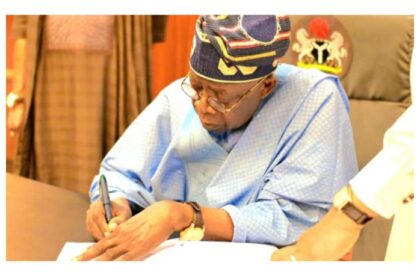
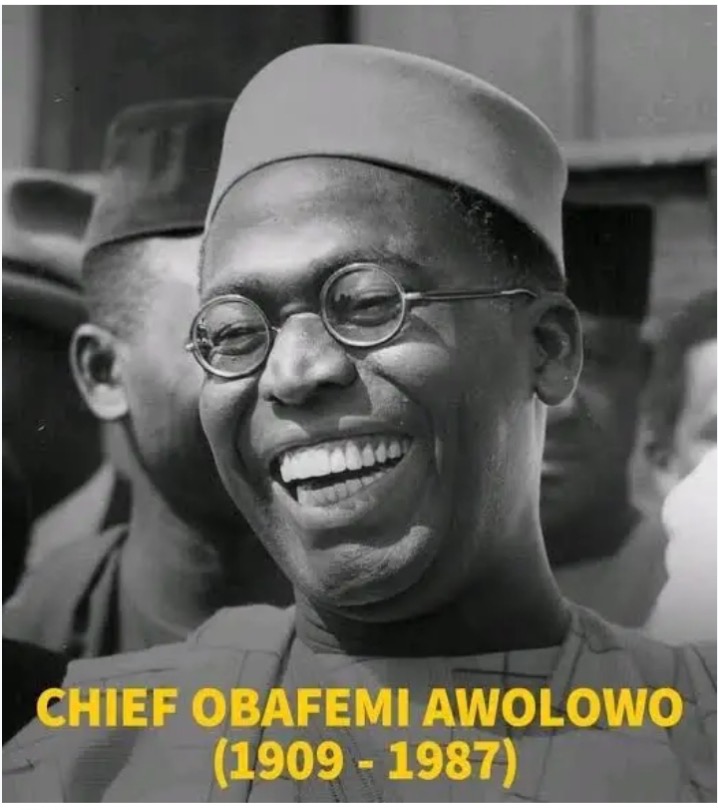
Today, 39 years, 1 month and 1 day ago, Chief Ọbafẹmi Awolọwọ – baptismal name Jeremiah, went silent.
I sat down to calculate not for any academic reason, but because I needed to feel how long we have been wandering without a compass.
On May 9, 1987, when he left us, armed robbery was still a shameful secret.
Kidnapping was something you heard about in foreign films.
Banditry belonged to American Westerns, not Nigerian forests.
Look at us now.
Every single evil he warned against is walking our streets freely, not hiding, not ashamed, just walking.
Back in 1981, when the oil money was making everyone drunk, Awolọwọ sat down and wrote an open letter to President Shehu Usman Aliyu Shagari.
These were his exact words:
“Our ship of state is fast approaching a huge rock, and unless you, as the chief helmsman, quickly rise to the occasion and courageously steer the ship away from its present course, it shall hit the rock, and the inescapable consequence will be an unspeakable disaster such as is rare in the annals of man.”
That was 1981.
Forty-five years ago.
And what did Nigeria do?
We laughed at him.
We called him a bitter old man who lost elections.
We called him Jeremiah, the Prophet of Doom.
Senators mocked him on the floor of the National Assembly.
Editorial writers dismissed him as a relic.
His own people in the West kept quiet because they were afraid of being called pessimists.
It was boldly written by the Western axis press; the Northern elites joined to mock him.
One newspaper said he was suffering from “political menopause” – those were the exact words.
Nobody asked the question that mattered: what was he doing while they were laughing?
He answered that question himself.
“While many men in power and public office are busy carousing in the midst of women of easy virtue and men of low morals,” he said, “I, as a few others like me, am busy at my desk thinking about the problems of Nigeria and proffering solutions to them.”
Then he added this:
“Only the deep can call to the deep.”
Read that again.
He was at his desk.
They were in clubs.
He was thinking.
They were carousing.
And we called him the old fool.
As the Roman philosopher Seneca once wrote, “No man was ever wise by chance.”
Awo’s wisdom did not fall from the sky.
It came from nights spent alone, worrying about a nation that did not want to be saved.
Everything he said would happen, happened.
The ship hit the rock.
Oil prices crashed in the mid-80s.
Austerity came.
Schools that he had made free in the West were abandoned.
Teachers stopped being paid.
A whole generation, especially in the North, was left uneducated.
And then the children of that generation grew up.
Awolọwọ had warned us long before.
“The kids you refused to educate are coming back to hunt you down today,” he said.
Those were not just words.
Those were a tombstone for a nation that refused to listen.
Look at what is happening now in 2026.
Armed robbery is no longer news.
Kidnapping is a business.
University students taken from their hostels.
Village chiefs dragged into forests.
Bus passengers counted like cattle.
Bandits in the North-West have their own flag, their own taxes, their own territory.
In the South-West, the children of the uneducated now break into homes with guns where books should have been.
Plato, the Greek philosopher, said something that fits here perfectly:
“The punishment which the wise suffer who refuse to take part in the government, is to live under the government of worse men.”
We refused to let Awo steer the ship.
So now we are governed by the men he warned us about – and worse, by their armed, angry, unruly, untaught children.
History does not ask for apologies, but it keeps receipts.
Take the men who stood against Awolọwọ.
Dr. Michael Okpara of the East disagreed with him on strategy but later quietly admitted that Awo’s vision on education and federalism was deeper than he had ever acknowledged.
Chief Richard Akinjide, who mocked the 1981 prophecy as alarmist, lived long enough to tell people privately, “Awo saw it coming” – though he never said it publicly.
Chief Ladoke Akintọla, once an ally, chose ambition over vision, sided with the Northern establishment, and left behind only a cautionary tale while Awo’s name was carved in gold across the West.
Chief Meredith Adisa Akinloye, the strongman of old Ọyọ politics, fought Awo relentlessly but watched his own political house crumble while Awo’s ideas outlived every enemy.
Chief Anthony Enahoro, a fellow progressive who later broke ranks, spent his final years quietly conceding that the sage had been more consistent in principle than almost anyone.
Even Dr. Nnamdi Azikiwe, the Great Zik of Africa, who had his own fierce battles with Awo, confessed in private moments that the man from Ikenne was “the best brain among us.”
And my own father, Alhaji Jimọh Afọlabi Lawal, told me before he died: “Your Awo was stubborn. But stubborn people are the only ones who see what others refuse to look at.”
Even General Yakubu Gowon, who fought a war against Awo’s federalism, later honoured him – the National Youth Service Corps was built on a slogan Awo had championed for years.
Awo did not need their apologies.
He had already said:
“Only the deep can call to the deep.”
The shallow never understood him.
They could only, years later, weep quietly.
Here is what Awolọwọ understood that no Nigerian leader since has truly grasped.
An uneducated population is not a workforce.
It is a time bomb.
The armed robber holding up a bank today is not a monster from birth.
He is a boy who never learned that hands can hold books instead of triggers.
The kidnapper in the forest is not a devil.
He is a youth who was shown no economic path except the shortcut of crime.
The bandit is not a spirit.
He is the ghost of a school that was never built, a teacher who was never paid, a future that was never invested in.
The German philosopher Arthur Schopenhauer wrote:
“Every man takes the limits of his own field of vision for the limits of the world.”
The politicians who mocked Awo had narrow vision.
They saw oil money.
They saw appointments.
They saw regions.
They did not see the ticking clock of ignorance.
Awolọwọ saw it.
He wept over it.
He sat alone at his desk while others partied.
And we called him a fool.
Today, 39 years, 1 month and 1 day after his death, let me say what we are all afraid to say out loud.
We are all living inside Awolọwọ’s prophecy.
We mocked him in 1981.
We abandoned free education.
We defunded the regions.
We chose shallow leaders who caroused while the ship sailed toward the rock.
And now we are paying the price.
In bl00d.
In ransom.
In tears.
“The children of the poor that you failed to educate will not let your children sleep peacefully.”
That was not bitterness.
That was love.
The love of a Jeremiah who told his people the truth and was stoned for it.
The Roman statesman Cicero said:
“The life of the dead is placed in the memory of the living.”
But for Awolọwọ, our Jeremiah, his life is not just in memory.
It is in every uneducated child carrying a gun.
Every parent weeping over a kidnapped daughter.
Every village living in fear.
His words did not die with him.
They are screaming at us from every crime scene.
May Nigeria finally learn before the rocks completely destroy the ship.
And may we learn to honour our living prophets before they become dead ancestors.
Because the deepest truth is this: the solutions to our deepest problems will never come from those who carouse.
They will only come from those willing to sit alone at a desk and think.
Awo sat.
We laughed.
Now we weep.
Then, he slept forever.
Sleep well, the Nigerian version of Nostradamus – the man who watered a nation that was too dry to weep back.
“Old men are dangerous. They have seen the patterns. They recognize that what young men call ‘new ideas’ are often old mistakes in new costumes. Listen to them, or prepare to repeat every tragedy they tried to spare you from.” – Marcus Tullius Cicero, On Old Age (De Senectute)
– TayọLawal manteedetlaw@gmail.com