


Exhaustion Inside Israel’s War Machine
Senior former Israeli IDF intelligence officials are now openly warning that Israel should stop the war. According to Yossi Melman, quoting a former senior Israeli IDF intelligence official, the Israeli public and the IDF are exhausted. The official argued that Israel and Trump should simply declare victory, announce that all objectives have been achieved, and cease fire. Just end the war that way. No negotiations, no deal, and no lifting of sanctions. Simply let the regime collapse into itself.
Melman explained that he spoke with a former senior Aman official who previously served in Unit 8200. According to him, the official’s analysis is one of the clearest and most measured voices amid the endless chatter dominating Israeli public discourse and television panels.
In his view, Israel can and should stop the war. Iran is being hit with severe blows, but Israel is also paying a heavy price in exhaustion and pressure.
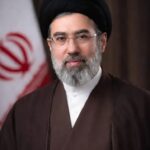
The official also emphasized that the new leader, Mojtaba Khamenei, lacks experience in managing large state systems. He previously focused mainly on financial matters and managing the enormous family wealth accumulated by the Khamenei family. The official believes Mojtaba understands Iran has little chance in a direct confrontation with both Israel and the United States, and that Iran’s nuclear project has suffered painful blows.
Because of this, the official does not rule out the possibility that the new Supreme Leader might eventually conclude that little nuclear capability remains and may sacrifice what is left in exchange for a deal and the lifting of sanctions.
At the same time, the official warned that what is unfolding now is also an oil war. The Iranians know the United States is extremely sensitive to disruptions in energy markets.
The officer added another key point: the new leader is not bound by old commitments and has fewer inhibitions. However, both he and the Revolutionary Guards also have a great deal to lose.
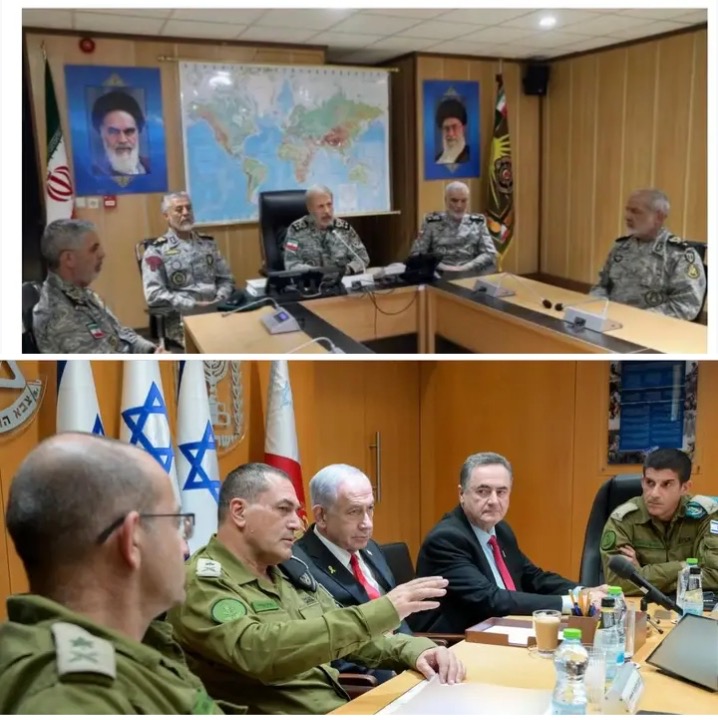
During the first three days of the war, there may indeed have been a communications breakdown inside Iran. As a result, Revolutionary Guard units may have acted independently according to pre-prepared contingency plans. Under those plans, if the central government struggles to function, provincial commanders — Iran is divided into 31 provinces — have authority to operate on their own.
In the early days of the war, Iranian responses appeared incoherent and sporadic, which led some observers to believe Iran had command-and-control problems. But according to the official, that phase has passed. Today there is leadership in the country that had already been prepared in advance.
He also warned that Israel often misunderstands Iran. Iran is not simply the Revolutionary Guards. It is a country with institutions and civil society. Unfortunately, many in Israel think of Iran only as a nuclear program that happens to have a country.
Iran has so far launched about 600 ballistic missiles from an arsenal estimated at roughly 2,500 missiles before the war, according to assessments by the IDF Intelligence Directorate, Aman. Many launchers have been damaged during the first thirteen days of the campaign, yet Iran still demonstrates the ability to launch several missiles — between two and five in each barrage — several times a day.
According to the former official, counting launchers and missiles misses the real point. What matters is Iran’s operational doctrine. They are managing a munitions economy. They fire only a few missiles at a time, and that is enough. Their goal is survival while wearing down Israel psychologically and strategically. In effect, their message is simple: you will not sleep at night, and during the day you will run to shelters.
(Yossi Melman is the intelligence and security correspondent for Haaretz.)
_______
*Iran Not Blinking*
Two weeks into the war, Israel and the United States are already tamping down expectations about the outcome as concerns about the consequences grow.
According to Ben Caspit of Al-Monitor, Iran is not blinking.
Eli Levita, the former deputy director of the Israel Atomic Energy Commission, acknowledged that while the military cooperation between Israel and the United States has been unprecedented and many operational achievements are impressive, the ultimate goals of the war remain far from being achieved.
The overthrow of the Iranian regime now seems imaginary.
Levita warned that Israel could actually face a more dangerous Iran after the war than before. A new leadership under Mojtaba Khamenei may conclude that being a nuclear threshold state failed to deter its enemies. The missile arsenal also failed to deter them. Even threats to expand the war across the region did not deter them.
In that scenario, Iran might conclude that the only real deterrent left is nuclear weapons, following the model of North Korea.
This possibility is deeply alarming to Gulf states. A wounded and humiliated Iran led by Mojtaba Khamenei is described as a nightmare scenario not only for Israel but also for the UAE, Bahrain, Saudi Arabia, and even Qatar.
According to a senior Israeli diplomatic source, these governments fear that Trump could lose interest and leave them alone with what he described as a wounded and humiliated tiger.
Regional leaders are already in contact with Washington trying to ensure continued American commitment to the war. However, the Americans are reportedly unwilling to promise anything at the moment.
Netanyahu himself has quietly shifted his rhetoric. He is no longer speaking about Israel or the United States overthrowing the Iranian regime directly. Instead, he is calling on the Iranian people to overthrow their own government.
According to Israeli diplomatic sources, Netanyahu is preparing an alibi so that when the war ends he can claim Israel did everything possible to create the conditions for regime change, but that the Iranian people failed to act.
Meanwhile, Israel continues expanding its strikes while the United States is increasing the pace of its own military operations. American power in the region continues to grow, with a third aircraft carrier expected to arrive and additional bombers entering the theater.
According to Israeli military sources, the Americans are operating as if the campaign is only beginning.
At the same time, Israel appears to be slowing its own operational tempo. As one military source put it, there are certain things that only the United States can do.
_______
*Israel Backtracks and Looks to Washington*
The reality is becoming clearer even inside Israel. Despite the sky-high expectations and dramatic declarations that accompanied the beginning of the war, Israeli commentators now admit that the outcome depends largely on what the United States decides to do next.
Ben Caspit wrote that even if the Iranian regime does not collapse, the Ayatollahs have still suffered a severe blow and have been significantly weakened. Hezbollah has also been weakened both operationally and politically.
However, the earlier declarations about “removing the threat” now appear hollow. According to Israeli commentary, this is nothing new.
The Israeli Air Force has achieved clear air superiority over Iranian skies and continues striking missile launch infrastructure. The results are significant but far from absolute.
Iran’s military industry is vast beyond imagination. Destroying such a system takes time.
Caspit described the current dynamic bluntly: Israel stabs, America tramples.
The American military machine continues to expand its presence in the region with carriers, bombers, and escalating operational tempo. Meanwhile, Israeli momentum could begin to decline.
Despite the pressure, Iran is not giving up. Iranian forces continue to fight, learn, adapt, attempt to disrupt Israeli air operations, and continue launching missiles in multiple directions, occasionally succeeding.
The task, he said, is Sisyphean — but unlike Sisyphus, Israel believes it may eventually reach the top of the hill.
Still, the final outcome of the war will ultimately be determined by the United States.
If the United States maintains its military pressure, imposes naval and air blockades, tightens sanctions, and closes economic loopholes, the Iranian regime could face severe difficulty recovering.
But if the United States eventually withdraws from the region after the war, the consequences could be very different.
Because in the end, Israel may have replaced an aging 86-year-old Ayatollah with a younger, healthier 56-year-old leader seeking revenge after losing family members in the war.
For now, the war continues, and the only way to break the cycle may eventually be the same path wars throughout history have taken — ending the violence through some form of agreement.
_______
Source: Conflicts Forum: compilation of consequential observations & strategic perspectives from leading Israeli commentators