


Why the landmark agreement could finally turn Nigeria’s sleeping industrial giant into a productive economic engine
By Abdulkarim Abdulmalik
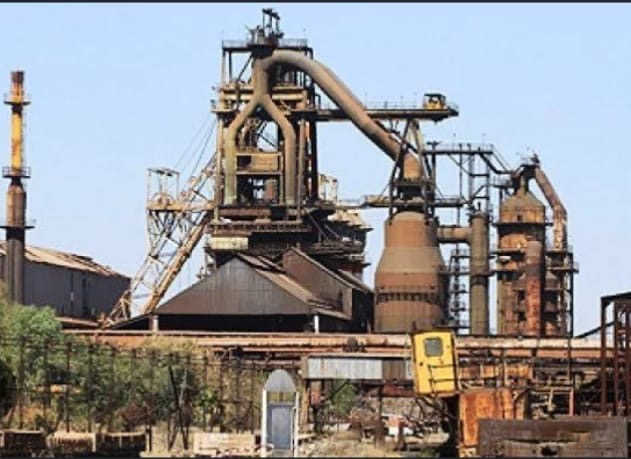
For generations of Nigerians, Ajaokuta Steel Plant has represented two things at once: the enormous ambition of a nation determined to industrialise and the painful frustration of a country that has repeatedly struggled to turn its industrial dreams into reality.
Since construction began in 1979, Ajaokuta has consumed enormous public attention and resources, while the promise of a fully operational integrated steel complex remained largely unfulfilled.
Now, after 46 years of waiting, there is a fresh reason for cautious optimism.
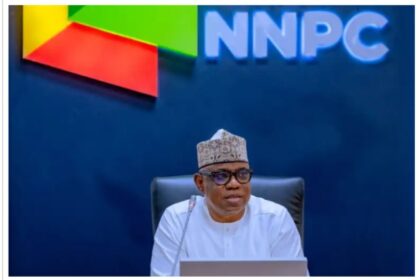
The Federal Government, through the Nigerian National Petroleum Company Limited (NNPC Ltd.), has reached a landmark long-term gas arrangement with Ajaokuta Steel Company Limited that could remove one of the critical obstacles militating it’s revival.
The agreement, signed during the 25th Nigeria Oil and Gas Energy Week in Abuja in July 2026, includes a 20-year Gas Sale and Aggregation Agreement involving NNPC Exploration and Production Limited (NEPL), the Gas Aggregation Company of Nigeria (GACN) and Ajaokuta Steel. The arrangement provides 3 million standard cubic feet per day (MMscf/d) of firm gas and 47 MMscf/d of interruptible volumes for the power plant serving the steel complex.
For Ajaokuta, this is not simply another government agreement.
It is potentially the difference between a plant that exists largely on paper and one capable of becoming the industrial powerhouse its founders envisaged.
A Long Wait for a National Dream
Ajaokuta’s story has become almost legendary.
The plant was conceived as the foundation upon which Nigeria would build a broad industrial economy. Steel was expected to feed construction, engineering, manufacturing, transportation, mining, defence-related industries and numerous other sectors.
Instead, the complex became one of the most enduring symbols of Nigeria’s unfinished industrial revolution.
Over the decades, successive administrations announced initiatives, partnerships and revival plans. Investors were courted. Technical studies were undertaken. Committees were inaugurated. Yet the fundamental question remained: how could the massive complex operate competitively without dependable energy?
That question has now received a significant answer.
NNPC itself described the July agreements as part of a broader strategy to deepen domestic gas utilisation, strengthen energy security and accelerate gas-based industrialisation. Its agreement with Ajaokuta goes beyond supplying gas, with the accompanying MoU also envisaging cooperation aimed at producing raw materials for oil and gas pipelines and supporting major infrastructure projects.
Why Gas Matters So Much
Steel production is energy-intensive. A plant of Ajaokuta’s scale cannot be sustained by intermittent or uncertain energy arrangements.
This explains why the new agreement matters.
A long-term gas supply framework gives potential investors a potent response to what they have for years, been demanding for: greater certainty about a critical operating input.
That does not mean Ajaokuta is suddenly producing steel today. It would be premature to make that claim.
Rather, the agreement removes a major piece of the puzzle.
As the Independent reported, reliable long-term gas supply has consistently been identified as one of the critical requirements for attracting investors and moving the plant toward full-scale operations.
The significance, therefore, is not merely that gas has been promised. It is that the Federal Government and its energy-sector partners are attempting to create the conditions under which serious investment and phased recommissioning could become commercially realistic.
The Tinubu Factor
For President Bola Ahmed Tinubu, the development provides an opportunity to connect his administration’s gas, infrastructure and industrialisation policies to one of Nigeria’s most recognisable industrial projects.
The Tinubu administration has repeatedly presented economic diversification and domestic production as central components of government policies.
Ajaokuta fits naturally into that vision.
Nigeria cannot sustainably build a diversified economy while importing large quantities of basic industrial inputs that could potentially be produced domestically.
If Ajaokuta eventually achieves meaningful production, its impact could extend well beyond the plant’s gates.
Construction companies would require steel. Manufacturers would require steel. Engineering firms would require steel. Transport infrastructure would require steel. Rail development would require steel. The broader industrial ecosystem could benefit from a stronger domestic supply chain.
That is why the Ajaokuta story is ultimately bigger than Ajaokuta.
Jobs Beyond the Factory Gates
The most immediate human dimension of the revival is employment.
A functioning steel complex would require engineers, technicians, artisans, transport operators, maintenance workers, administrators, security personnel and a wide range of specialised professionals.
But the potential indirect employment could be more significant.
Mining, logistics, fabrication, construction, equipment maintenance, hospitality, housing, transportation and other businesses around the industrial ecosystem could expand as activity increases.
For communities around Ajaokuta and Kogi State, the difference between an idle industrial complex and an active one would become transformational.
Young Nigerians who have grown up seeing the plant as a monument to what might have been, could eventually see it as a place where skills are acquired, careers are built and businesses are created.
From Import Dependency to Industrial Confidence
Nigeria’s steel challenge has never been simply about producing metal.
It is about economic sovereignty.
Every major industrial economy depends on reliable access to basic materials. A country that must continually import critical industrial inputs exposes itself to exchange-rate pressures, international price fluctuations, supply disruptions and foreign-exchange constraints.
A functioning domestic steel industry could therefore strengthen Nigeria’s manufacturing base and reduce some import dependence.
But this must be approached realistically.
The gas agreement alone will not solve every problem confronting Ajaokuta. The company requires extensive technical, financial, managerial and infrastructural work. Its equipment, production systems, investment structure and commercial model must all be properly assessed and developed.
The Federal Government itself has previously identified technical and financial audits and investor participation as important elements of the revival process.
Consequently, Nigerians should celebrate the gas agreement without confusing it with the final commissioning of the steel plant.
The real victory will come when the furnaces, production lines and associated facilities begin operating sustainably and commercially.
Ajaokuta Must Not Become Another Broken Promise
This is where the Tinubu administration faces its greatest test.
Nigeria has seen too many promising industrial announcements that eventually effervescence from public memory.
The 20-year gas agreement creates an opportunity, but opportunity must now be converted into execution.
There must be transparency about the remaining technical requirements, investment commitments, timelines and expected production milestones.
There must also be strong institutional protection for the project so that its future does not depend entirely on the political interests of successive administrations.
Ajaokuta should become a national industrial asset rather than a political trophy.
The Giant Stirs
The most compelling feature of this moment may be psychological.
For 46 years, Ajaokuta has reminded Nigerians of an unfinished dream.
The July 2026 gas agreement does not erase that history; or does it guarantee instant success.
But it changes the conversation.
For the first time in a long while, the question is shifting from “Why has Ajaokuta not worked?” to “What must be done to make it work?”
That is a significant change.
If the agreement is followed by disciplined investment, technical rehabilitation, credible management, reliable infrastructure and sound commercial planning, Ajaokuta could yet become what it was originally intended to be: a foundation for Nigeria’s industrial transformation.
For Nigerians who grew up hearing the name Ajaokuta without seeing its promise manifested, the latest development offers something precious—not a licence for celebration without scrutiny, but a reason to hope.
After 46 years, the sleeping giant may finally be stirring.
And if Nigeria gets the next steps right, Ajaokuta’s greatest chapter may not belong to its past.
It may be waiting to be written.
– Abdulkarim Abdulmalik is an Abuja-based Journalist and can be reached on Email: nowmalik@gmail.com