


By Anh Tuan
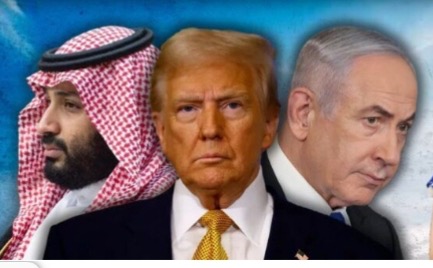
In a stunning display of diplomatic hardball that has sent shockwaves through the Middle East, former President Donald Trump reportedly made an unprecedented demand regarding Israel during a tense phone call involving Iranian officials — a move that left key Gulf allies stunned and scrambling for a response.
According to sources close to the discussions, Trump did not mince words, insisting on a dramatic shift in regional dynamics that would dramatically strengthen Israel’s position while putting immense pressure on Tehran.
The call, which took place amid escalating tensions over Iran’s nuclear program and proxy activities across the region, has been described by insiders as one of the most confrontational high-level conversations in recent memory. What began as a potential opening for dialogue quickly transformed into a masterclass in Trump-style negotiation: bold, unapologetic, and utterly unpredictable.
“Trump looked them straight in the eye — metaphorically speaking — and said the only way forward was for Iran to accept Israel’s right to exist not just in words, but in ironclad security guarantees that would reshape the entire balance of power,” one senior Gulf official reportedly told Firstpost, speaking on condition of anonymity due to the sensitivity of the matter.
This shocking push came at a critical juncture. For months, Gulf states including Saudi Arabia, the UAE, and Bahrain had been quietly working behind the scenes to de-escalate tensions with Iran while simultaneously deepening their own security partnerships with Israel under the shadow of the Abraham Accords. Trump’s intervention, however, threatened to upend the delicate balancing act these nations had been performing.
The demand itself was audacious even by Trump’s standards.
Insiders reveal he called for Iran to publicly and permanently abandon its longstanding goal of “wiping Israel off the map,” dismantle significant portions of its ballistic missile program targeting Israeli territory, and cease all funding and arming of groups like Hezbollah, Hamas, and the Houthis. In exchange, Trump allegedly floated the possibility of sanctions relief — but only if Israel was given a formal seat at the table in future regional security arrangements, effectively creating a new anti-Iran alliance with Israel at its core.
Gulf allies, who have invested billions in hedging their bets between Washington, Jerusalem, and cautious outreach to Tehran, were reportedly caught completely off guard. One source described the moment the demand was relayed as “a bombshell that exploded in slow motion.” Saudi officials, in particular, are said to have expressed private concerns that such an aggressive stance could derail years of careful diplomacy aimed at preventing a full-scale regional war.
Yet Trump’s calculation appears rooted in his long-standing “maximum pressure” doctrine. Having previously overseen the Abraham Accords — the groundbreaking normalization agreements between Israel and several Arab states — Trump sees himself as the architect of a new Middle East where Israel is no longer the isolated outlier but a central pillar of security and prosperity.
“Trump made it crystal clear: no more playing both sides,” another Washington insider familiar with the call recounted. “He told them that if Gulf countries want continued American security guarantees and economic partnerships, they need to stop hedging and fully commit to a front that includes Israel as an equal partner against Iranian aggression.”
The timing of the call could not have been more dramatic. It came just days after reports emerged of Iran advancing its uranium enrichment capabilities closer to weapons-grade levels, coupled with renewed Houthi attacks on shipping lanes critical to Gulf economies.
Israeli intelligence had reportedly shared alarming assessments with their American counterparts, warning that Tehran was mere months away from a breakout capability.
Trump, never one to shy away from leveraging personal relationships, reportedly referenced his strong rapport with Israeli Prime Minister Benjamin Netanyahu and key Gulf leaders during the conversation. “Bibi and I fixed this once before,” he is said to have remarked, alluding to the Abraham Accords. “Now it’s time to finish the job.”
The reaction from Gulf capitals was swift and multifaceted. While publicly maintaining diplomatic composure, private communications between Riyadh, Abu Dhabi, and Manama revealed deep anxiety. The UAE, which has developed one of the closest working relationships with Israel in the region, reportedly supported elements of Trump’s hardline approach but worried about the economic fallout of renewed Iranian hostility. Saudi Arabia, still navigating its own complex internal reforms under Crown Prince Mohammed bin Salman, found itself in a particularly precarious position — eager for normalization with Israel but hesitant to be seen as following an American diktat that could inflame domestic and Islamic world opinion.
Iranian officials, for their part, were said to have responded with predictable fury. Supreme Leader Ayatollah Ali Khamenei’s inner circle viewed Trump’s demand as nothing short of a declaration of political warfare. Yet behind the public bluster, some Iranian moderates reportedly recognized the shifting regional sands — especially as Russia and China, traditional backers, appeared increasingly distracted by their own global challenges.
What makes this episode particularly fascinating is how it reveals the evolving power dynamics in the Middle East. For decades, Gulf states maintained strategic ambiguity toward Israel, benefiting from American protection while paying lip service to Palestinian causes.
Trump’s intervention forces these nations to confront an uncomfortable truth: in an era of Iranian aggression, economic diversification needs, and American domestic political shifts, sitting on the fence may no longer be viable.
Security analysts have been poring over the implications. Dr. Elena Markov, a Middle East expert at the Institute for Strategic Studies, told Firstpost: “This isn’t just about one phone call. Trump is signaling that the next phase of regional realignment will have Israel as a fully integrated power — not a guest, but a co-architect. The Gulf states are being asked to choose: prosperity and security through normalization, or continued risk through equivocation.”
The economic stakes are enormous. A full integration of Israel into Gulf security frameworks could unlock trillions in joint investment, technology sharing, and energy cooperation. Israeli expertise in cybersecurity, water management, and defense could prove invaluable to Gulf nations facing climate challenges and evolving threats. Conversely, alienating Iran further risks renewed proxy conflicts that could spike oil prices and destabilize global markets.
Trump’s personal style loomed large over the entire episode. Known for his deal-making bravado, he reportedly mixed threats with incentives — warning of secondary sanctions on any entities continuing to do business with Iran while dangling the prospect of massive American investment in a “new Middle East” anchored by Israel-Gulf cooperation.
Critics, however, warn that such aggressive posturing could backfire spectacularly. Progressive voices in Washington and European capitals have condemned the approach as reckless saber-rattling that ignores Palestinian suffering and risks pushing Iran into a corner from which it might lash out unpredictably.
Yet Trump’s defenders point to his track record. During his previous term, the Abraham Accords achieved what many considered impossible — breaking decades of Arab-Israeli hostility without a single new war. His supporters argue that only Trump possesses the combination of personal relationships, unpredictability, and political will to force the region toward a more stable, Israel-inclusive future.
As details of the call continue to leak, the diplomatic fallout is only beginning. Israeli officials have remained notably silent in public, likely coordinating closely with Washington.
Netanyahu’s office is said to be “extremely satisfied” with Trump’s stance, viewing it as validation of Israel’s long-standing security concerns.
Meanwhile, social media across the Arab world has erupted with heated debate. Some younger Gulf citizens, increasingly exposed to Israeli technology and culture through quiet channels, express cautious support for deeper ties. Others, influenced by traditional media narratives, see Trump’s demand as an existential threat to Arab solidarity.
The coming weeks will prove decisive. Will Gulf leaders quietly align with Trump’s vision, accelerating normalization efforts? Or will they attempt to walk a tighterrope, preserving relations with Washington and Israel while keeping channels open to Tehran?
One thing is certain: Trump’s shocking Israel push has shattered the status quo. In demanding that ancient enemies find common cause against a mutual threat, he has forced the Middle East to look in the mirror and confront its future.
The region — and the world — is watching to see who will blink first.
– HybridMag