


Iran’s Foreign Minister Rejects Trump’s 48-Hour Ultimatum on Strait of Hormuz: “Try Respect”
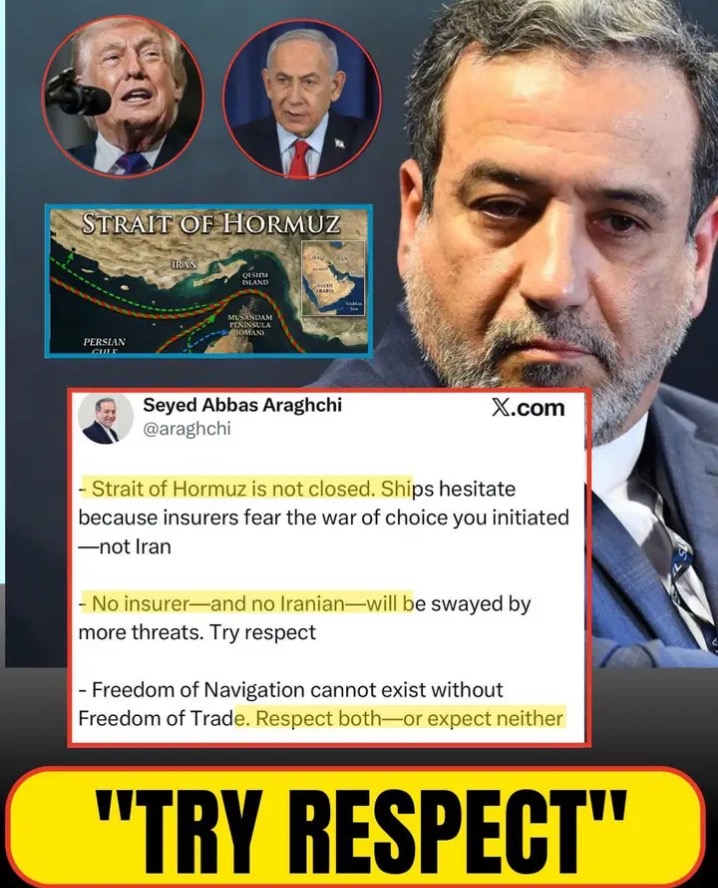
“The Strait of Hormuz is not closed. Ships hesitate because insurers fear the war of choice you initiated—not Iran. “
In direct response to President Trump’s 48-hour deadline threatening military or economic consequences if Iran disrupts the vital waterway, Foreign Minister Abbas Araghchi made clear that the strait remains fully open to commercial traffic. Any slowdown in shipping is driven solely by skyrocketing insurance rates caused by the instability of the conflict Washington chose to escalate, not by any Iranian blockade or interference. This distinction places full responsibility for the hesitation on U.S. policy rather than Iranian actions, underscoring that Tehran has taken no steps to close the passage despite the ultimatum.
“No insurer—and no Iranian—will be swayed by more threats. Try respect. “
Araghchi dismissed the effectiveness of additional U.S. pressure, stating bluntly that neither global insurance companies nor the Iranian government respond to ultimatums or saber-rattling. Instead of escalation, he called on the Trump administration to shift toward a policy of mutual respect, arguing that decades of sanctions and threats have only hardened positions and failed to achieve compliance. This appeal highlights a fundamental diplomatic principle: coercion produces defiance, while respectful dialogue offers the only realistic path to de-escalation in the region.
“Freedom of Navigation cannot exist without Freedom of Trade. Respect both—or expect neither. “
The Foreign Minister tied the two concepts together as inseparable, warning that the United States cannot demand safe passage for its allies’ vessels while simultaneously imposing crippling trade sanctions on Iran. True freedom of navigation in the Strait of Hormuz, which carries one-fifth of global oil, requires reciprocal freedom of commerce for all parties involved. Failure to honor both principles simultaneously, Araghchi cautioned, will result in neither being guaranteed implying that continued U.S. threats without addressing Iran’s legitimate trade grievances could lead to unpredictable consequences for international shipping.