



If you are relying on American media alone for the truth about this war, you are being managed. Here is what non-Western and independent reporting is saying that you probably will not hear on CNN or Fox tonight.
TRUMP ALREADY ASKED FOR A CEASEFIRE — IRAN SAID NO
According to Israeli outlet Yedioth Ahronot, a US official proposed an immediate ceasefire through an Italian mediator just hours after the strikes began.
Iran rejected it.
Trump reportedly expected a short 4-5 day operation. Iran has no intention of playing along with that timeline. Iranian officials say the last ceasefire in 2025 only gave the US and Israel time to rearm and plan a bigger strike — and they will not repeat that mistake.
THE REGIME DID NOT COLLAPSE
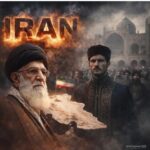
The theory behind the attack was that killing Khamenei would cause the Islamic Republic to crumble internally.
It didn’t.
A transitional leadership council is already operating and the IRGC command structure is still functioning. While some Iranians celebrated, large mourning rallies have also taken place with crowds framing Khamenei as a martyr.
Instead of collapsing the regime, the strike may have unified many inside Iran against the attackers.
THE US IS TAKING REAL HITS
The Pentagon has confirmed the first American combat deaths and injuries just two days into the war.
Meanwhile, images circulating outside Western media show damage to US and allied infrastructure across the region — including strikes near bases in Iraq and Kuwait, fires near Gulf shipping routes, and disruptions around the Strait of Hormuz.
Even Israeli analysts warn that a major hit on US forces or shipping could rapidly turn American public opinion against the war.
IRAN CHANGED ITS STRATEGY
Instead of launching one large missile barrage that gets intercepted, Iran has shifted to constant low-level strikes across multiple targets — bases, infrastructure, and shipping.
Each attack is small. But together they create economic pressure.
Air traffic disruptions, shipping delays in the Strait of Hormuz, and rising insurance costs for tankers are already beginning to ripple through global markets.
Iran’s strategy appears simple: make the war economically painful enough that continuing becomes politically unsustainable.
THE WAR IS DEEPLY UNPOPULAR
Early polling in the US shows limited public support for the attack. Lawmakers from both parties are questioning the legality of the operation, and a bipartisan War Powers resolution is already being discussed in Congress.
Globally, protests and backlash are spreading. Demonstrations have erupted near US diplomatic missions in several countries, and regional governments are scrambling to prevent escalation.
Hezbollah has also begun firing from Lebanon into northern Israel — a move the IDF described as an escalation that could widen the war.
THE QUESTION MANY ARE ASKING
If the war was meant to be quick — why are ceasefire talks already being floated?
If the regime was supposed to collapse — why is it still fighting?
And if this was meant to stabilize the region — why is the conflict spreading?
One thing is certain: the war being presented on television may not be the full picture.
Follow multiple international sources. Compare narratives. And question everything.
The reality of a war is rarely as simple as the version sold on the evening news.