


The world lives under a strange rule.
Some nations can possess the most destructive weapons ever created.
Others are told they must never have them.
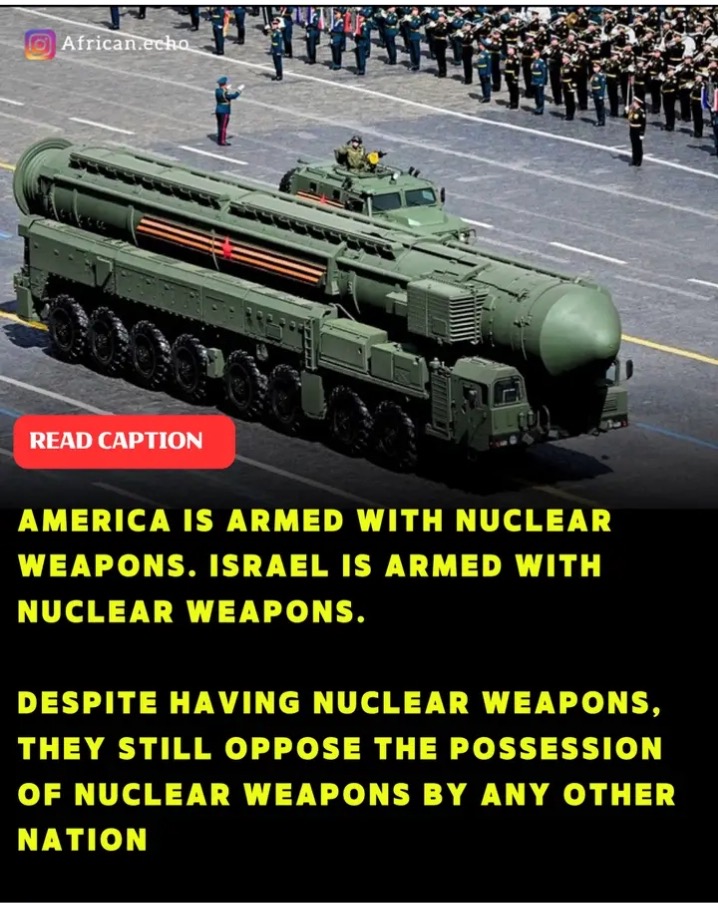
Today, countries like the United States are openly armed with thousands of nuclear warheads.
Meanwhile, Israel is widely believed by international analysts to possess nuclear weapons as well—though it has never officially confirmed it.
Yet these same powers strongly oppose other nations developing the very same weapons.
Why?
The official argument is simple: preventing nuclear war.
The idea is that if more countries obtain nuclear weapons, the chances of catastrophe increase.
But critics see something deeper.
They argue that nuclear weapons are not just military tools—they are instruments of global power. The countries that already possess them sit at the top of the international security system. Their military strength, political influence, and diplomatic leverage are all tied to that power.
So when new nations attempt to develop nuclear capabilities, it triggers sanctions, pressure, and sometimes threats of military action.
Supporters say this protects global stability.
Skeptics say it preserves a global hierarchy where a small group of nations decides who can and cannot wield ultimate power.
History shows that the debate over nuclear weapons has always been about more than bombs. It is about control, security, fear, and the structure of the modern world.
The real question is uncomfortable but important:
Is nuclear non-proliferation about protecting humanity…
or protecting the dominance of those who already have the weapons?
And if nuclear weapons are truly too dangerous for the world…
should anyone have them at all?
– African.echo