



Jumada al-Ula 5, 1448 (October 16, 2026)
Assalaamun Alaykum Warahmatullah Taallah Wabarakatuhu
A LIFE OF HONOUR, DISCIPLINE AND LOVE
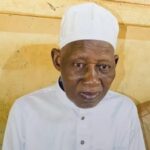
In Loving Memory of My Father, Alhaji Zubair Adubi Abdulmalik Omeiza-Ajigarah who died on Thursday, October 16, 2025 (Rabi al-Thani 24, 2447 AH)
In the name of Allah, the Most Gracious, the Most Merciful.
All praise belongs to Almighty Allah, the Creator of life, the Giver of blessings, and the One to whom every soul must ultimately return. May His peace and blessings be upon Prophet Muhammad (peace be upon him), his household, his companions, and all those who follow the path of righteousness.
Theme: The Legacy of a Responsible Man Lives Beyond the Grave
Today, I write, not merely as a Journalist and an Islamic scholar reflecting on the meaning of life and death, but as a child remembering a father whose life was a lesson, whose character was a school, whose love was a refuge, and whose legacy remains a source of inspiration.
Introduction: When a Father Becomes a Legacy
“Indeed, we came from Allah, and indeed to Him we will return.” (Qur’an 2:156)
On Thursday, October 16, 2025, (Rabi al-Thani 24, 2447 AH) our family experienced the painful reality of mortality when my beloved father, Alhaji Zubair Adubi Abdulmalik Omeiza-Ajigarah, returned to his Creator.
His departure left a space in our hearts that no words can completely fill. The passing of a father is not simply the loss of a parent; it is the departure of a family’s pillar, a repository of wisdom, a disciplinarian, a teacher, and a living connection to the sacrifices that shaped our lives.
Yet, Islam teaches us that death is not the end of every form of influence. A person may leave this world while the good he has done continues to speak for him.
My father has gone, but his lessons remain. His voice may no longer command a room, but his values continue to command our conscience. His hands may no longer work, but the skills he taught others continue to serve humanity.
This is the enduring reality of a life lived with purpose.
A Disciplinarian Who Understood the Value of Character
One of the defining qualities of my father was discipline. He believed that a meaningful life must be built on self-control, responsibility, honesty, and respect for others.
He was not a man who regarded the upbringing of children as an exercise in providing food, clothing, and shelter alone. He understood that parents have a greater responsibility: to prepare their children to become people of integrity.
His discipline was part of his philosophy of life. He knew that talent without character could become a liability, while education without moral direction could lose its true purpose.
The Qur’an reminds us in Surah At-Tahrim, (66:6), of the responsibility to protect ourselves and our families from wrongdoing. This responsibility begins with teaching, guidance, example, and accountability.
My father took these principles seriously.
Today, when we remember his firmness, we should also remember the wisdom behind it. His discipline was among the instruments through which he sought to prepare his children for the challenges of life.
The real tribute we can offer him is not merely to praise his strictness, but to preserve the honesty, responsibility, and self-respect he wanted us to embody.
A Pioneer Who Transformed Tailoring in Ebiraland
Beyond the walls of our family home, Alhaji Zubair Adubi Abdulmalik Omeiza-Ajigarah was a pioneer in his chosen profession.
He was among the early modern tailoring entrepreneurs in Ebiraland, in present-day Kogi State, Nigeria. His acquisition of what is remembered as the first embroidery-design machine in Ebiraland marked an important milestone in the development of tailoring and garment decoration in the area.
At a time when access to modern technology was not as widespread as it is today, he recognised the possibilities that innovation could bring to traditional craftsmanship. In 1969, during Nigeria’s unfortunate civil war when I was a Class IV Primary School pupil at Ihima Native Authority School, he went to far away Kano city to aquire the skill and became the first tailor to domesticate in Ebiraland.
Thus, he did not merely make clothes. He expanded the possibilities of his trade.
His achievement demonstrated that progress often begins when one person dares to think beyond existing limitations. While others might have been satisfied with familiar methods, he embraced a new technique and opened opportunities for a more sophisticated form of tailoring.
This made him very popular among the elites in Ebiraland, Ogori-Magongo, Lampese, Ibilo, Auchi, Aduge, Ogale, Ayere, Kabba, Ikare and several neighbouring communities within Kogi as well as Edo and Ondo States. The Ohionoyi of Ebiraland of blessed memory, Alhaji Mohammed Sani Omolori fondly called him the father of modern tailoring in Ebiraland.
His story offers a strong lesson to our young people: do not despise vocational skills, do not fear innovation, and do not assume that greatness must begin in a government office or a university lecture hall.
Sometimes, history is shaped by a determined artisan working patiently with his hands.
My father’s workshop was more than a place of business. It was a place where creativity met discipline, where experience became instruction, and where a trade became a means of livelihood.
A Teacher Whose Classroom Was the Workshop
One of my father’s most valuable legacies was his investment in people.
He trained dozens of artisans, passing on knowledge and practical skills that enabled others to build their own futures.
In an age when unemployment and economic uncertainty continue to challenge Nigerian families, his example deserves renewed attention.
He understood a principle that every community must rediscover: teaching someone a productive skill is an investment that can benefit an entire family and, eventually, the community at large.
Every apprentice who learned under him became a potential source of support for others. Every skill acquired created an opportunity for independence. Every person who went on to practise the trade carried a portion of his knowledge into the future.
The Prophet Muhammad (peace and blessings be upon him) taught that when a person dies, such person’s deeds come to an end except for three continuing sources of reward: ongoing charity, beneficial knowledge, and a righteous child who prays for them. This teaching is recorded in Sahih Muslim (Hadith 1631).
My father’s contribution to vocational training brings this lesson into apt focus. The knowledge he shared did not disappear when he left his workshop. It continues wherever his former trainees apply the skills they learned from him.
What a beautiful legacy it is to leave behind people who can say, “I learned my trade from him.”
A Community Leader Who Spoke Truth to Power
My father was also a community leader whose influence extended beyond commerce and family life.
He was a retired politician who did not believe that respect for authority required surrendering one’s conscience. He spoke the truth to those in positions of power without reservation.
Such courage is not always rewarded with applause. Indeed, people who speak uncomfortable truths may sometimes be misunderstood, criticised, or excluded. Yet, societies cannot progress when everyone is afraid to tell those in authority what they need to hear.
The Qur’an commands believers in Surah An-Nisa (4:135), to stand firmly for justice, even when doing so involves themselves or their relatives.
This principle offers a fitting lens through which to understand my father’s commitment to speaking his mind.
His example reminds political leaders that public office is a responsibility, not a licence for arrogance. It reminds community leaders that genuine leadership demands honesty, and it reminds citizens that loyalty to a person must never become an excuse for abandoning the truth.
A leader’s worth is not measured only by the people who praise him while he lives, but also by the courage, justice, and integrity he leaves as examples for others.
A Man Whose Character Earned Public Recognition
My father’s standing in the community was reflected in the esteem in which he was held and in the recognition he received through the songs of prominent Ebira musicians, including Alhaji Ahmadu Okaito and Alhaji Isa Eromi Ihima, among others.
In Ebira society, traditional music can serve as a living record of community history, social relationships, achievement, and character. When respected musicians celebrate an individual, their songs can preserve memories that travel across generations.
Such recognition forms part of the public memory of my father’s life.
But beyond the music and the praise, his deeper achievement was the reputation he built through his conduct.
He was respected by religious leaders because of his high moral standards. His influence was not based solely on political association or professional success. It was also grounded in the values he demonstrated in everyday life.
The lesson is simple: a good name is built slowly, through consistent conduct, and can become one of the most enduring possessions a person leaves behind.
A Devout Sufi Muslim Who Valued Education and Religious Tolerance
My father was a devout Sufi Muslim whose religious commitment formed an important part of his identity.
For him, faith was not merely a label to be displayed. It was a responsibility to be reflected in character, discipline, compassion, and relationships with others.
Sufism, in its emphasis on spiritual purification, remembrance of Allah, humility, and the struggle against destructive inclinations of the ego, offers a reminder that outward religious observance must be accompanied by inward moral development.
The Qur’an declares in Surah Al-Hujurat (49:13), that humanity was created into peoples and tribes so that people might come to know one another, and that true honour before Allah rests upon righteousness.
My father’s advocacy for religious tolerance and peaceful coexistence reflected the importance of this principle.
He understood that devotion to one’s religion should not become hostility towards another person’s faith. A Muslim can remain firmly committed to Islam while respecting the dignity and freedom of Christian neighbours and people of other beliefs.
In a country as religiously diverse as Nigeria, this lesson is particularly important. Religious differences should never become instruments for destroying friendships, dividing communities, or encouraging violence.
My father also promoted both Islamic and Western education. He recognised that spiritual knowledge and modern learning could complement each other in preparing responsible citizens.
His example challenges us to raise children who are spiritually grounded, intellectually curious, professionally competent, and morally responsible.
A Father Whose Love Was Infectious
Of all my father’s qualities, his affection for his children remains among the most personal and precious.
Behind the public figure, the community leader, the politician, the religious devotee, and the pioneering tailor was a father whose love for his children was unmistakable.
There are forms of love that do not need grand speeches. They reveal themselves in concern, sacrifice, correction, protection, encouragement, and the quiet desire to see one’s children succeed.
A father may be strict in his expectations and still possess a heart overflowing with affection. Indeed, the combination of discipline and love can become one of the strongest foundations upon which children build their lives.
The Prophet Muhammad (peace be upon him) demonstrated compassion in his relationships with children and taught the importance of mercy towards others.
My father’s love remains part of our inheritance. We carry it in the values he taught us, the memories we cherish, and the responsibility we now bear to treat our own families with patience, kindness, and understanding.
To my siblings and the entire family, grief should not make us forget gratitude. We have lost his physical presence, but we have not lost the opportunity to live by the principles he placed before us.
What Should We Do With His Legacy?
Dear family, friends, and members of our community, remembrance must become more than an annual gathering or a recitation of beautiful words.
If we truly wish to honour Alhaji Zubair Adubi Abdulmalik Omeiza-Ajigarah, we must turn his memory into action.
We must uphold discipline without cruelty, leadership without arrogance, and honesty without fear.
We should support vocational education and encourage young people to acquire skills that can sustain them. We should honour artisans whose work contributes to society, and we should recognise that the development of a nation depends as much on skilled hands as on educated minds.
We should defend the truth when falsehood becomes convenient. We should promote Islamic and Western education, encourage mutual respect among religious communities, and refuse to allow religious differences to destroy our common humanity.
We should preserve his story for the younger generation so that his pioneering contribution to tailoring, his service to the community, and his commitment to family and faith do not disappear with the passage of time.
Above all, we should remember him in our prayers.
The Qur’an teaches us in Surah Al-Isra (17:24) to pray for our parents, asking Allah to have mercy upon them as they cared for us when we were young.
That prayer remains a beautiful expression of gratitude to a father whose sacrifices helped shape our lives.
Conclusion: His Life Has Become Our Responsibility
My beloved father, Alhaji Zubair Adubi Abdulmalik Omeiza-Ajigarah, your earthly journey ended on Thursday, October 16, 2025 (Rabi al-Thanni 24, 1447 AH), but the story of your influence has not ended.
You were a disciplinarian who taught responsibility; a pioneer who embraced innovation; a craftsman who trained others; a community leader who valued truth; a retired politician who refused to surrender his conscience; a devout Sufi Muslim who upheld moral standards; an advocate of education, peace, and religious tolerance; and a father whose love remains deeply rooted in the hearts of his children.
Your life reminds us that greatness is not determined only by the material wealth one accumulates, the offices one occupies, or the public recognition one receives. Greatness is also measured by the people one teaches, the lives one improves, the principles one defends, and the love one leaves behind.
As we remember you, we ask Almighty Allah to forgive your shortcomings, accept your good deeds, illuminate your resting place, widen your grave, and grant you Al-Jannatul Firdaus.
May Allah reward you for every useful skill you taught, every person you helped, every act of kindness you performed, every sacrifice you made for your children, and every effort you invested in promoting peace and righteousness.
May He comfort all those who mourn you and grant us the strength to preserve the best of your legacy.
And may the generations who come after us remember that, in Ebiraland, there lived a man who used his hands to create, his knowledge to empower, his voice to speak the truth, his faith to guide his conduct, and his heart to love his family.
Your journey on earth is ended Thursday, October 16, 2025 (Rabi al-Thanni 24, 1447 AH). Monday, October 5, 2026 (Rabi al-Thanni 24, 2448 AH) marked one Hijrah year of your glorious transition. Rest in peace, dear father. The values you planted will continue to grow in the lives of those you touched.
Inna lillahi wa inna ilayhi raji’un. (Indeed, we came from Allah, and indeed, to Him we shall return).
___________
To Alhaji Zubair Adubi Abdulmalik Omeiza-Ajigarah, his brothers and sisters who had earlier departed, may Almighty Allah SWT expand your graves, illuminate them, grant you peace in Barzakh and ultimately, Al-Jannah Fridous.
________________
Endeavour to recite Surah Al-Kahf (Chapter 18: Verses 1-110).
Juma’ah Mabrouq