


By Juliana Katung, Kaduna
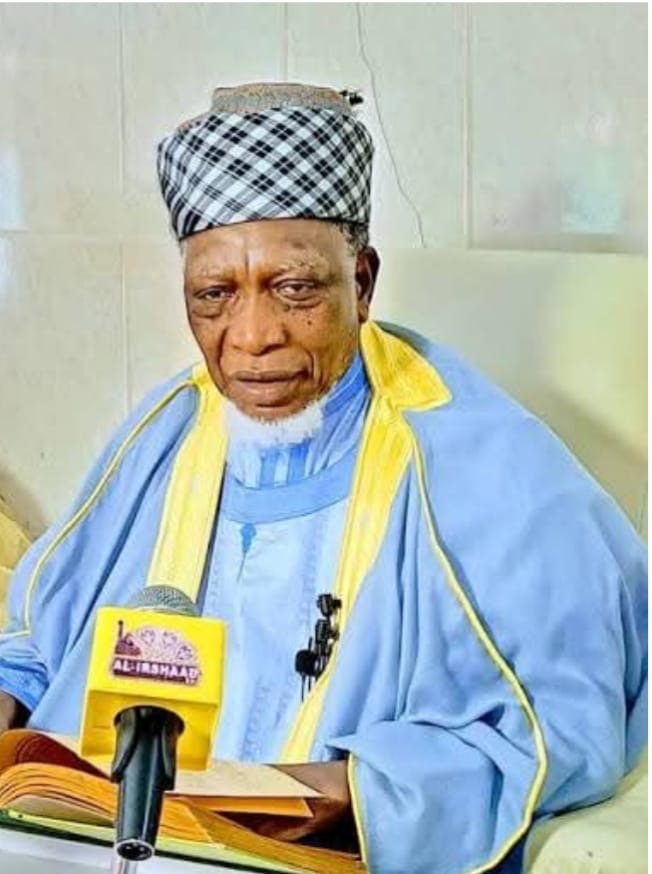
A coalition named Hausawa Tsantsa Movement “Mesa Ta Tashi” has dissociated itself from the statements attributed to Sheikh Sani Yahaya Jingir, alleging that Nigeria belongs exclusively to Muslims, warning that such rhetoric promotes religious intolerance and threatens national unity.
The coalition of Hausa Muslims, in a public disclaimer dated 10th August 2026, strongly rejected the alleged remarks by Islamic cleric Sheikh Sani Yahaya Jingir, describing them as “a deeply divisive interpretation of religion and citizenship” that contradicts both Islamic teachings and the Nigerian Constitution.
“No numerical majority has the authority to intimidate another faith,” the movement declared.
The group, in a statement signed by Hajiya Kaltume Alumbe Jitami and made available on Thursday in Kaduna, stated that “If these statements were accurately reported or made, they represent a deeply divisive interpretation of religion and citizenship that we categorically reject.”
“Nigeria belongs equally to all Nigerians, irrespective of religion, ethnicity, region, or political affiliation, and no numerical majority has the moral, religious, or constitutional authority to intimidate, marginalize, or threaten another faith community.”
The group was responding to reports in which Sheikh Jingir was quoted as saying Nigeria is a “Muslim country” and that Christians should accept a Muslim-Muslim ticket or “leave Nigeria because it belongs to us.”
Citing the Qur’an, the group stated that Islam rejects coercion. The Hausa Muslims cited multiple Qur’anic verses to argue that Islam does not support the persecution of Christians or religious domination in politics.
“Islam does not teach Muslims to disrespect, persecute, or deny Christians their dignity and fundamental rights. The Holy Qur’an expressly declares: ‘There shall be no compulsion in religion’ (Qur’an 2:256), thereby establishing the principle that faith cannot be imposed through coercion, intimidation, or oppression,” the statement read.
It added: “The Qur’an also commands Muslims to deal with people of other faiths with justice and kindness, stating that Allah does not forbid Muslims from being kind and just to those who do not fight them because of religion (Qur’an 60:8). These principles leave no room for religious persecution or the denial of another person’s citizenship rights because of his or her beliefs.”
The group further quoted Qur’an 109:6 — “For you is your religion, and for me is my religion” — saying it “reinforces religious coexistence and mutual respect.”
“Therefore, any attempt to present hostility towards Christians as an Islamic obligation is inconsistent with the clear teachings of the Qur’an,” the statement said.
On the Muslim-Muslim presidential ticket, the group said political leadership “must be determined by constitutional principles, competence, public trust, electoral choice, and the equal rights of citizens, not by religious coercion or the claim that one faith must permanently dominate another.”
“Any political arrangement involving candidates of the same faith remains a matter of political choice and must never be used to justify the exclusion, intimidation, or marginalisation of Christians or other Nigerians,” it stated.
Calling on Jingir to clarify or withdraw the remarks, the group said religious and political leaders “have a serious responsibility to use language that promotes national cohesion rather than language capable of inflaming religious tension.”
“We make it clear that Hausa Muslims who believe in justice, peaceful coexistence, and the authentic teachings of Islam are not represented by any statement that promotes hostility or discrimination against Christians. We reject religious supremacy, threats, and all forms of sectarian intimidation,” it declared.
The group in the statement, however, urged Mallam Yahaya Jingir, if the alleged statements are correctly attributed to him, to clarify or withdraw any remarks that could reasonably be understood as threatening or diminishing the rights of Nigerian Christians.
– New Nigerian Newspaper