


Let me be brutally direct with you today.
The 14 point MOU now agreed between Iran and America is one of the most extraordinary diplomatic document that was ever created.
Read those 14 points carefully. Then ask yourself- who won this war?
America’s stated objectives when it launched Operation Epic Fury alongside the Zionist regime it supports, on 28 February 2026 were unambiguous: destroy Iran’s nuclear programme permanently, obliterate its missile industry, neutralise its support for resistance groups across the region, and – though never officially stated – trigger regime change in Tehran.
Not one of those stated objectives has been achieved. Not one.
Iran’s Supreme Leader was assassinated in the opening hours of the campaign. Its conventional navy was largely destroyed. Its nuclear sites sustained severe damage. By every metric of raw military firepower, America “won” the battles.
And yet- here is what the peace agreement actually says:
I. The US commits to non-interference in Iran’s internal affairs and respect for Iranian sovereignty;
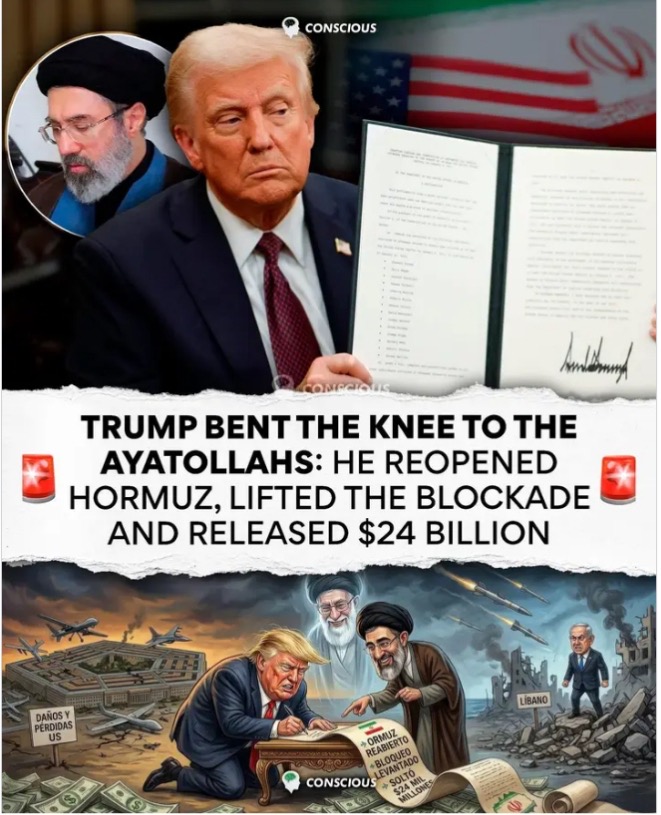
2. The naval blockade – America’s ultimate coercive instrument – is to be lifted completely;
3. US forces are to withdraw from around Iran;
4. All oil and petrochemical sanctions are suspended;
5. US is to unfreeze $24 billion of Iranian assets;
6. The US and its allies must present reconstruction plans for Iran amounting to at least $300 billion.
Let’s call a spade a spade.”Reconstruction fund” is a euphemism – a diplomatic fig leaf. There is a word in the vocabulary of history for when the aggressor pays to rebuild what it destroyed in a country it attacked. That word is reparations. And in the entire history of warfare, only the defeated pay reparations. It happened in the Napoleonic wars. Germany paid them after two World Wars. Japan paid them after 1945. Iraq paid them after Kuwait.
America is now being asked to pay them after Iran.
If you needed a single fact to understand who lost the war, this is it.
And more crucially – Iran’s missile programme and its support for its proxies in the region – Hamas, Hezbollah and the Houthis are definitively removed from the negotiating agenda altogether.
I want you to pause on that last point. America went to war – spending officially $30 billion (although I think the real figure is around $200 billion) in 3 months, depleting munition stockpiles so severely that analysts say will take 3-5 years to rebuild, triggering a global energy crisis that darkened economic outlooks worldwide – and Iran’s missiles and it’s geopolitical alliances are NOT even on the table.
This is not a peace agreement. This is a terms of surrender document, and I have been calling that for at least the past 6 weeks. And America is the one signing it.
No wonder Donald Trump has gone from calling it total victory to proclaiming that he is the first American President to sign a Peace Deal with Iran! The humiliation is total!
The great American strategic theorist would ask: what is the relationship between means and ends? You do not commit the world’s most powerful military to a campaign of this scale, assassinate a Head of state, spend $200 billion of taxpayers’ money, and have most of your bases in the Persian Gulf destroyed by Iranian ballistic missiles, and engineer a global oil crisis – only to walk away having achieved nothing that you set out to achieve.
A leaked US Defence Intelligence Agency assessment told the real story: Iran moved much of its enriched uranium stockpile before the strikes began. The underground facilities were not collapsed. The nuclear programme was set back by months, not years. Trump told the world he had “completely and totally obliterated” Iran’s nuclear capabilities. The DIA said otherwise.
This is the difference between narrative and reality- and the world is now watching America navigate the gap in real time.
Compare this to Vietnam. America lost in Vietnam after years of ground war, 58,000 dead, and the shattering of a generation. That was a tragedy of attrition – a superpower slowly bled out by a peasant army.
What happened in Iran is strategically far worse and much more humiliating. This was a 100 day hi-tec air war – America at its most lethal, most technologically supreme, most unleashed. B-2 stealth bombers, carrier strike groups, the finest precision munitions on earth. And Iran – battered , sanctioned, blockaded – looked the American eagle in the eye, closed the Strait of Hormuz, struck US bases across 7 countries, and waited.
Iran did not need to win militarily. It only needed not to lose politically. And that is what it did.
The MOU is Iran’s vindication. The Islamic Republic – for all the damage it sustained – emerges with its sovereignty affirmed and strengthened. It’s reconstruction guaranteed. It’s economy unlocked, and it’s strategic programme protected. The Americans after all their fire and thunder, can’t wait to go home.
Now consider what this means for the wider Middle East – and for American hegemony itself.
For 7 decades, American dominance in the ME rested on a single proposition: that the US could compel outcomes through military force. Every ruler in Riyadh, every government in Amman, every calculation in Cairo and Ankara and Tel Aviv was made in the shadow of that proposition. America’s vast constellation of military bases – Al Udeid in Qatar, Fifth Fleet headquarters in Bahrain, installations across Kuwait, the UAE, and beyond – were not merely logistical assets. They were the physical embodiment of American will. They said: we are here, and we decide.
That proposition has now been shattered.
The bases may still exist, although most of them have been literally destroyed. The warships may still sail. But what does a military base mean when the country it was meant to intimidate has just negotiated a peace agreement protecting its missiles, its proxies, and its sovereignty – and extracted a $300 billion reparations commitment from its attacker in the process? The infrastructure of hegemony may remain. The credibility that gave it meaning has gone.
This is how empires end – not always with a single catastrophic defeat, but with the moment when the world realises that the emperor’s power to compel has reached its limits. When smaller nations look at what Iran achieved and begin to draw their own conclusions. When friends and adversaries alike recalibrate.
Iran has not merely survived American military assault. It has demonstrated to the entire Global South – to every nation that has lived under the shadow of American coercion – that resistance is possible, that sovereignty can be defended, and that the world’s most poweful military machine can be politically defeated even when it wins every battle.
This is the end of American hegemony in the Middle East. Not its weakening. Not its decline. It’s end.
History will record this as the moment the American century confronted its limits in the most direct possible way – not in the jungles of Southeast Asia, not in the mountains of Afghanistan, but in the Persian Gulf, in a war that lasted 100 days and ended with Washington agreeing to rebuild what it destroyed.
The emperor, it turns out, has no clothes.
And the world has noticed.
– Source: Lim Tean