


In a country where the present is often uncertain, Waqf is a promise to the future. And Nigeria’s future, if we are wise enough to endow it, could be the most prosperous and compassionate of all.
In the arid deserts of traditional finance, where transactions are fleeting and profits are often private, there exists an ancient, yet profoundly radical, an Islamic concept called Waqf.
Derived from the Arabic root word waqafa – meaning “to hold, confine or prohibit”. Waqf is the act of holding an asset, preserving its substance and dedicating its usufruct (benefit) for the public good. Imagine planting a tree not for the shade it gives you today, but for the fruit it will bear for your great – grandchildren a century from now. That is Waqf.
It is an organized perpetual charity (a well monitored Sadaqatul Jariyah). Once an asset is declared as Waqf, be it land, a building, a water well or a sum of money, it is never sold, inherited or gifted. It belongs to Allah and its revenue flows endlessly to those in need.
For Nigeria, a nation of soaring potential tangled in the thorns of infrastructural deficits and economic inequality, Waqf is not merely a religious relic. It is a sleeping giant. A missing key. A blueprint for a more resilient, compassionate and prosperous economy.
The Mechanics of Mercy
To understand how Waqf could heal Nigeria, we must first understand its elegance. In classical Islamic civilization, Waqf funded everything. Hospitals in Damascus, green energy in Oman, universities in Fez, Egypt, Morrocco, caravanserais in Timbuktu, and even the public fountains of Istanbul were all sustained by this model.
The formula is simple: Lock the principal. Release the yield.
A wealthy family donates a plot of land in Lagos. That land is legally designated as Waqf. It cannot be sold. Instead, a market is built on it. The rent from the stalls does not go to a private landlord; it flows into a trust that funds scholarships for orphans in Kano, dialysis machines for a hospital in Enugu and interest-free loans for farmers in Sokoto. Guess what! The asset remains. The wealth circulates. The community rises.
Nigeria’s Silent Crisis: The Case for Waqf
Nigeria faces a paradox. It is the giant of Africa, yes! endowed with oil, gas, fertile land and a vibrant youth population. Yet, according to the World Bank, over 40% of Nigerians live below the poverty line. Public schools crumble. Hospitals lack basic drugs. And government budgets, in overwhelming debt and perpetually stretched thin, can barely cover salaries, let alone sustain social infrastructure.
This is where Waqf steps into the breach. Unlike conventional charity (Zakat), which is often consumed immediately (food, clothing, emergency aid), Waqf is an endowment. It builds the school, then pays the teacher’s salary, then buys the textbooks year after year, decade after decade.
Imagine a “Waqf Healthcare Hospital” in Abuja or Kano. A philanthropist donates land. The Waqf commission or a trusted waqf managers build a mother and child hospital. Instead of charging market rates, the hospital uses a sliding scale – profits from paying patients cross-subsidize free care for the indigent. This is not a charity reliant on unpredictable handouts; it is a self-sustaining ecosystem of dignity.
The Economic Multiplier Effect
Beyond social welfare, Waqf is a powerful engine for macroeconomic growth. The following areas but not limited to, can be explore;
1. Unlocking Dead Capital
Nigeria is home to vast properties, family lands, abandoned colonial buildings and undeveloped urban plots that are idle due to inheritance disputes or lack of capital. Through a cash Waqf or corporate Waqf, families can donate these illiquid assets to a trust. The trust develops them into affordable housing or commercial hubs. The land that generated zero economic value suddenly generates jobs, trade and taxes.
2. The Awqaf Investment Fund
Nigeria could establish a National Awqaf (plural of Waqf) Investment Fund. This fund would pool small donations, from market women, civil servants and corporations into a Sharia-compliant portfolio (real estate, agriculture, renewable energy). The returns would finance public goods. This democratizes philanthropy; a N1,000 contribution from a taxi driver in Ibadan, N2,000 contribution from a mechanic in Abuja become a perpetual share in building a bridge in Bayelsa.
3. Strengthening the Islamic Finance Ecosystem
As a member of the Islamic Development Bank (IsDB) and a nation with a large Muslim population, Nigeria has already issued Sukuk (Islamic bonds) for infrastructure. Waqf is the natural next layer. It provides the “social safety net” that Islamic finance promises. It proves that finance can be both profitable and compassionate, reducing reliance on crippling government debt or high-interest loans.
A Nigerian Blueprint: From Kano to Lagos
We do not need to look to the ancient past for proof. Look to Singapore, where the Majlis Ugama Islam (MUIS) and BAZNAS in Indonesia who manage a Waqf fund worth hundreds of millions, developing commercial real estate to fund religious and social services. Look to Kuwait, Malaysia and Turkey, where Waqf properties form a significant pillar of the social welfare system.
Waqf can solve a lot of problems, in fact, uncountable problem and Nigeria can leverage on it, like;
– The Waqf on Education: A state like Borno, rebuilding after insurgency, could use Waqf lands to build vocational training centers for widows and youth.
– The Agricultural Waqf: A corporate farm in Kaduna can donates a portion of its land as Waqf. The harvest from that plot goes to a food bank program for internally displaced persons.
– The Digital Waqf: In a modern innovation, a software company can donate a rental property. The digital revenue ranging from parking fees, solar panels or data centers to funds coding bootcamps for girls in the Northern Nigeria.
The Challenges (And How to Overcome Them)
Skeptics will point to Nigeria’s notorious land title system, weak legal frameworks and the risk of mismanagement. These are valid concerns. But they are not insurmountable.
First, Nigeria needs a Waqf Act, i.e a national law that recognises Waqf assets, provides legal protection against confiscation or encroachment and establishes a transparent regulatory commission (national and state-level). Second, technology is our ally. Blockchain-based Waqf ledgers can ensure that every kobo generated is traceable and irreversible. Third, we must involve professional asset managers and trusted organization, not just religious scholars. The soul of Waqf is religious, but its engine is professional.
A Legacy for the Unborn
There is a hauntingly beautiful saying often associated with Waqf: “When a man dies, his deeds come to an end except for three: ongoing charity (Sadaqah Jariyah), beneficial knowledge or a righteous child who prays for him.”
Waqf is the architecture of immortality. It allows a trader in Onitsha, a professor in Zaria, an Architect in Kaduna or a chief in Benin to write their name not on a gravestone, but on a hospital wing that heals for centuries.
For Nigeria, standing at the crossroads of youth and decay, oil and poverty, faith and frustration, Waqf offers a third path. It is not Western aid. It is not government dependency. It is community-powered, faith-anchored, market-driven and eternity-minded.
Let us not merely dig wells. Let us build the eternal orchard. Let us plant the seeds of Waqf across Nigeria. And in a hundred years, when our great-grandchildren drink from its shade, they will remember: this was the gift that never ended.
Adeyemi R. A.
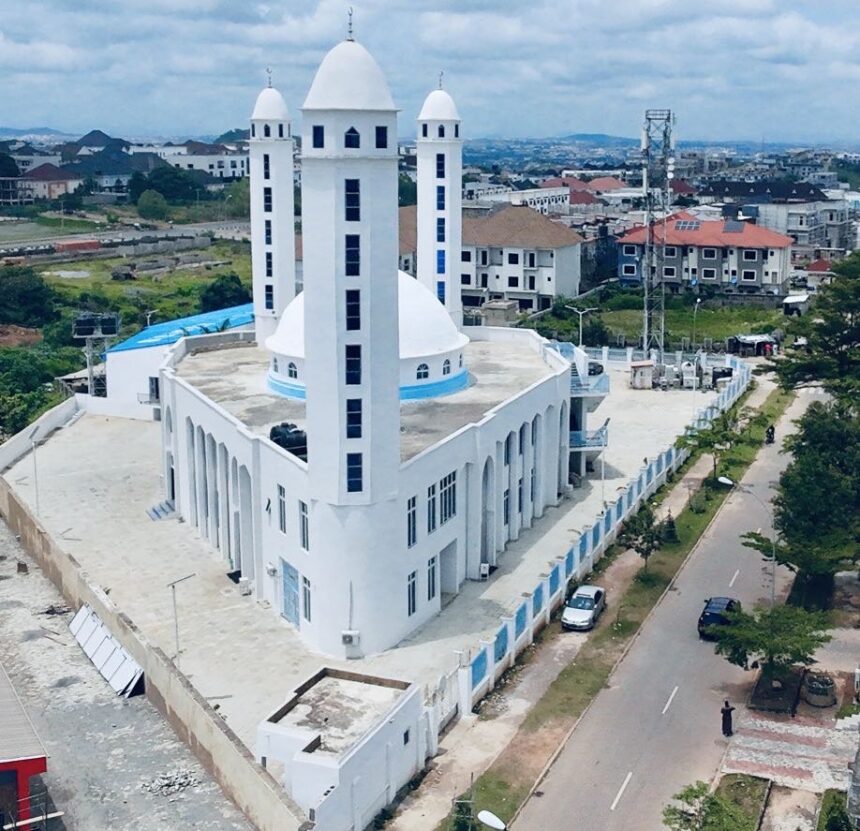
Al-Habibiyyah Islamic Center
Plot 753, Babagana Kingibe Street, Guzape District, FCT – Abuja.