


By Ugoji Maximillian
There was a time when one powerful country could present an intelligence dossier, make a frightening claim about another country, build a coalition around that claim, and convince the world that war was necessary.
But the world has learned.
Iraq was one of the greatest lessons.
In 2003, the United States and its allies invaded Iraq on the central argument that Saddam Hussein possessed weapons of mass destruction and represented a major security threat.
Countries joined the coalition.
Iraq was invaded.
Saddam Hussein was overthrown.
The country was devastated.
But the massive stockpiles of chemical reactions and biological weapons that had been used to justify the invasion were not found.
The Iraq Survey Group later concluded that Iraq had destroyed its undeclared chemical weapons stockpile in 1991 and found no evidence that Iraq had restarted a chemical-weapons production programme.
The war had already happened before the world could fully digest the intelligence behind it.
And Iraq was not the only lesson.
Look at Libya in 2011.
The international intervention began under a UN mandate to protect civilians and enforce a no-fly zone.
NATO says the operation was authorized by UN Security Council Resolution 1973.
But after Muammar Gaddafi fell, Libya did not automatically become the stable, prosperous democracy many people expected.
The country entered years of political fragmentation, armed conflict and instability.
So countries began asking a different question:
“If we help destroy a government, who will rebuild the country afterwards?”
That is the lesson of the post-9/11 era:
Afghanistan
Iraq
Libya
Syria
Years of war have demonstrated that destroying a government is much easier than rebuilding a nation.
And now we are seeing another major change in international politics.
COUNTRIES ARE ASKING: WHAT IS IN IT FOR US?
The 2026 Iran conflict has demonstrated just how complicated this new world has become.
The United States and Israel launched military operations against Iran, but the conflict did not automatically produce a unified international military coalition.
Instead, countries have been extremely cautious about becoming directly involved.
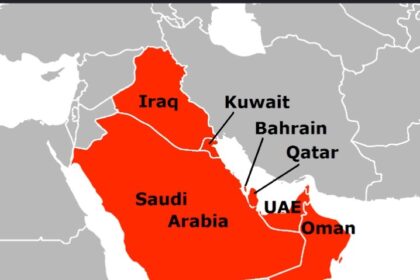
Even Gulf states that host American military facilities have their own national interests, economies and security calculations.
They know what happens when a regional war gets out of control.
They know that missiles do not respect borders.
They know that oil prices rise.
Shipping routes are disrupted.
Airports become targets.
Investments disappear.
And ordinary citizens pay the price.
Recent reporting has shown Gulf governments pressing for de-escalation while trying to protect their own territories and economies.
This is the new reality.
Countries are no longer automatically willing to sacrifice their soldiers, economies and citizens simply because a powerful ally says: “Join us.”
They want evidence.
They want a clearly defined objective.
They want to know how the war ends.
They want to know who pays for reconstruction.
And most importantly: They want to know whether their national interest is actually at stake.
THE WORLD HAS BECOME MORE MULTIPOLAR
China has its interests.
Russia has its interests.
India has its interests.
The Gulf states have their interests.
Africa increasingly has its interests.
And developing countries are learning that they don’t always have to choose between Washington, Moscow, Beijing or anyone else.
They can pursue their own national interests.
That doesn’t mean America has become weak.
It doesn’t mean Western countries cannot build coalitions.
And it certainly doesn’t mean every country will refuse to participate in future wars.
It means the politics of automatic obedience is becoming much harder.
The Iraq experience changed perceptions.
The Libya experience changed perceptions.
Afghanistan changed perceptions.
And the continuing Iran conflict is creating another lesson about the enormous cost of regional war.
Today, before a country joins a war, its leaders increasingly have to answer:
What is the objective?
What is the evidence?
How does the war end?
Who pays for reconstruction?
And what happens if the conflict spreads?
That is progress.
Because the greatest victory for humanity is not winning more wars.
It is preventing unnecessary wars from starting in the first place.
The world has suffered enough from wars sold as quick solutions that turned into decades of instability.
The age of “join us first, ask questions later” is becoming much harder to sustain.
And perhaps that is one of the most important geopolitical lessons of the 21st century.
Nations are learning to say:
“We will not die for another country’s agenda.”
– Ugoji Maximillian is a teacher of systems, author and entrepreneur.