


By Abdulquadir Abdulwahid
When 44 people in Abuja were told in October 2026 that they had been in contact with an Ebola patient, the fear in their households was not abstract. It was the fear of watching for a fever, of wondering whether the private hospital where the patient had been treated for malaria had protected its nurses, of asking why it took thirteen days to confirm what a travel history should have suggested on day one. Nigeria’s first Bundibugyo Ebola case is more than an epidemiological event. It is a mirror held up to a health system, and the reflection is uncomfortable.
The Index Case: Thirteen Days That Should Not Have Been Lost
The patient’s symptoms began on 7th October 2026. She sought care at a private hospital in Abuja on 11th October. Laboratory confirmation of Bundibugyo virus came on 20th October (Federal Ministry of Health and Social Welfare, 2026). That is a thirteen-day gap between symptom onset and diagnosis, and nine days between her first clinical contact and confirmation.
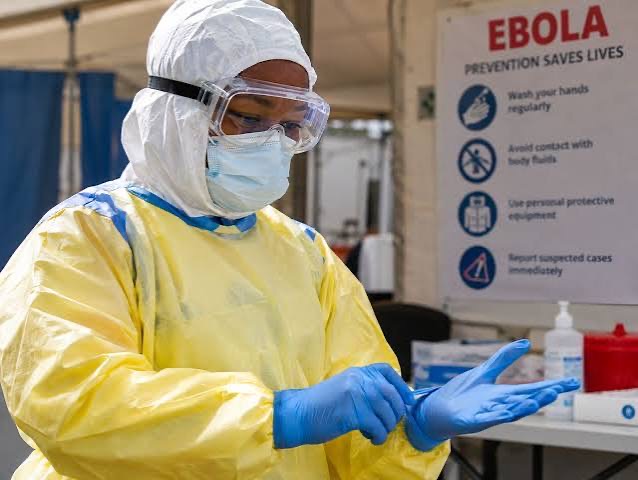
During those days she was treated for what was presumed to be a common febrile illness, most likely malaria. She was not isolated under Ebola precautions. Nurses, doctors, other patients and caregivers moved around her without the personal protective equipment (PPE) that a viral haemorrhagic fever demands. Each of those interactions is a potential transmission event that should never have been possible.
The travel history was there to be read. The Nigeria Centre for Disease Control and Prevention (NCDC) had assessed Nigeria’s risk of importing Bundibugyo Ebola as HIGH in its May 2026 advisory and had named the FCT as a high-risk state because of its international airport (NCDC, 2026). The patient arrived on a commercial flight from a region in active outbreak. The system knew this risk existed. The first point of clinical contact did not act on it.
The contact list tells its own story. Forty-four contacts were identified: the patient’s Swiss husband, healthcare workers, other patients and travel contacts. The Federal Airports Authority of Nigeria was directed to place 46 people on a no-fly list for at least 21 days. But Africa CDC Director-General Dr. Jean Kaseya warned publicly that the near two-week testing delay made full contact identification “quite challenging,” and virologist Professor Oyewale Tomori said plainly that with a patient moving between multiple locations, “more people were exposed than initially identified.”
This matters enormously because of the strain involved. Bundibugyo is not the Zaire ebolavirus of 2014. There are no approved vaccines and no specific therapeutics for Bundibugyo EVD. The tools that stop Zaire Ebola do not work here. Containment depends entirely on early detection, isolation, infection prevention and control, contact tracing and supportive care. A thirteen-day diagnostic delay attacks the one defense that actually exists.
Preparedness: The ₦10 Billion That Did Not Reach The Bedside
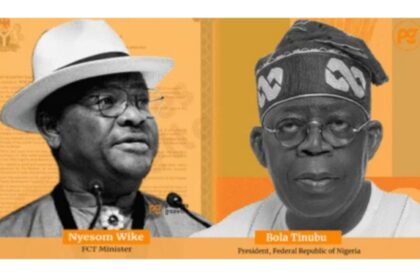
In June 2026, after the DRC-Uganda outbreak was declared a Public Health Emergency of International Concern, President Bola Tinubu approved a Presidential Task Force on Ebola Preparedness, chaired by Chief of Staff Femi Gbajabiamila, and ordered the immediate release of ₦10 billion to strengthen NCDC operations. The announcement promised intensified passenger screening at all international airports, activation of referral and isolation centres at Lagos and Abuja airports, and mandatory QR-code health declarations for travellers from high-risk countries.
Four months later, a symptomatic traveller from an outbreak zone walked through Abuja airport and was treated for days at a private hospital before anyone tested her for Ebola. The distance between a ₦10 billion press release and a nurse’s hands without gloves is the real measure of preparedness, and that distance was not closed.
Former Vice-President Atiku Abubakar put the question in terms the public understood “Where is the money?” Publish the amount actually disbursed, the dates of payment, every contract awarded, every recipient and every item delivered. A press statement cannot replace an audit. He alleged that during the critical window, 44 close contacts were left unmonitored, while private health workers faced the case without adequate protective equipment. Those allegations are contested, but the demand behind them is legitimate. Nigerians cannot verify whether ₦10 billion bought thermal scanners, PPE stockpiles, clinician training or Bundibugyo testing capacity, because no public accounting has been provided.
The legislature’s own response confirms the gap. Both the Senate and the House of Representatives called for emergency releases from the service-wide vote, implying that the June allocation had not reached operational agencies in usable form. The Senate further flagged “selective health declarations, understaffed Port Health posts, and outdated legal frameworks,” and called for replacement of the Quarantine Act of 1926 – a colonial-era law – with legislation aligned to the International Health Regulations (2005). A country relying on a 1926 statute to screen passengers in 2026 is not prepared, whatever the budget line says.
The private sector blind spot deserves particular attention. Much of Abuja’s healthcare is delivered privately, and the index patient’s first contact was with a private facility. After confirmation, the Health Minister had to urge public and private facilities to “remain on high alert” and follow IPC protocols. That appeal, issued after the fact, is an admission that private-facility readiness had been assumed rather than verified. When a private hospital becomes an unrecognised exposure site, the consequences fall on the health workers who had no reason to suspect Ebola and no equipment to protect themselves.
Public Trust: The Crisis That Outlasts The Outbreak
Official communication in the first weeks was fragmented, and the gaps filled with rumour. Nigerian authorities initially said the patient arrived from Uganda via Addis Ababa on 5th October. Africa CDC’s Dr Kaseya later stated she arrived in Abuja with her husband on 3rd October after several days in Uganda. Uganda’s Health Ministry said she had travelled to eastern DRC for business and merely transited Uganda without symptoms, adding that “travel through Uganda does not establish that infection occurred here.” Three official accounts, three different timelines. Dr Kaseya was forced to appeal publicly to the patient to disclose her movements “to avoid crisis between African countries.”
This is how trust erodes: not through one lie, but through the accumulation of partial truths and unexplained silences. Professor Tomori named the mechanism precisely: “When government doesn’t give us full information, the gaps that they leave is filled by rumors.” A public that learns of a thirteen-day diagnostic delay only after confirmation and hears conflicting travel histories from three capitals, has every reason to distrust the next official assurance.
The stakes are practical, not sentimental. The World Health Organization’s Director-General, commenting on the same DRC outbreak, said the key to ending it “is not biomedical. It’s leadership, ownership, partnership and trust,” and identified community mistrust – including belief that Ebola is not real – as a serious barrier to containment. Nigeria’s COVID-19 experience already left a residue of skepticism about emergency funds and restrictive measures. The Ebola case has reactivated it. Atiku’s warning against using the outbreak to restrict political campaigns and voter participation, whatever its merits, shows how quickly public health measures are read through a political lens when institutional credibility is thin.
Contact tracing, isolation compliance and honest symptom reporting all depend on people believing that the system is competent and honest. If the ₦10 billion cannot be accounted for, and if 44 contacts cannot be sure why they were exposed for thirteen days, that belief is already damaged.
What The Case Demands Of Researchers And Policymakers
First, close the diagnostic gap. The thirteen-day interval is the single most actionable failure. Private facilities must be mapped, trained and equipped as Ebola-ready referral points; travel history from active transmission zones must trigger immediate testing even without haemorrhagic symptoms; and Bundibugyo testing capacity must be decentralized beyond national reference labs, with turn-around times tracked as a performance indicator.
Second, audit the money against outcomes. The ₦10 billion allocation is a natural experiment in converting fiscal commitment into frontline capability. Researchers should establish what was disbursed, what was procured and whether port screening, PPE availability and clinician training measurably improved between June and October 2026. The answer will shape how Nigeria designs emergency funding for the next threat.
Third, treat trust as infrastructure. Transparency in the first 72 hours -full timelines, acknowledged uncertainties, verifiable spending – is not public relations. It is the mechanism by which 44 contacts become compliant, and by which the next patient with a fever and a travel history is reported early rather than treated quietly for malaria.
Conclusion
The 2026 Abuja case will be remembered for what it revealed, not for what it was. A single imported infection was contained, but it passed through a thirteen-day blind spot, a ₦10 billion preparedness program that did not visibly reach a private hospital’s isolation room, and an information environment in which three governments told three different stories. Bundibugyo has no vaccine. Nigeria’s only defences are early detection, functioning facilities and public cooperation – and all three were weakened before the virus ever arrived. The measure of the response will not be the press conference on 20th October. It will be whether the next patient is tested on day one, whether the next nurse has gloves, and whether the next official statement is believed.