


Rabi al-Awwal 22, 1448 (September 4, 2026)
Bismillahir Rahmanir Raheem
As-Salamu Alaykum wa Rahmatullahi wa Barakatuh
A Message of Deep Reflection on the State of Da’wah in Northern Nigeria
Lessons from the Trial of Sheikh Nura Khalid Regarding His Son
By: Dr. Bashir Ahmad Usman Yankuzo
To the Ummah, the Scholars, the Du’at, and the General Muslim Public in Northern Nigeria and Beyond.
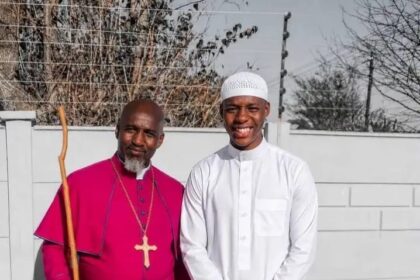
At first, when the news came to me that the son of our respected brother Sheikh Nura Khalid had left Islam for Christianity, I took it as a rumor. I refused to believe it. But gradually, I was made to understand that it is indeed true.
After listening to the boy myself, what I saw was an uncoordinated mood, a clear lack of knowledge, and childish explanations of the reasons that made him choose to be a Christian instead of remaining the Muslim he was born as. It is painful to hear and to see, but it is also a moment for deep reflection.
Lessons from Trials of Sheikh Nura Khalid Regarding His Biological Son’s Blasphemy (Ridda)
Let me start by stating that guidance is in the Hands of Allah. Even those who are guided, Allah told us about their confession: “Wama kunna li nahtadiya laula an hadanal Lah” [Al-A’raf 7:43] – “And we would not have been guided if Allah had not guided us.” And Allah directed us to seek for His guidance at every inch of our life journey, over 17 times at least in a day: “Ihdinas siratal Mustaqeem” [Al-Fatihah 1:6] – “Guide us to the straight path.”
So the misguidance of any person, although painful, is not a new thing to a Muslim. Allah says: “Indeed, [O Muhammad], you do not guide whom you like, but Allah guides whom He wills” [Al-Qasas 28:56]. What is strange is the way some Muslims handle issues of guidance and misguidance as it affects those they like or those they disagree with.
In the case of Ustadh Nura Khalid, people have commented in different ways depending on their understanding and how they see the pattern of Da’wah the Sheikh has taken for himself. Among those close to him or his fans, they are quick to point at the son of Nuh and say there is nothing strange. But this is wrong.
Some others who have differences with him regarding his Da’wah even went to the extent of saying they are not surprised even if it is Nura himself that left Islam for Christianity. This is also wrong. I think what is most important is, as Muslims, we should first empathize with the family, then take lessons in our approaches to Da’wah, and then pray to Allah for guidance and protection. Allah warns us: “O you who have believed, if there comes to you a disobedient one with information, investigate, lest you harm a people out of ignorance” [Al-Hujurat 49:6].
Regarding children of righteous Prophets, it should be known that the son of Prophet Nuh did not blaspheme after being a believer.
From the beginning he was not a Muslim. Allah says about him: “He is not of your family; indeed, he is [one whose] work was other than righteous” [Hud 11:46]. So the cases are different. Because for someone to be a Muslim and later abandon the faith is different from someone who was never one at all.
If someone as a Muslim abandons Islam, definitely something happened regarding his understanding, or other factors played a role, such that instead of him enjoying the Deen, it took him away from it, or made him resent the faith, or blaspheme, as in the case of not only the son of Nura but also of some other scholars if it ever happened (May Allah forbid) as well as some silent issues in the homes of some of our scholars that are not in the public.
These children are supposed to have seen Islam in practice and therefore are expected to love it more, even if they are unable to put all its teachings into practice. Allah says: “O you who have believed, protect yourselves and your families from a Fire” [At-Tahrim 66:6].
This definitely calls for more serious interrogation to find out what happened. By doing so, we can learn some lessons and then possibly consider taking necessary steps to contain the situation. Meanwhile, the Shari’ah provision of handling apostasy is well known to scholars, including those affected.
Among the lessons I believe we need to learn is that none of us is perfect, and our conduct or preaching alone are not enough to guide another person. Many of our scholars get carried away thinking they are the best in knowledge or wisdom regarding Da’wah.
Some are good at looking outside more than within regarding what should be emphasized or not. I have seen scholars who are vehemently fighting and fuming against Muslim sisters who, although they are Muslims and attend Islamic functions, do not wear Niqab or perfect Hijab, while at the same time the same scholar is surrounded by sisters, aunts, sometimes even wives and children not wearing the same Niqab.
There are cases where lots of lapses are within us, that we are managing and handling with wisdom at home within our close or distant family, but we seldom do the same when we come to public preaching. Many scholars amplify the faults of others and their shortcomings much more than saying some good things about them.
Allah says: “O you who have believed, avoid much assumption. Indeed, some assumption is sin. And do not spy or backbite each other” [Al-Hujurat 49:12]. I believe we need to change by accepting the weaknesses, challenges and barriers many people are battling with that are denying them being the perfect people we want to see.
Significantly, are we ourselves perfect?
Again regarding Da’wah methodology, many scholars are more concerned with pleasing other people or groups they want to win to their side, or seeking for faults in an attempt to convince them. We have cases of Muslims who gain more time to study and see faults in the Bible than getting wisdom from the Qur’an, as it happens to those in comparative religion.
Allah says: “And do not argue with the People of the Scripture except in a way that is best” [Al-Ankabut 29:46]. Some of them have problems understanding their basic rules of worship but are good at arguing using the Bible. In the same way we have people of other sects taking the books of their adversaries, explaining their faults much more than properly understanding and implementing what they are convinced is good in their own books.
Likewise on the issue of interfaith, some are more concerned with convincing followers of other faiths such as Christians about what Islam is not, than teaching what Islam is in their words and actions.
Allah says: “Invite to the way of your Lord with wisdom and good instruction, and argue with them in a way that is best” [An-Nahl 16:125]. In the same way we have those paying more attention to defending Islam than projecting and explaining its correct teachings.
The case of interfaith appears to be even more harmful because there are some institutions that through comparative religion brought lots of Christians to Islam, but now after switching to interfaith are not bringing as much number as before.
So what I believe we need is balance. We should neither completely avoid this nor that, but we should get specialists in these areas and allow them to handle the matter when the need arises.
We need not completely spend our energy clarifying wrong things others are thinking, but instead concentrate more on explaining and implementing the best practices of Islam based on our scholarly understanding.
Another issue is the way and manner we present issues and excessively argue and amplify them, even if they have no immediate importance to the overall good of the community, or if they are purely scholarly matters.
For example, what benefit is there in discussing the fate of the parents of the Prophet as to whether they are in Paradise or not because they never practiced Islam? Will there be any harm in explaining to people that Allah will not hold anybody responsible if such a person was never presented with the message and then rejected it willingly?
Allah says: “And We never punish until We have sent a messenger” [Al-Isra 17:15]. What is the harm in explaining that the Prophet understands the psychology of people and therefore addresses them in a way that they can be more comfortable?
As a result of this, even if someone feels bad that his parents or relatives are not guided, for the Prophet to explain that himself is affected because Abu Lahab is like a father to him, but condemned by Allah, so the Prophet can tell the person that my father and your father are in Hell.
In regards to his mother, how many waited to take the huge lesson in the love of his mother, even after her death, and in shedding tears for her, that there is no need to seek for forgiveness for her because she never witnessed the time of prophethood to have practiced, rightly or wrongly, what is enshrined in the teachings of Islam?
Today, instead of seeking better ta’weel to make the religion better understood, some scholars are more concerned with showing that they have deep knowledge and research capabilities. This has to change.
Another issue is managing differences and giving allowance and respect to opinions that are rooted in scholarship. Islam reached various parts of the world through the efforts of various past predecessors and they spread it based on their understanding. What stops us from accepting their good legacies, even if we can correct with wisdom what we think are not the best practices?
Allah says: “And hold firmly to the rope of Allah all together and do not become divided” [Aal ‘Imran 3:103]. We have cases where some people come to see the Mazahib as evil and even against following the path of the Salaf. Hence many fought the established Maliki Mazhab whose books and teachings have been accepted widely and used among our people.
Instead of some of our scholars who disagree with some teachings in the Mazhab carefully explaining and teaching what they are convinced of, they ended up bringing more arguments and divisions in the community.
The same thing regarding Aqeedah itself. Whoever carefully studied the book of Risala will clearly appreciate that it has provided what is enough to be used as a basis of understanding the Aqeedah of Ahlus Sunnah known in our community.
Whether someone is in Izala, Tariqa, Salafi, Shi’a or whatever group, once the Muslim Ummah is not organised, your sect or your group will definitely be affected. This is true in as much as we all wish to be the best Ummah evolved for mankind as Allah said: “You are the best nation produced [as an example] for mankind.
You enjoin what is right and forbid what is wrong and believe in Allah” [Aal ‘Imran 3:110]. When the house is divided, the enemy enters from all sides, and no group will be spared.
Now that election is approaching, another very disturbing issue is allowing the way politics and campaigns are done by the politicians to also come into the methodology of our Da’wah.
Just as politicians are battling to win followers and crush their opponents at the polls, some scholars are unfortunately thinking along similar directions. I urge our scholars to please have deeper thinking, such that even if they have a conviction that one politician is better than the other, they should never make it a religious obligation for others to believe and accept their judgment as the acceptable Islamic judgment in all ramifications.
Allah says: “O you who have believed, be persistently standing firm in justice, witnesses for Allah, even if it be against yourselves” [An-Nisa 4:135]. Da’wah is about truth and sincerity, not about partisanship and coercion.
In summary, to my understanding the issues are many that our scholars need to carefully consider and review regarding their methodology.
Recently we have some people focusing on condemnation and verbal abuses, even to the Sultan himself, without regard to his position and consideration to the hindrances and obstacles the system has placed against his authority, denying him opportunities to fully represent the Ummah as expected. Instead of working with wisdom and patience to remove those obstacles, some are more concerned with fault finding.
Again, owing to these divisions, the common people on the street are given opportunity to interpret Islam the way they like. The case of Maulud is an example. It has always remained a scholarly disagreement as to the permissibility of declaring a day for Maulud or not, and this should not be a problem.
But because the argument is poorly managed, the common person in the street has taken it and interpreted its celebration or rejection in his own way, not minding what the Shari’ah says about his actions during the celebrations, or what scholars who disagreed say on how the disagreement should be scholarly discussed.
The summary of my submission is that scholars, especially in Northern Nigeria, need to review their strategies and methodology of Da’wah. Although sects and groups might be gaining and winning more followers, the general situation of the Ummah is not positively improving. If our children and those close to us are not seeing the beautiful teachings of the religion, and therefore are giving it a second thought, then we need to deeply reflect over what is happening within the houses of those listening to us.
The world we are living in is a challenging world with lots of peculiarities that require more wisdom, more awareness, more patience, and more sincerity.
I pray to Allah to protect our children, to return the son of our brother to the fold of Islam in the best manner, to grant Sheikh Nura and his family beautiful patience, and to guide all of us to that which pleases Him. Ameen ya Rabbal Alameen.
Alhamdulil lah. Wa billahi tawfiq.
Dr. Bashir Ahmad Usman ‘Yankuzo
Chief Imam, Federal University of Technology, Minna
National Coordinator, Islamic Scholars and Experts Community Initiative for Development ISECID Nigeria
08065542625
bashnazyan@gmail.com
20th Rabi’ul Auwal 1448
2nd September 2026
_______________
Endeavour to recite Surah Al-Kahf (Chapter 18: Verses 1-110).
Juma’ah Mabrouq