


By Abdulkarim Abdulmalik
From Energy Leadership to Sports Administration, the New NBBF President Faces Expectations of Reform, Talent Development and Institutional Renewal
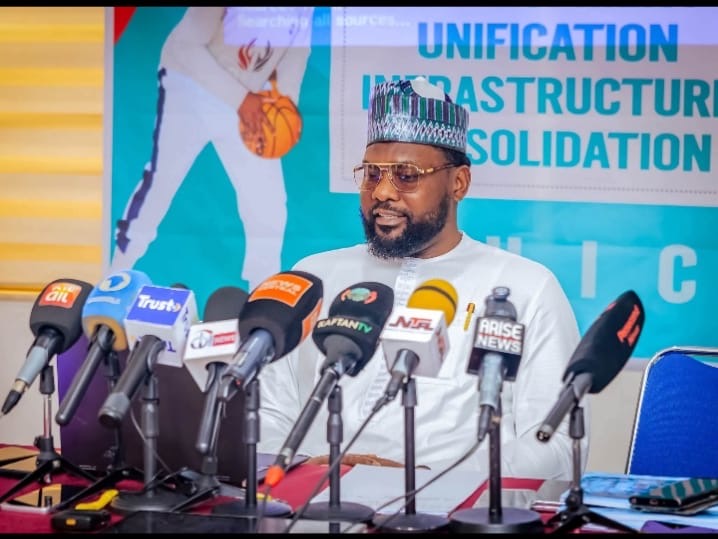
The election of Dr. Mustapha Abdullahi, Director-General of the Energy Commission of Nigeria (ECN), as President of the Nigeria Basketball Federation (NBBF) has opened a new chapter in his professional journey, bringing his experience in engineering, scientific research, public administration and energy leadership into the arena of sports development.
Abdullahi emerged victorious at the federation’s elective congress in Abuja on October 15, 2026, securing 40 out of the 48 votes cast. His victory, representing approximately 83.3 per cent of the votes, signals substantial support among the delegates who participated in the election.
The development has attracted the attention of President Bola Ahmed Tinubu, who congratulated Abdullahi on his emergence, describing the election as an opportunity to advance basketball development in Nigeria.
Beyond the congratulatory message, the President’s remarks highlight the expectations surrounding the new administration: stronger institutional management, improved athlete welfare, effective talent identification and the creation of opportunities for young Nigerians to compete and excel on national and international stages.
For Abdullahi, the challenge is to translate the confidence expressed through the election into practical results capable of strengthening Nigerian basketball.
Tinubu’s Message and the Responsibility of Leadership
In a statement issued by his Special Adviser on Information and Strategy, Bayo Onanuga, President Tinubu urged the new NBBF president to deploy his experience, leadership and commitment towards strengthening the federation and improving the administration of the sport.
The President also called on stakeholders across the basketball community—including players, coaches, administrators, sponsors and supporters—to rally behind the new leadership and work collectively towards building a stronger, more competitive and professionally managed federation.
His message underscores an important reality about sports administration: the responsibilities of leadership extend beyond the individual elected to occupy an office.
Basketball development requires cooperation among multiple stakeholders, including government institutions, sports administrators, educational establishments, private-sector partners and the athletes whose performances ultimately determine the sport’s standing.
Without such collaboration, even ambitious programmes can struggle to achieve lasting results.
Tinubu’s appeal for collective support therefore places an important responsibility on both the new president and the wider basketball community. While Abdullahi must provide direction and accountability, stakeholders must also contribute to an environment that allows the federation to pursue its objectives effectively.
The President expressed the hope that the new administration would prioritise athletes’ welfare, effective talent identification and the development of both men’s and women’s basketball.
He also wished Abdullahi a successful tenure, reaffirming the Federal Government’s recognition of sports as an important platform for youth empowerment, national unity and international engagement.
A Professional Journey Across Different Sectors
One of the distinguishing features of Abdullahi’s career is his experience across several professional fields.
As Director-General of the Energy Commission of Nigeria, he occupies a leadership position in an institution concerned with energy planning, policy coordination and the development of Nigeria’s energy sector.
His broader professional background spans engineering, scientific research, petroleum regulation and public administration. These fields require analytical thinking, institutional coordination, planning and the management of complex responsibilities.
Although energy management and basketball administration operate in different environments, both depend on effective leadership, strategic planning, resource management and measurable outcomes.
For instance, the administration of a national sports federation requires the development of policies, the coordination of competitions, the management of finances, the maintenance of relationships with stakeholders and the establishment of clear performance objectives.
Similarly, the development of basketball talent requires systematic identification, training opportunities, adequate facilities and sustained investment in young athletes.
Abdullahi’s professional experience may provide useful perspectives for addressing these challenges. However, the ultimate value of that experience will depend on how effectively it is applied to the realities of Nigerian basketball.
His new position presents an opportunity to connect administrative discipline with the sporting aspirations of young Nigerians.
Beyond Elections: The Need for Institutional Reform
Winning 40 of 48 votes gives Abdullahi a substantial electoral mandate. Nevertheless, the real test of his leadership will not be the margin of victory but the progress recorded during his tenure.
Sports federations require more than periodic elections. They need transparent governance, predictable competition schedules, effective financial management and credible mechanisms for resolving disputes.
For the NBBF, strengthening these institutional foundations would help create an environment in which players, coaches and other stakeholders can concentrate on their responsibilities.
A professionally managed federation should also provide clear information about its programmes, finances, selection procedures and development priorities.
Transparency can build trust among stakeholders, while accountability helps ensure that available resources are directed towards agreed objectives.
Abdullahi’s administration will therefore need to establish priorities that can be monitored and evaluated rather than relying exclusively on broad promises of transformation.
Regular engagement with stakeholders, clear reporting mechanisms and measurable targets could help the federation assess its progress and identify areas requiring improvement.
Institutional reform is rarely achieved through a single announcement. It is built through consistent decisions, credible processes and a willingness to address problems openly.
Investing in Young Talent
Perhaps the most consequential aspect of Tinubu’s message is the emphasis on youth empowerment.
Nigeria possesses a large population of young people for whom sports can provide opportunities for personal development, education, employment and international exposure.
Basketball, in particular, offers opportunities across several areas, including professional competition, coaching, officiating, sports medicine, analytics, event management and sports marketing.
Yet, talent alone is insufficient. Young players require access to structured training, qualified coaches, competitive platforms and appropriate facilities.
Schools, universities and grassroots sporting organisations can play important roles in identifying emerging talent before it is lost to inadequate support or limited opportunities.
A comprehensive talent-development strategy would therefore require the federation to work closely with educational institutions, state sports authorities, private academies and community organisations.
Such partnerships could help establish clearer pathways from grassroots participation to elite competition.
The development of women’s basketball also deserves sustained attention. Creating opportunities for female players, improving their access to coaching and facilities, and supporting their participation in competitions would help ensure that the sport’s development is inclusive.
Tinubu’s emphasis on both men’s and women’s basketball provides a useful framework for assessing the priorities of the new administration.
Partnerships and International Competitiveness
The commercial and international dimensions of basketball development also deserve attention.
A stronger federation must be able to attract sponsors, maintain productive partnerships and demonstrate that resources committed to the sport can generate meaningful outcomes.
Businesses are more likely to sustain their involvement when they see transparent management, credible programmes and opportunities to connect with audiences through well-organised competitions.
The NBBF could explore partnerships that support grassroots tournaments, coaching development, player scholarships, facility improvements and youth competitions.
International cooperation may also provide opportunities for knowledge exchange, technical development and exposure to modern approaches to basketball administration.
However, such initiatives must be supported by clear agreements, responsible financial management and a commitment to long-term sustainability.
For Nigerian basketball to become more competitive, development efforts must extend beyond preparations for major tournaments. They must include the everyday work of nurturing players, improving coaching standards and strengthening the institutions responsible for the sport.
The Road Ahead
President Tinubu’s congratulatory message has placed the new NBBF leadership within a broader national conversation about the role of sports in youth development, social cohesion and international engagement.
For Abdullahi, the immediate task is to turn the goodwill surrounding his election into an actionable programme for Nigerian basketball.
That programme must address the practical concerns of athletes, the professional needs of coaches, the expectations of administrators and the interests of sponsors and supporters.
It must also recognise that the federation’s success will depend on its ability to build consensus, manage resources responsibly and create opportunities that reach beyond established sporting centres.
His background in engineering, scientific research, petroleum regulation, public administration and energy leadership offers a range of experiences that could inform his approach. But the decisive evidence of success will be the results achieved under his watch.
Ultimately, Abdullahi’s election is not merely a personal milestone. It is an opportunity to strengthen Nigerian basketball through professional administration, investment in young talent, improved athlete welfare and inclusive development.
Tinubu has offered his congratulations and called for collective support. The responsibility now rests with the new NBBF president and the wider basketball community to transform that goodwill into tangible progress.
For the young Nigerian waiting for an opportunity to play, the coach seeking better facilities, the female athlete demanding equal opportunities and the sponsor looking for credible leadership, the promise of this new chapter will be measured not by the celebrations surrounding the election but by the opportunities and achievements that follow.
The mandate has been secured. The next chapter must be defined by performance, accountability and the future of Nigerian basketball.
– Abdulkarim Abdulmalik (nowmalik@gmail.com)